 العربية
 English

Noorani Qaida for kids gives young learners a gradual and understandable path into Quran reading by teaching them how Arabic letters look, sound, connect, and change inside words. At Rattel Wartaqi Quran Academy, experienced teachers guide children through a structured learning journey that develops reading skills one step at a time.
Instead of expecting children to recognize complete Quranic words immediately, lessons focus on mastering individual letters, vowel signs, pronunciation, and blending before progressing to more advanced reading. This approach reduces confusion and builds confidence from the very beginning.
A strong foundation helps children avoid guessing and encourages accurate Quran recitation with proper Tajweed. For this reason, many families choose Rattel Wartaqi Quran Academy to begin with Noorani Qaida for kids, ensuring that young learners develop the essential reading skills needed for fluent, confident, and correct Quran reading in an engaging and supportive learning environment.
What Is Noorani Qaida for Kids?
Noorani Qaida is a beginner reading method designed to teach the basic sounds and patterns used in Arabic and Quranic text. It usually begins with individual letters, then introduces vowel signs, connected forms, long vowels, sukoon, tanween, shaddah, and other common reading features. The lessons move from simple recognition to more complete reading tasks.
It is useful for children who do not speak Arabic at home and for Arabic-speaking children who still need structured reading practice. Everyday speech does not automatically provide accurate Quranic reading. The value of Noorani Qaida for kids lies in its sequence: each lesson prepares the learner for the next through recognition, listening, pronunciation, and blending.
Start Your Quran with Tajweed Journey Today
Begin your journey to recite the Holy Quran with confidence, clarity, and correct pronunciation. Join Rattel Wartaqi Quran Academy and learn through a structured Quran with Tajweed program designed for both beginners and advanced learners.
With qualified teachers and personalized guidance, you will improve your recitation step by step while mastering the rules of Tajweed simply and practically. Flexible online classes allow you to learn at your own pace while maintaining steady progress and consistency.
This program helps you strengthen your connection with the Holy Quran, improve accuracy, and build confidence in recitation. Enroll today and start your journey toward beautiful, correct, and meaningful Quran recitation.

The Purpose of Noorani Qaida in Quran Learning
The main purpose of Noorani Qaida for kids is to give children the tools needed to decode Quranic words correctly. Decoding means looking at the letters and signs, identifying their sounds, and combining them in the proper order. Without this skill, a child may memorize a verse by sound but struggle to read the same words from the page.
A good foundation helps the child understand why a word is read in a certain way. The learner notices the effect of fatha, kasra, damma, elongation, sukoon, and doubling. Instead of only repeating after an adult, the child begins to understand the written system and gradually becomes more independent.
How Noorani Qaida Helps Children Read the Quran?
Children must connect each letter’s shape with its sound. Arabic letters may change at the beginning, middle, or end of a word, and several letters differ only by their dots. Through regular practice, Noorani Qaida for kids trains the child to notice these details and avoid confusing similar forms.
Improving Pronunciation
Some Arabic sounds do not exist in the child’s home language, so letters such as ع, ح, خ, ق, ض, and ظ may be replaced with easier sounds. Slow demonstration, careful listening, and gentle repetition help prevent these substitutions from becoming habits. The aim is steady improvement, not instant perfection.
Building Readiness Before Full Quran Reading
The Quran contains connected script, vowel marks, stops, elongations, and pronunciation patterns. Practicing these elements separately makes the page less overwhelming. Noorani Qaida for kids therefore acts as a bridge between letter recognition and fluent reading, allowing later attention to meaning, rhythm, and Tajweed.
Why Should Kids Learn Noorani Qaida?
Children learn to identify letters in different positions and to combine sounds rather than guessing complete words. This supports reading accuracy not only in the Quran but also in other fully vowelled Arabic texts.
It Improves Quran Pronunciation
The method gives attention to letter sounds from the beginning. Children become aware that accurate reading depends on where a sound comes from and how it differs from nearby sounds. Early correction is often easier than changing an established habit years later.
It Makes Quran Learning Easier
A child who understands basic reading signs can progress through Quran lessons with less confusion. Instead of stopping at every symbol, the learner can focus on reading a phrase smoothly and listening to corrections.
It Introduces Tajweed Foundations Early
Children do not need a long list of technical terms at the beginning. However, they can still learn practical habits such as extending a sound for the right length, noticing a doubled letter, and reading sukoon correctly. These habits prepare them for formal Tajweed study.
The benefit of Noorani Qaida for kids is cumulative: each small skill supports the next stage and builds confidence in reading.
What Do Kids Learn in Noorani Qaida?
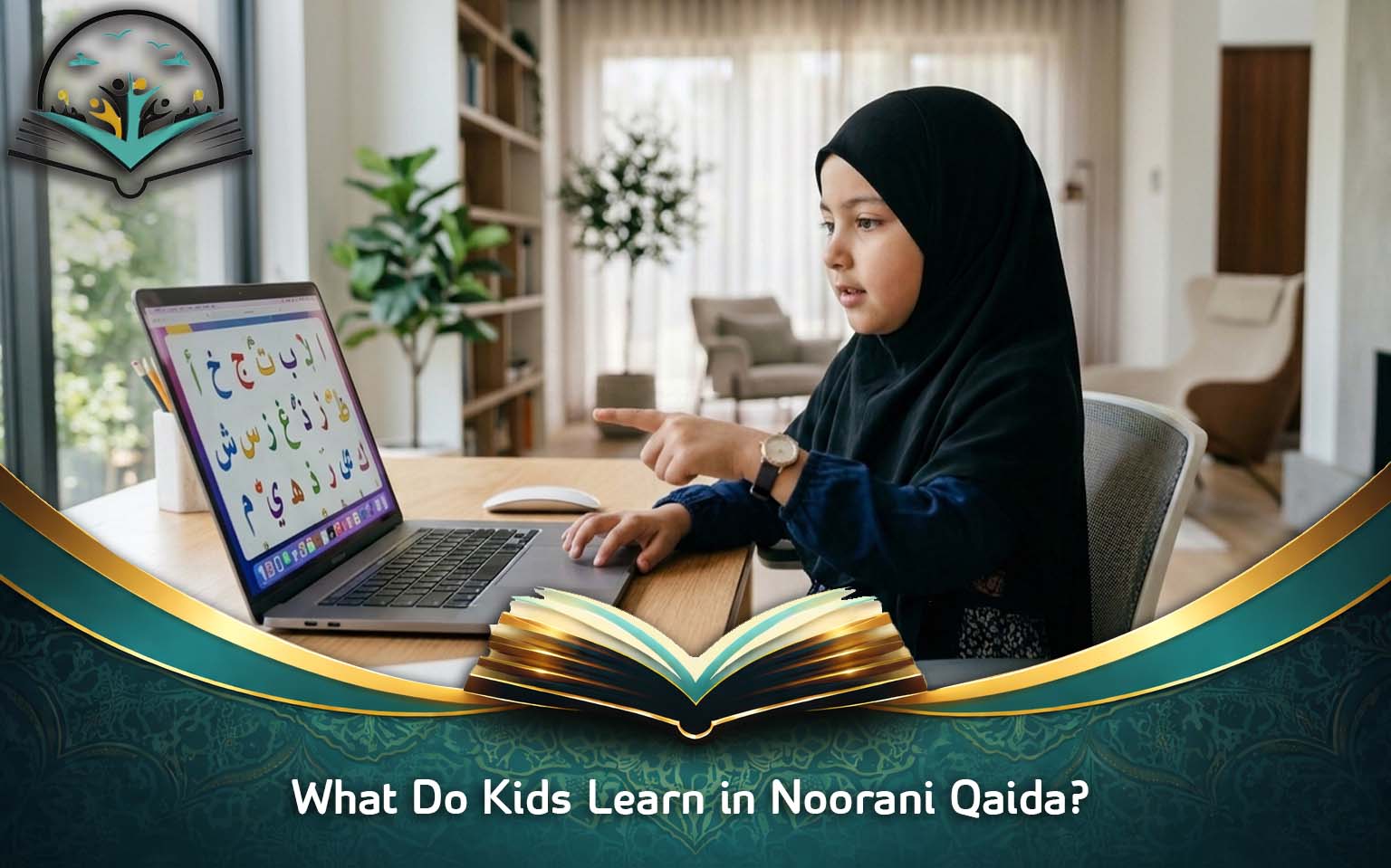
At Rattel Wartaqi Quran Academy, children learn Noorani Qaida through a structured curriculum that develops Quran reading skills step by step. The first stage focuses on recognizing individual letters, learning their names and sounds, and identifying the dots and shapes that distinguish similar letters.
Lessons include listening, reading aloud, pointing to letters, and short review activities that strengthen recognition and prepare children for fluent Quran reading. Learning the alphabet alone is not enough, because successful Quran reading depends on accurately recognizing every sound rather than simply memorizing letters.
Letter Sounds and Pronunciation
The learner practices how each letter is pronounced. The teacher may demonstrate the mouth, tongue, lips, or throat position without giving the child too much technical detail. Clear imitation is often more useful for young learners than lengthy explanations.
In Noorani Qaida for kids, pronunciation practice should remain patient. Some sounds improve quickly, while others need repeated attention.
Harakat and Short Vowels
Fatha, damma, and kasra change the sound attached to a letter. Children learn that بَ is read “ba,” بِ is “bi,” and بُ is “bu.” They then practice the same pattern with many letters until the response becomes quick and natural.
Weak vowel recognition causes many mistakes. Short, focused drills improve accuracy without exhausting the child.
Joining Arabic Letters
Arabic letters change shape when connected. Children learn to follow the word from right to left and identify each part without losing the original sound. They also notice that some letters connect only from one side.
Blending should begin with short combinations. Accuracy matters more than finishing a full line quickly.
Basic Quran Reading Rules
After mastering the short vowels, children continue learning long vowels, tanween, sukoon, shaddah, and common letter combinations. They gradually understand the difference between short and extended sounds while applying every rule during guided reading exercises.
At Rattel Wartaqi Quran Academy, students who complete Noorani Qaida can continue with madani qaida to strengthen reading fluency, improve pronunciation, and prepare for more advanced Quran recitation with greater confidence.
Benefits of Noorani Qaida for Kids
When a learner can recognize letters, vowels, and common signs, Quran reading becomes less intimidating. The child approaches new words with a method: identify, sound out, blend, and read. This is much more reliable than guessing from memory.
Greater Reading Confidence
Confidence grows when children experience frequent small successes. Reading one line accurately may seem minor to an adult, but it can be a major achievement for a beginner. A calm learning environment helps the child associate Quran study with progress rather than fear.
Fewer Common Pronunciation Mistakes
Many mistakes come from confusing similar letters, ignoring vowel marks, shortening long vowels, or failing to pronounce doubled letters. Structured practice brings attention to these areas before the child begins reading longer passages.
More Independent Practice
Once the child understands the system, revision becomes easier. He or she can look at a familiar lesson and attempt it without waiting for every sound to be given. This independence is one of the most practical outcomes of Noorani Qaida for kids.
Independence still requires correction and encouragement; it simply means the child begins applying known patterns without constant prompting.
Noorani Qaida for Beginners: How Does It Work?
The method begins with the smallest units of reading and adds one new element at a time. A typical path moves from isolated letters to vowelled letters, joined forms, longer sounds, and more complex combinations. This sequence reduces cognitive overload.
A child should move forward only after reading the pattern with reasonable accuracy, not merely after completing a page.
Practice and Revision
Daily practice is usually more effective than one long weekly session. A short review can include reading aloud, identifying sounds, or listening and pointing. With Noorani Qaida for kids, small variations keep revision fresh while reinforcing the same skill.
Teacher Guidance and Correction
A capable teacher listens closely and corrects the most important error without interrupting every second. Constant interruption can make a child hesitant. On the other hand, ignoring errors allows them to become fixed habits.
Good correction is specific: the teacher repeats the sound, demonstrates it, and lets the child try again without shame.
Online Noorani Qaida Classes for Kids
Rattel Wartaqi Quran Academy offers interactive Noorani Qaida classes for kids through live one-on-one sessions with qualified Quran teachers.
Every lesson includes pronunciation practice, guided reading, and immediate feedback using live audio, video, and digital learning resources. This personalized approach allows children to build confidence, improve reading accuracy, and develop strong Quran reading skills from the comfort of their homes.
Benefits of Learning Online
Online quran learning for kids provides families with flexible scheduling while giving children access to experienced Quran teachers regardless of their location.
Live online lessons encourage active participation, allowing students to read aloud, ask questions, receive instant correction, and maintain consistent progress through personalized instruction and regular practice.
Choosing the Right Teacher
Choosing the right teacher plays a major role in a child's success. A qualified online quran tutor should possess excellent Tajweed knowledge, clear pronunciation, patience, and experience working with children of different ages and learning abilities.
At Rattel Wartaqi Quran Academy, every teacher adapts lessons to each student's pace, providing encouragement, constructive feedback, and individualized guidance that helps children develop confidence while mastering accurate Quran reading.
Noorani Qaida for Different Age Groups
Preschool learners usually need very short lessons, visual repetition, movement, and frequent encouragement. The goal is not to complete the material quickly. It is to build familiarity with Arabic letters and sounds while keeping the learning experience positive.
At this age, Noorani Qaida for kids may use tracing, matching, pointing, and short sound games. Five focused minutes can be more useful than a pressured twenty-minute session.
Children at this stage may also need the same letter presented in several ways. They might see it on the page, trace it with a finger, hear its sound, and search for it among other letters. This variety strengthens recognition without overwhelming them.
School-Age Kids
Older children can usually concentrate for longer and understand simple explanations about how letters connect and how vowel signs work. They may respond well to small goals, progress records, and independent revision between lessons.
School-age children should not be compared with siblings or classmates. One child may recognize letters quickly but struggle with pronunciation, while another may pronounce sounds accurately but need more time to blend them. The best pace is the one that produces real understanding.
Children Starting From Zero
Some children begin without any Arabic background. They may require additional listening practice and more time with unfamiliar sounds. This is normal. Starting from zero does not prevent success, but it requires a clear routine and patient expectations.
Parents should not assume that slow progress during the first lessons means the child is unable to learn. The early stage often involves developing several new skills at once, including right-to-left tracking, letter recognition, listening, and mouth coordination.
Light review helps, but constant testing can create resistance. Learning should remain serious and emotionally safe.
How Long Does It Take to Learn Noorani Qaida?
There is no single completion time that fits every child. Age, language background, lesson frequency, attention span, teacher guidance, and home practice all influence progress. Some learners move through the material steadily, while others pause at particular stages to strengthen pronunciation or blending.
Finishing the book is not the same as mastering the skills. A child may reach the final lesson while still needing support when reading unfamiliar Quranic words. Readiness appears in accurate letter recognition, stable vowel reading, correct blending, and the ability to apply rules to new examples.
Parents should therefore focus less on comparing completion dates and more on the quality of the child’s reading. A learner who spends additional time mastering difficult sounds may ultimately progress more successfully than a learner who moves through the pages without secure pronunciation.
Consistent practice makes the greatest difference. With Noorani Qaida for kids, a short daily review often produces better results than irregular long sessions. The aim should be durable skill, not a rushed completion date.
Tips for Parents to Help Kids Learn Noorani Qaida
Choose a predictable time when the child is reasonably rested. A brief session after breakfast, after a break, or before an enjoyable evening activity may work better than practice when the child is hungry or exhausted.
Consistency helps the brain expect and prepare for learning. It also reduces arguments because the lesson becomes a familiar part of the day rather than an unexpected demand.
The routine does not have to be long. A few minutes of focused revision can maintain skills between formal lessons. On difficult days, reviewing one familiar line may be better than forcing the child to complete a large amount of new material.
Encourage Practice Without Pressure
Children notice the emotional tone of correction. A parent who becomes impatient may make the child afraid to read aloud or unwilling to attempt unfamiliar words. It is better to say, “Let’s listen to that sound again,” than to show frustration.
Parents should support rather than replace the teacher. They can listen, praise effort, prepare the lesson material, and save uncertain pronunciation questions for the next lesson.
Pressure may sometimes produce quick repetition, but it rarely produces confident learning. Children need enough time to look at the signs, remember the sound, and correct themselves.
Celebrate Small Improvements
Progress may be a difficult letter recognized, a vowel remembered, a line read without prompting, or a mistake corrected independently. Naming these gains helps the child understand that effort produces improvement.
With Noorani Qaida for kids, encouragement should focus on specific actions. Saying, “You watched the vowel carefully today,” is more useful than offering only a general “good job.” Specific praise teaches the child which learning habits should be repeated.
Parents can also remind children of earlier difficulties they have already overcome. This helps them see that a sound that feels challenging today may become easier through practice.
Keep Lessons Child-Friendly
Changing between reading, pointing, listening, repeating, and matching can refresh attention without turning the lesson into entertainment only. The activity should serve the reading goal, not distract from it.
Children may also benefit from brief movement breaks. After reading a few lines, a young learner can stand, stretch, and return to the page with renewed concentration.
Common Challenges When Learning Noorani Qaida
Some sounds may feel physically unfamiliar. The child may understand the correction but still be unable to produce the sound consistently. This is usually improved through repeated listening, slow imitation, and short targeted practice.
Adults should distinguish skill difficulty from lack of focus. The first needs patient guidance; the second may require a shorter task, a different activity, or a brief break.
It can also help to practice the difficult sound by itself before placing it inside a syllable or word. Once the child can produce the isolated sound more accurately, it can be combined gradually with vowels.
Children should not be mocked for replacing one sound with another. Embarrassment can make them speak more quietly or avoid participation, which reduces the practice they need.
Losing Focus During Lessons
Young children may look away, play with nearby objects, rush through the page, or begin guessing. This does not always mean they are unwilling to learn. The lesson may be too long, too repetitive, too difficult, or scheduled at the wrong time.
Small goals help. Reading three careful lines, pausing, and then continuing is often better than demanding a full page at once.
Teachers can also regain attention by asking the child to point to a particular letter, find a vowel sign, or repeat a sound after listening. These simple changes require active participation.
Forgetting Previous Lessons
Forgetting is a normal part of learning. A forgotten rule usually needs retrieval and repetition, not criticism. Children may understand a pattern during one lesson and struggle to recall it several days later.
A useful routine begins with a few minutes of older material before introducing something new. Noorani Qaida for kids works best when earlier skills remain active because later lessons depend on them.
Review should include examples from different pages. If the child recognizes a pattern only in one memorized location, the skill may not yet be flexible enough for Quran reading.
Rushing and Guessing
Some children try to finish quickly and guess a word from its first letter or general shape. They may appear fluent, but closer listening reveals frequent vowel and pronunciation mistakes.
The solution is to reduce the pace and ask the child to point to each part while reading. This encourages attention to every letter and sign.
Accuracy should come before speed. Fluency develops naturally after the reading process becomes secure. Asking a beginner to read quickly can strengthen guessing rather than genuine recognition.
Noorani Qaida vs Direct Quran Reading: Which Is Better?
Direct Quran reading may work for a learner who already knows Arabic letters, vowel signs, and basic blending. However, a complete beginner can become overwhelmed by dense script and several reading rules appearing together.
Starting with Noorani Qaida for kids allows the learner to practice reading patterns in a controlled form. The child can concentrate on one skill without also managing verse length, stopping places, unfamiliar vocabulary, and several pronunciation features at once.
The two approaches are not opponents. Noorani Qaida prepares the child for Quran reading rather than replacing it. Short Quranic words or brief verses can be introduced gradually once the learner begins decoding patterns confidently.
This gradual transition also helps the teacher discover whether the child can apply a familiar rule outside the lesson book. Reading a rule correctly in a repeated exercise is useful, but applying it to a new Quranic word demonstrates deeper understanding.
The better choice depends on the child’s starting point. A learner who cannot identify letters needs foundation work. A learner who already reads Arabic but lacks Quranic accuracy may need targeted revision rather than beginning from the first page.
The decision should therefore be based on a simple reading assessment, not only on the child’s age. Two children of the same age may require very different starting points.
Creating a Positive Quran Learning Experience
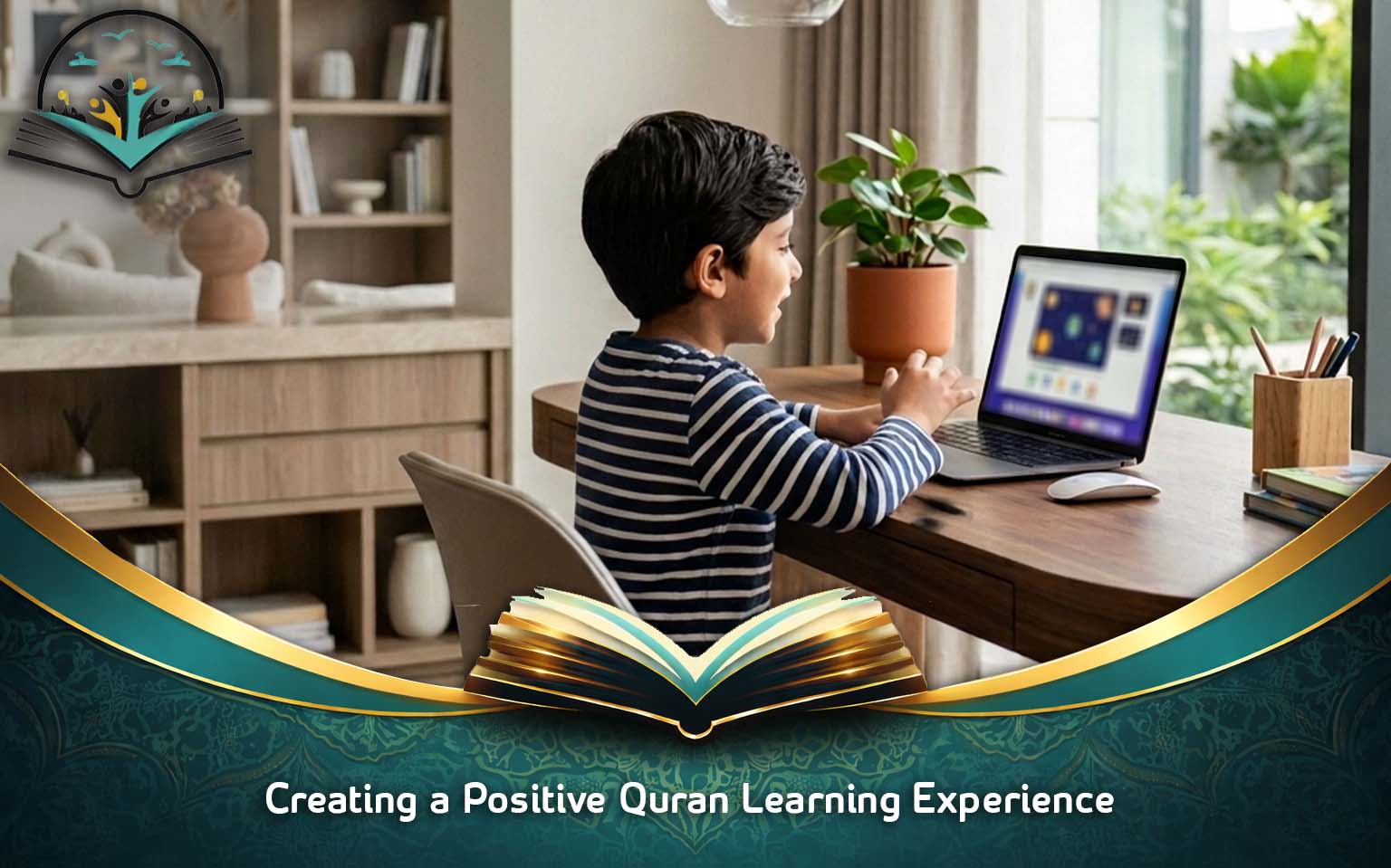
The emotional environment matters. Children remember whether mistakes felt safe, whether adults listened to them, and whether their effort was noticed. Harsh correction may produce obedience in the moment but lead to avoidance later.
A positive approach does not mean accepting careless reading. It means combining clear expectations with patience. The child can be asked to repeat, slow down, listen carefully, and practice again without being shamed.
Adults should also avoid comparing the child with another learner. Comparisons can make progress feel unimportant and may create unnecessary competition around Quran learning.
Quran lessons should never be used as punishment or threatened as a consequence of misbehavior. A consistent and respectful routine creates a healthier emotional connection with learning.
It is also helpful for adults to model respect for the learning process. When children see parents listening attentively, practicing their own reading, or speaking positively about gradual improvement, they understand that learning continues throughout life.
When taught with care, Noorani Qaida for kids can become the beginning of a lifelong relationship with Quran reading. The child learns not only sounds and symbols, but also the habits of attention, patience, discipline, and respectful recitation.
Frequently Asked Questions
Here are answers to some of the most common questions parents ask about Noorani Qaida for Kids and how it helps children start their Quran learning journey with strong reading foundations.
What is Noorani Qaida for kids?
It is a structured beginner method that teaches children Arabic letters, sounds, vowel signs, connected forms, and basic Quran reading rules. It helps learners build the skills needed to read Quranic text accurately rather than depending only on memorization.
At what age should children start Noorani Qaida?
Many children can begin simple letter and sound activities during the preschool years, but readiness matters more than a fixed age. A child should be able to listen briefly, imitate sounds, recognize visual differences, and follow simple instructions.
Very young children may begin with short and playful recognition activities, while older beginners can follow more structured reading lessons.
Is Noorani Qaida suitable for beginners?
Yes. Noorani Qaida for kids is particularly suitable for complete beginners because it moves from simple letter recognition to more complex reading patterns. It can also help children who started Quran reading directly but developed weak foundations or repeated pronunciation errors.
In conclusion, Noorani Qaida for kids provides a strong and practical foundation for learning to read the Quran with confidence and accuracy. By mastering Arabic letters, vowel signs, pronunciation, and basic reading rules step by step, children develop the skills needed for fluent Quran recitation.
At Rattel Wartaqi Quran Academy, experienced teachers combine patient instruction with personalized guidance to help every child progress at a comfortable pace. Regular practice, gentle correction, and parental encouragement create a positive learning environment that supports lasting success.
Rather than rushing through lessons, the focus remains on building real understanding, preventing common reading mistakes, and inspiring a lifelong love for reading the Quran correctly, confidently, and with respect for Allah's words.
Ready to start? Explore our Noorani Qaida Course to build a strong foundation in reading the Quran.
Add New Comment