 العربية
 English


Online Quran Classes for Adults offer a practical way to study the Quran, improve recitation, and develop a stronger connection with its teachings while managing everyday responsibilities.
Many adults want to improve their Quran reading but struggle to find enough time for regular study. Work commitments, family responsibilities, and different starting levels can make traditional learning arrangements difficult to maintain. Fortunately, online learning allows adults to study from home and organize their lessons around their personal circumstances.
With the right learning plan, adults can work on Arabic pronunciation, understand the principles of Tajweed, memorize selected surahs, and explore Quranic meanings through Tafsir. The important step is choosing a learning approach that matches individual goals rather than trying to master everything at once.
Rattel W Artaqi Quran Academy is the academy to focus on when exploring a suitable learning path. Before enrolling, learners should understand their options, identify the skills they want to develop, and consider the teaching approach that will help them study consistently.
This guide explains what adults should look for in an online Quran program, how beginners can get started, and which factors can make the learning experience more comfortable and productive.
What Makes Online Quran Classes for Adults a Practical Choice?

Adults often approach Quran study with different needs from younger learners. Some already read Arabic but want to improve their recitation, while others need to begin with the Arabic alphabet and basic reading skills. Therefore, a suitable program should recognize these differences instead of following the same pace for everyone.
Online learning can make Quran education more accessible because students do not need to travel to a physical classroom. They can also choose a learning environment that suits their concentration and personal routine. Several advantages make this approach worth considering:
- Convenience: Study from home without spending time traveling to a learning center.
- Flexible planning: Arrange lessons around work, family responsibilities, and other commitments when the program permits.
- Individual attention: Choose private instruction when direct feedback is important.
- Different learning goals: Focus on reading, pronunciation, Tajweed, memorization, or understanding Quranic meanings.
- Consistent practice: Build a regular study routine that can be maintained over time.
However, convenience alone does not guarantee progress. Learners still need regular attendance, active participation, and independent practice between sessions.
When considering Rattel W Artaqi Quran Academy, adults should clarify which learning options are available and whether the teaching approach matches their current abilities. Asking these questions before enrollment can help prevent misunderstandings and make the decision more informed.
Improve Your Quran Recitation with Expert Guidance
Are you ready to overcome common Quran recitation mistakes and recite the Holy Quran with greater accuracy and confidence? At Rattel W Artaqi Quran Academy, you can work on your pronunciation, strengthen your understanding of Tajweed rules, and improve your reading fluency through structured learning and guided practice.
Whether you are a beginner or an experienced reader, focusing on your individual challenges can help you build better recitation habits step by step. Join Rattel W Artaqi Quran Academy today and take the next step toward more accurate Quran recitation with guidance tailored to your learning needs.
Start your journey toward clearer pronunciation, consistent Tajweed application, and a stronger connection with the words of the Holy Quran.

Key Features to Look for in Online Quran Classes for Adults
Not every online Quran program follows the same teaching method. Some emphasize foundational reading, whereas others focus on advanced recitation, memorization, or Islamic studies. For this reason, adults should compare the educational features of a program before deciding whether it meets their needs.
Flexible Scheduling for Busy Adults
A realistic schedule is essential for anyone balancing Quran study with a full working day or family obligations. Even a well-designed course may become difficult to maintain if its lesson times regularly conflict with other responsibilities.
Before joining, consider when you can concentrate most effectively. Some learners prefer studying early in the morning, while others find evenings or weekends more convenient. A practical schedule should account for:
- Your regular working hours and commuting time.
- Family responsibilities and household commitments.
- The amount of time available for independent practice.
- The frequency of lessons you can attend consistently.
- Opportunities to reschedule sessions, if the provider allows it.
Online Quran Classes for Adults are most useful when the timetable supports consistency rather than creating additional pressure. It is usually better to follow a manageable routine than to plan more sessions than you can realistically attend.
When discussing your needs with Rattel W Artaqi Quran Academy, ask about available time slots, lesson duration, and scheduling policies before making a commitment.
Teachers Who Understand Adult Learners
Teaching adults requires patience, clear explanations, and respect for different learning backgrounds. Some students may remember Quran reading from childhood but need to rebuild their confidence. Others may be learning Arabic letters for the first time.
A suitable teacher should identify the learner's current level and explain mistakes without making the student feel uncomfortable. In addition, the teacher should be able to adjust explanations when a particular sound, rule, or reading exercise proves difficult. When evaluating an instructor, consider the following points:
- Knowledge of Quran recitation and Tajweed.
- Ability to explain pronunciation and reading rules clearly.
- Experience teaching students at different levels.
- Constructive feedback during recitation practice.
- Patience when students need repeated explanations.
- A teaching style that encourages questions and discussion.
It is also reasonable to ask about a teacher's qualifications and relevant teaching experience. These details help you evaluate whether the instruction meets your expectations.
For learners considering Rattel W Artaqi Quran Academy, confirming the available teachers' qualifications and teaching methods is a useful step before selecting a course.
A Structured Curriculum for Different Levels
A structured curriculum gives students a clear direction. Instead of moving randomly between topics, learners follow a sequence in which foundational skills support more advanced work.
For example, a beginner may need to recognize Arabic letters, connect them correctly, and practice reading short words before concentrating on detailed Tajweed rules. Meanwhile, an experienced reader may benefit more from correcting articulation, improving fluency, or studying selected recitation rules. A curriculum may include these areas, depending on the student's level and chosen course:
- Arabic letters and their sounds.
- Basic reading and word recognition.
- Correct pronunciation of Quranic words.
- Tajweed principles and practical application.
- Fluent reading from the Mushaf.
- Quran memorization and revision.
- Introductory Tafsir and Quranic understanding.
The most suitable sequence depends on an initial assessment of the learner's skills. Consequently, students should ask how lessons are organized and how their progress will be evaluated.
A clear curriculum also helps learners understand what they are studying, why each topic matters, and which skill they should practice next.
Private Lessons and Individual Attention
Some adults prefer one-to-one instruction because it provides more opportunities to recite, ask questions, and receive direct corrections. This format can be particularly helpful when a student has specific pronunciation difficulties or wants to follow a personal learning plan.
Private lessons can allow the teacher to adjust the pace according to the student's needs. For example, a learner who struggles with certain Arabic sounds may spend more time practicing those sounds before moving to the next exercise.
Nevertheless, private instruction is not the only useful option. Group classes may provide opportunities to listen to other students, share learning experiences, and participate in a supportive learning environment.
When comparing formats, consider your preferred learning style, the amount of individual feedback you need, and the available lesson schedule. Ask Rattel W Artaqi Quran Academy which formats it currently offers rather than assuming that every option is available.
Interactive Tools That Support Learning
Online teaching can use several digital tools to make lessons easier to follow. Screen sharing, digital copies of the Mushaf, audio playback, and visual explanations may help students review material and understand corrections.
However, technology should support teaching rather than replace it. A useful tool is one that helps learners hear a sound accurately, observe a correction, or repeat an exercise more effectively. Depending on the platform, helpful learning resources may include:
- Shared Quran pages for following the same passage.
- Audio examples for listening and repeating.
- Digital writing tools for explaining selected rules.
- Practice materials for revision between lessons.
- Notes that help students remember corrections.
Students should also check that their internet connection and devices support clear audio. Since pronunciation is central to Quran recitation, poor sound quality can make lessons less effective.
Before starting, ask which resources are available and how they will be used during lessons. This will help you determine whether the online format suits your learning needs.
How to Choose the Right Quran Teacher for Your Level?

The teacher's approach can influence how comfortable and productive the learning experience becomes. Therefore, choosing an instructor should involve more than looking at a course title or selecting the first available class.
Start by identifying what you can already do. Can you read Arabic words confidently? Do you recognize common Tajweed rules? Can you recite a short surah without frequent pauses? Your answers can help you explain your needs to a prospective teacher.
During an introductory discussion, pay attention to whether the teacher listens carefully and gives clear answers. A useful instructor should explain the learning process, discuss realistic goals, and identify the skills that need attention.
It can also help to ask how corrections are delivered. Some learners prefer detailed explanations, while others benefit from hearing a correct example and repeating it several times. A good teaching approach should make feedback understandable and actionable.
When reviewing Rattel W Artaqi Quran Academy as a potential option, ask about the teacher assigned to your course, the method used to assess your level, and the way individual learning goals are addressed.
What Qualifications Should You Check?
Quran teachers may have different educational backgrounds and areas of specialization. Depending on your goals, you may want an instructor with experience in foundational reading, advanced Tajweed, memorization, or Quranic interpretation.
Before enrolling, consider asking:
- What qualifications or Quranic studies training does the teacher have?
- Does the teacher have experience with adult beginners?
- Can the teacher explain the rules in a language you understand?
- How are recitation errors identified and corrected?
- Is there a clear process for reviewing your progress?
These questions do not guarantee that every instructor will be suitable, but they help you make a more informed choice.
Focus on Tajweed and Accurate Pronunciation
Tajweed helps learners understand and apply the rules governing Quranic recitation. However, reading about a rule is not the same as applying it correctly while reciting.
A teacher may need to work with you on the articulation points of Arabic letters, their characteristics, elongation rules, and appropriate stopping and starting practices. The specific areas covered depend on your current reading ability.
For example, two Arabic letters may sound similar to a beginner. A teacher can demonstrate the difference, listen to the learner repeat each sound, and provide feedback until the distinction becomes clearer.
Online Quran Classes for Adults should therefore include opportunities for actual recitation rather than relying exclusively on explanations. Listening, repeating, receiving corrections, and practicing again are essential parts of developing more accurate reading habits.
Build a Sustainable Weekly Routine
Begin by identifying the periods when you can study without frequent interruptions. Then decide how much time you can devote to lessons and independent revision.
Following a consistent schedule can help you maintain steady progress, especially when balancing work and family responsibilities. Parents who want to support younger learners can also review How to Prepare Your Child for Online Quran Classes for practical preparation ideas. A practical routine might include:
- Attending scheduled lessons at consistent times.
- Reviewing the previous lesson before beginning a new topic.
- Practicing difficult sounds or rules between sessions.
- Listening to appropriate recitation examples.
- Reviewing teacher feedback at the end of each week.
The exact schedule should reflect your circumstances. If your work commitments change frequently, ask about the provider's scheduling and cancellation policies before enrolling. You may also compare Online Quran Classes vs. In-Person Classes to understand how each learning format fits your routine and preferences.
Set Small, Measurable Learning Goals
Large goals can feel overwhelming when they are not divided into smaller tasks. Instead of aiming to master every Tajweed rule immediately, choose one skill that you can practice and review.
For example, your first goal might be to improve the pronunciation of a particular group of letters. Later, you could work on smoother reading, fewer pauses, or more consistent application of a rule you have already studied. As your understanding develops, learning about What is Tafseer and Why It Matters can help you explore the meanings and context of Quranic passages alongside recitation practice.
With Rattel W Artaqi Quran Academy, discuss how your goals might fit into the available course structure and whether progress reviews can help you stay on track.
Online Quran Classes for Adults should support steady learning without encouraging students to rush through topics before they understand them. Progress may vary according to prior experience, practice time, and the complexity of the material. Learners who eventually want to demonstrate their recitation proficiency may also explore What is Ijazah in Quran Recitation to understand this certification and its requirements.
How to Measure Progress in Quran Learning?
Progress should be evaluated through observable improvements rather than the number of lessons completed alone. A learner may attend regularly but still need additional practice with a particular sound or rule. Conversely, small improvements in pronunciation can represent meaningful development.
A teacher can help identify these changes by listening to the learner read familiar passages and comparing performance over time.
Signs That Your Skills Are Developing
Depending on your starting level, progress may include improved pronunciation, accurate recitation, better Tajweed application, increased fluency, and greater confidence when reading the Quran independently.
- Recognizing Arabic letters more confidently.
- Reading words with fewer interruptions.
- Pronouncing difficult letters more accurately.
- Applying familiar Tajweed rules more consistently.
- Identifying and correcting previously repeated mistakes.
- Reading familiar passages with improved fluency.
- Memorizing selected passages with more reliable recall.
Not every learner will develop these skills at the same pace. Some areas may improve quickly, while others require repeated demonstrations and sustained practice.
Use Feedback to Guide Your Next Steps
After a lesson, identify the most important correction and practice it before moving on to additional material. Trying to correct too many mistakes at once can make practice confusing.
You can also keep a simple record of the topics studied, the corrections received, and the areas that still require attention. This makes it easier to discuss progress with your teacher and establish realistic goals for the next lesson.
When discussing a learning plan with Rattel W Artaqi Quran Academy, ask how feedback and progress reviews are handled. A clear review process can help you understand what you have learned and which skills need further development.
Online Quran Classes for Adults Who Are Beginners
Starting Quran study as an adult can feel challenging, especially for people who have little experience reading Arabic. However, beginners do not need to master everything at once. A step-by-step approach can make the process more manageable.
The first stage may involve learning to recognize Arabic letters and pronounce their sounds. Students then practice connecting letters, reading simple combinations, and gradually working toward Quranic words and short passages. For additional guidance, reviewing Common Mistakes in Quran Recitation can help learners recognize errors and understand which areas may need further practice.
As these foundations improve, lessons can introduce more detailed pronunciation guidance and relevant Tajweed principles. The pace should depend on the learner's understanding rather than an arbitrary deadline.
What Do Beginner Courses Usually Cover?

A beginner curriculum may cover several stages, including basic recognition, guided practice, skill development, regular revision, and gradual progression toward greater independence.
- Arabic letter recognition: Learn the shapes and sounds of individual letters.
- Letter combinations: Understand how letters connect and how vowel marks affect pronunciation.
- Basic reading: Practice reading words and short passages with guidance.
- Pronunciation development: Identify sounds that need additional practice.
- Introductory Tajweed: Learn relevant rules as reading ability develops.
- Guided recitation: Apply previously learned skills to Quranic passages.
Some programs may also offer introductory memorization or Islamic studies, but students should confirm which subjects are included in their chosen course.
Is It Too Late to Start Learning?
Adults sometimes delay Quran study because they believe they should already know how to read fluently. This expectation can prevent them from taking the first step.
In reality, learners can begin from their current level and develop their skills through appropriate instruction and regular practice. Previous knowledge may influence the starting point, but it does not eliminate the need to practice.
The key is to choose a program that treats foundational learning as a legitimate starting point. When contacting Rattel W Artaqi Quran Academy, explain whether you can already read Arabic or need help with the alphabet so that the appropriate learning path can be discussed.
One-to-One Online Quran Lessons for Personalized Progress
Individual lessons may be useful for adults who want focused feedback and a learning plan based on their personal goals. Unlike a group session, a private lesson can devote more time to the student's own recitation and specific difficulties.
For example, a learner returning to Quran study after many years may need to refresh basic reading skills before studying more advanced rules. Another student may already read fluently but want to improve particular aspects of Tajweed.
A personalized lesson can address these different needs without assuming that every learner requires the same exercises.
How Can Private Lessons Help?
Individual instruction allows teachers to address specific learning needs, provide immediate feedback, correct mistakes, and adjust lesson pace according to each learner’s progress.
- More opportunities to recite during the lesson.
- Immediate feedback on specific mistakes.
- Additional time for difficult sounds or rules.
- A pace that reflects the learner's understanding.
- Greater flexibility in choosing learning priorities, where permitted.
Even so, private lessons require active participation. Students should recite aloud, ask questions when an explanation is unclear, and repeat exercises between sessions.
Prepare for Each Lesson
A few simple habits can make individual instruction more productive:
- Keep the required Mushaf or learning materials ready.
- Review the previous lesson's corrections.
- Write down questions that arise during practice.
- Choose a quiet place with clear audio.
- Follow the teacher's recommendations for revision.
When exploring Rattel W Artaqi Quran Academy, ask whether private lessons are available and how the teacher would structure a course around your specific goals.
Affordability and Planning Your Quran Learning Budget
The overall cost of online Quran education can vary according to the provider, lesson format, frequency, duration, and teacher availability. Therefore, adults should compare the complete learning arrangement rather than focusing only on a single advertised fee.
Online study may reduce expenses associated with transportation and commuting. Nevertheless, learners should still consider tuition, internet access, equipment, and any additional materials that may be required.
What Should You Compare Before Enrolling?
When reviewing a course, consider the following factors: teacher qualifications, lesson flexibility, curriculum structure, progress tracking, feedback quality, and learning goals.
- Lesson format: Are sessions private or shared with other students?
- Frequency: How many lessons are included in the chosen plan?
- Duration: How long does each lesson last?
- Included materials: Are practice resources part of the course?
- Payment arrangements: What payment schedules and methods are available?
- Cancellation policy: What happens if you cannot attend a scheduled lesson?
- Additional charges: Are there any costs beyond the advertised course fee?
These details make it easier to compare programs fairly. A lower initial cost may not represent the best value if the lesson format or schedule does not suit your needs.
Before enrolling with Rattel W Artaqi Quran Academy, request current information about its available courses, fees, and payment policies. Do not assume that trial sessions, discounts, family packages, or particular payment arrangements are offered unless the academy confirms them.
Interactive Online Quran Classes for Different Learning Preferences
Adults do not all learn in the same way. Some understand a rule more easily after hearing an explanation, while others benefit from watching a demonstration and repeating an example. Online lessons can combine these methods to make learning more accessible.
Audio practice is particularly useful for Quran recitation because students need to hear sounds clearly and reproduce them. Visual materials may also help when a teacher explains a reading pattern or points to a specific word in the Mushaf.
Useful Digital Learning Resources
Depending on the course and teaching platform, learners may benefit from interactive lessons, personalized feedback, recorded sessions, progress tracking, digital learning materials, flexible scheduling, and regular assessments to support steady improvement.
- Shared Quran pages for following the lesson.
- Audio examples for listening and repetition.
- Visual explanations of selected Tajweed rules.
- Written notes identifying areas for revision.
- Practice exercises for use between sessions.
These resources should have a clear purpose. For example, an audio recording may help a student review a difficult pronunciation, while written notes can remind the learner which rule to apply during recitation.
Should Adults Choose Private or Group Classes?
The best format depends on individual preferences and the type of feedback needed.
| Learning preference | Format to consider |
|---|---|
| Frequent individual corrections | Private lessons |
| Learning alongside other students | Group lessons |
| Focused work on specific reading difficulties | Individual instruction may be useful |
| Opportunities to hear different learners | Group learning may be suitable |
Neither format is automatically better for every adult. Students should compare the actual teaching arrangements, class size, opportunities to recite, and available feedback before making a decision.
Learning Quranic Meanings Alongside Recitation
For some adults, Quran study extends beyond reading accuracy. They may also want to understand the meanings of selected passages and learn how those meanings are explained through Tafsir.
Recitation and interpretation are related but distinct learning goals. Correct pronunciation requires attention to Arabic sounds and recitation rules, whereas studying Tafsir involves exploring the meanings and explanations of Quranic passages through appropriate sources.
Learners should therefore clarify whether their chosen program focuses on recitation alone or includes Quranic understanding and related Islamic studies.
Choose a Suitable Learning Sequence
If your main goal is to improve reading, begin by strengthening the relevant reading and pronunciation skills. Once you can follow the material comfortably, you may choose to add lessons focused on meaning and interpretation.
If you already read confidently, you might prefer to discuss whether introductory Tafsir or another area of Islamic study can be incorporated into your learning plan.
When evaluating Rattel W Artaqi Quran Academy, ask which subjects are available and whether they can be studied separately or alongside recitation. This helps ensure that the course matches your expectations without assuming that every program includes the same subjects.
Common Challenges Adults Face When Studying the Quran
Returning to Quran study can bring practical and educational challenges. Recognizing them early makes it easier to respond with realistic solutions instead of abandoning the learning process.
Limited Time for Practice
A busy schedule can make regular study difficult. To address this problem, choose manageable practice periods and attach them to an existing routine, such as a quiet period before work or after completing daily responsibilities.
Consistency matters more than creating an ambitious timetable that becomes difficult to maintain.
Feeling Embarrassed About Making Mistakes
Some adults hesitate to recite aloud because they worry about pronunciation errors. However, feedback is an important part of learning. Mistakes can help identify which sounds or rules need more attention.
Choose an instructor who explains corrections respectfully and gives you enough opportunity to repeat exercises.
Difficulty Remembering Tajweed Rules
Learning a rule theoretically does not always make it easy to apply during recitation. Instead of memorizing several rules at once, focus on one relevant principle and practice identifying it in suitable passages.
Ask your teacher for examples and specific exercises that address the difficulty.
Losing Motivation During Slow Progress
Improvement may not always be immediately noticeable. Keeping track of small achievements can help you recognize development over time.
For instance, you might compare your current reading of a familiar passage with an earlier attempt or note that a previously difficult sound has become easier to pronounce.
Online Quran Classes for Adults become more manageable when expectations are realistic and practice is treated as a regular part of learning rather than a test of immediate perfection.
How to Get Started With Rattel W Artaqi Quran Academy?
Choosing a suitable course begins with understanding your needs. Before making an enrollment decision, prepare a short list of questions about your level, goals, schedule, and preferred teaching format.
First, decide whether you want to begin with Arabic reading, improve Quran recitation, study Tajweed, memorize selected passages, or explore Quranic meanings. Next, explain your current abilities honestly so that the appropriate starting point can be identified.
It is also important to clarify the practical details of the course. Ask about available teachers, lesson times, session duration, learning materials, fees, and cancellation arrangements.
What to Check Before Enrolling in an Online Quran Course?
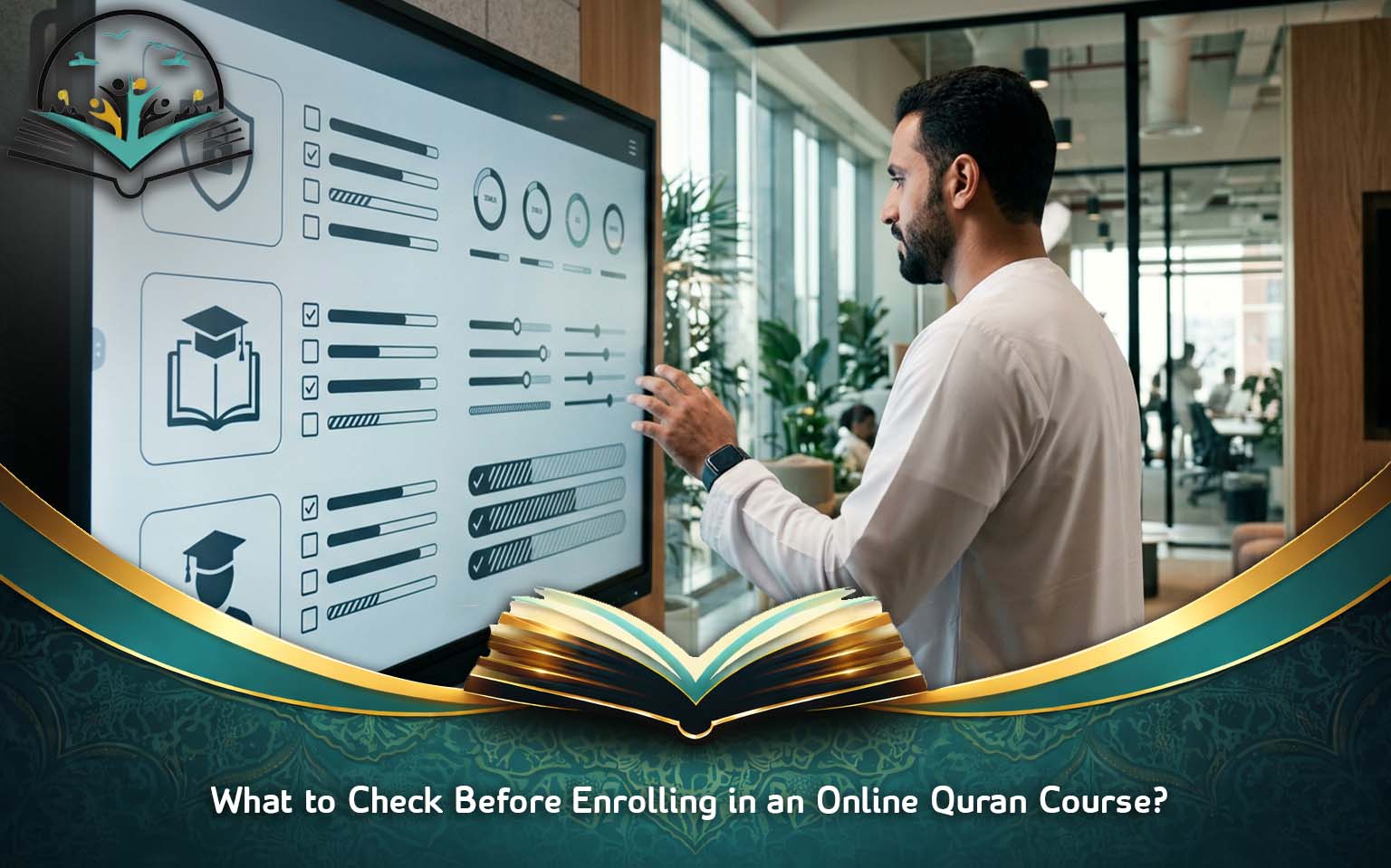
Use this checklist to organize your decision and choose the right Quran learning program. Consider your goals, current reading level, preferred lesson format, teacher qualifications, schedule, course content, and budget. Confirm these details before enrolling to ensure the program meets your needs.
- Identify your main Quran learning goal.
- Describe your current reading and recitation level.
- Ask about the course curriculum and teaching approach.
- Confirm which lesson formats are available.
- Check the timetable and attendance policies.
- Request current fee and payment information.
- Clarify how feedback and progress are reviewed.
- Make sure your device and internet connection are suitable.
Rattel W Artaqi Quran Academy can be the starting point for discussing these requirements and determining whether its available options match your learning priorities. Confirm the details directly before committing to a particular course.
Most importantly, give yourself time to build a consistent routine. Learning the Quran is a continuing process, and a suitable program should help you develop your skills step by step.
Frequently Asked Questions About Adult Quran Learning
These frequently asked questions address common concerns about adult Quran learning, including course selection, beginner requirements, lesson flexibility, and expected progress.
1. Can I resume Quran study after a gap of ten or twenty years?
Yes, you can resume studying after a long break. Your previous experience may help you remember some reading skills, although you may need to review forgotten material. An initial assessment can help identify what you still know and where additional practice would be useful.
2. What should I do if I feel nervous about reciting in front of a teacher?
Explain your concern before the lesson begins. You can ask the teacher to start with short, familiar passages and provide corrections gradually. Practicing aloud on your own before class may also help you become more comfortable with recitation.
3. Can I continue learning if I travel frequently for work?
That depends on your internet access, the course schedule, and the provider's attendance policies. Before enrolling, ask whether lessons can be arranged around travel and what options are available when you cannot attend a scheduled session.
4. How can I keep practicing when I do not have a lesson scheduled?
Follow the exercises assigned by your teacher, review previously studied passages, and listen to appropriate recitation examples. Keep a list of questions or difficult sounds to discuss during your next lesson. Regular, focused revision can help reinforce what you have learned between sessions.
In Conclusion, Online Quran Classes for Adults provide a flexible route for learners who want to improve their reading, refine their pronunciation, study Tajweed, or explore Quranic meanings while balancing everyday responsibilities.
The most suitable program is one that matches your current level, offers an appropriate teaching approach, and helps you maintain a realistic schedule. Qualified instruction, clear learning goals, constructive feedback, and regular practice can all contribute to a more productive experience.
You do not need to master every skill immediately. Start with a clear goal, practice consistently, and allow each stage of learning to prepare you for the next. With patience and a suitable learning plan, you can continue developing your Quran reading and understanding at a pace that fits your life.