 العربية
 English

Common Mistakes in Quran Recitation can affect pronunciation, Tajweed application, reading fluency, and the accuracy of Quranic words. Whether you are learning to read the Quran for the first time or improving skills you have developed over many years, recognizing these errors is an important step toward more accurate recitation.
Reading the Quran correctly involves more than recognizing Arabic letters. Learners also need to understand articulation points, distinguish between similar sounds, apply appropriate elongation and nasalization rules, and observe proper stopping and starting signs. Without regular feedback, even experienced readers may repeat errors without noticing them.
At Rattel W Artaqi Quran Academy, learners can work on Quran recitation through structured instruction, guided practice, and feedback suited to their current abilities. The goal is to help students identify specific weaknesses, understand how to correct them, and develop a consistent practice routine.
What Are the Most Common Mistakes in Quran Recitation?
Many recitation errors develop gradually. A learner may struggle with particular Arabic letters, overlook a Tajweed rule, or read too quickly to maintain accurate pronunciation. Other mistakes occur when readers misunderstand stopping signs or practice independently without checking their progress. The following are eight important areas that deserve attention:
- Incorrect pronunciation of Arabic letters and their articulation points.
- Applying Tajweed rules incorrectly or overlooking them.
- Reading too quickly and sacrificing clarity.
- Stopping or restarting at unsuitable places.
- Confusing Arabic letters with similar sounds.
- Shortening or extending Madd incorrectly.
- Misapplying Ghunnah during recitation.
- Practicing without regular review or qualified feedback.
Although these difficulties can overlap, each requires a slightly different correction method. Therefore, identifying the exact problem is more effective than simply repeating an entire page without a clear objective.
Improve Your Quran Recitation with Expert Guidance
Are you ready to overcome common Quran recitation mistakes and recite the Holy Quran with greater accuracy and confidence? At Rattel W Artaqi Quran Academy, you can work on your pronunciation, strengthen your understanding of Tajweed rules, and improve your reading fluency through structured learning and guided practice.
Whether you are a beginner or an experienced reader, focusing on your individual challenges can help you build better recitation habits step by step. Join Rattel W Artaqi Quran Academy today and take the next step toward more accurate Quran recitation with guidance tailored to your learning needs.
Start your journey toward clearer pronunciation, consistent Tajweed application, and a stronger connection with the words of the Holy Quran.

Incorrect Pronunciation of Arabic Letters
One of the most significant Common Mistakes in Quran Recitation is pronouncing Arabic letters without using their correct articulation points, known as Makharij al-Huruf. Each letter has a characteristic sound, and some letters require precise tongue placement, throat articulation, or lip movement.
For example, the letters س and ص differ in their articulation characteristics, while ق and ك must not be treated as interchangeable sounds. Similarly, ح and هـ have distinct articulation points, even though some beginners find them difficult to distinguish.
Incorrect pronunciation may affect the identity of a letter and, in certain contexts, the meaning of a word. For this reason, learners should develop accurate pronunciation before attempting to increase their reading speed.
How to Improve Arabic Letter Pronunciation?
Use a focused routine rather than practicing every letter randomly.
- Listen to a qualified Quran reciter pronounce the target letter in isolation and within words.
- Observe the tongue, lips, and throat movements involved in producing the sound.
- Repeat the letter with different vowel marks, including Fathah, Kasrah, and Dammah.
- Practice words containing the letter before moving to complete verses.
- Ask a qualified teacher to identify and correct persistent pronunciation errors.
At Rattel W Artaqi Quran Academy, guided recitation practice can help learners identify the sounds they struggle with and work on them systematically. Consistent correction is especially useful when a pronunciation error has become an established habit.
Ignoring Essential Tajweed Rules
Tajweed explains how Quranic letters should be pronounced and connected during recitation. However, some readers concentrate on recognizing the words while overlooking the rules that govern their pronunciation.
This can lead to mistakes involving Noon Sakinah, Tanween, Meem Sakinah, Ghunnah, Madd, and the characteristics of heavy and light letters. For instance, a reader might apply Idgham where another rule is required or fail to maintain the appropriate nasal sound.
These problems do not always result from a lack of knowledge. Sometimes, learners understand a rule theoretically but struggle to apply it while reading continuously.
Tajweed Rules That Require Particular Attention
| Tajweed area | What learners should check |
|---|---|
| Noon Sakinah and Tanween | Apply Izhar, Idgham, Iqlab, or Ikhfa according to the following letter. |
| Meem Sakinah | Distinguish between Ikhfa Shafawi, Idgham Shafawi, and Izhar Shafawi. |
| Madd | Observe the appropriate elongation for each type. |
| Ghunnah | Maintain the required nasal sound and duration. |
| Heavy and light letters | Preserve the correct characteristics of each letter. |
| Waqf and Ibtida | Stop and resume reading in ways that preserve the intended meaning. |
The best approach is to study one rule at a time and apply it to carefully selected Quranic examples. Afterward, practice the same rule in connected verses so that the correct pronunciation becomes more natural.
Reading the Quran Too Quickly
Fast reading is another frequent cause of Common Mistakes in Quran Recitation. Some readers focus on completing a particular number of pages rather than maintaining clear pronunciation. Consequently, letters may become indistinct, elongation may be shortened, and pauses may occur without sufficient attention to the meaning.
A faster pace also makes it harder to monitor individual Tajweed rules. When several pronunciation challenges appear in one verse, rushing through the passage may cause the reader to overlook more than one error.
Why a Measured Pace Improves Recitation?
Reading at a controlled pace gives the reciter enough time to pronounce each letter correctly and observe its characteristics. Moreover, it allows the reader to recognize stopping signs, maintain appropriate elongation, and notice areas that need further practice.
To improve reading speed without compromising accuracy:
- Begin with a short passage rather than a full page.
- Read slowly enough to distinguish every letter.
- Repeat difficult words before connecting them to the surrounding verse.
- Record a short practice session when possible and listen for unclear sounds.
- Increase the pace gradually only when pronunciation remains consistent.
For example, learners can practice Surah Al-Fatihah one verse at a time. Once they can recite each verse accurately, they can work on connecting the verses without losing clarity.
At Rattel W Artaqi Quran Academy, a structured learning routine can help students balance fluency with careful application of Tajweed instead of treating speed as the primary measure of progress.
Stopping and Starting at Inappropriate Places
Correct stopping and restarting are important parts of Quran recitation. Readers need to recognize when a pause is appropriate, when a phrase should remain connected, and where to resume after taking a breath.
The signs printed in a Mushaf provide guidance about stopping, continuing, and other aspects of recitation. Nevertheless, their interpretation requires learning and practice. A reader who stops at an unsuitable point may leave a phrase incomplete or create a misleading connection between its parts.
Common Waqf and Ibtida Errors
Several problems can occur during stopping and restarting:
- Pausing without considering whether the phrase is complete.
- Ignoring a stop sign or continuation sign.
- Restarting from a word that does not provide a suitable connection.
- Taking a breath in the middle of a phrase without reviewing where to resume.
- Treating every printed stopping sign as if it had the same function.
For example, in Surah Al-Fatihah, the relationship between the words in a verse matters when deciding where to stop and how to resume. Readers should learn the relevant stopping guidance rather than rely on intuition alone.
If a reciter must stop because of breathing, the next step is to determine an appropriate place to restart. A qualified teacher can demonstrate how to do this while preserving the connection between phrases.
Understanding Waqf and Ibtida is therefore an essential part of correcting Common Mistakes in Quran Recitation, not merely an optional skill for advanced readers.
Confusing Similar Arabic Letters
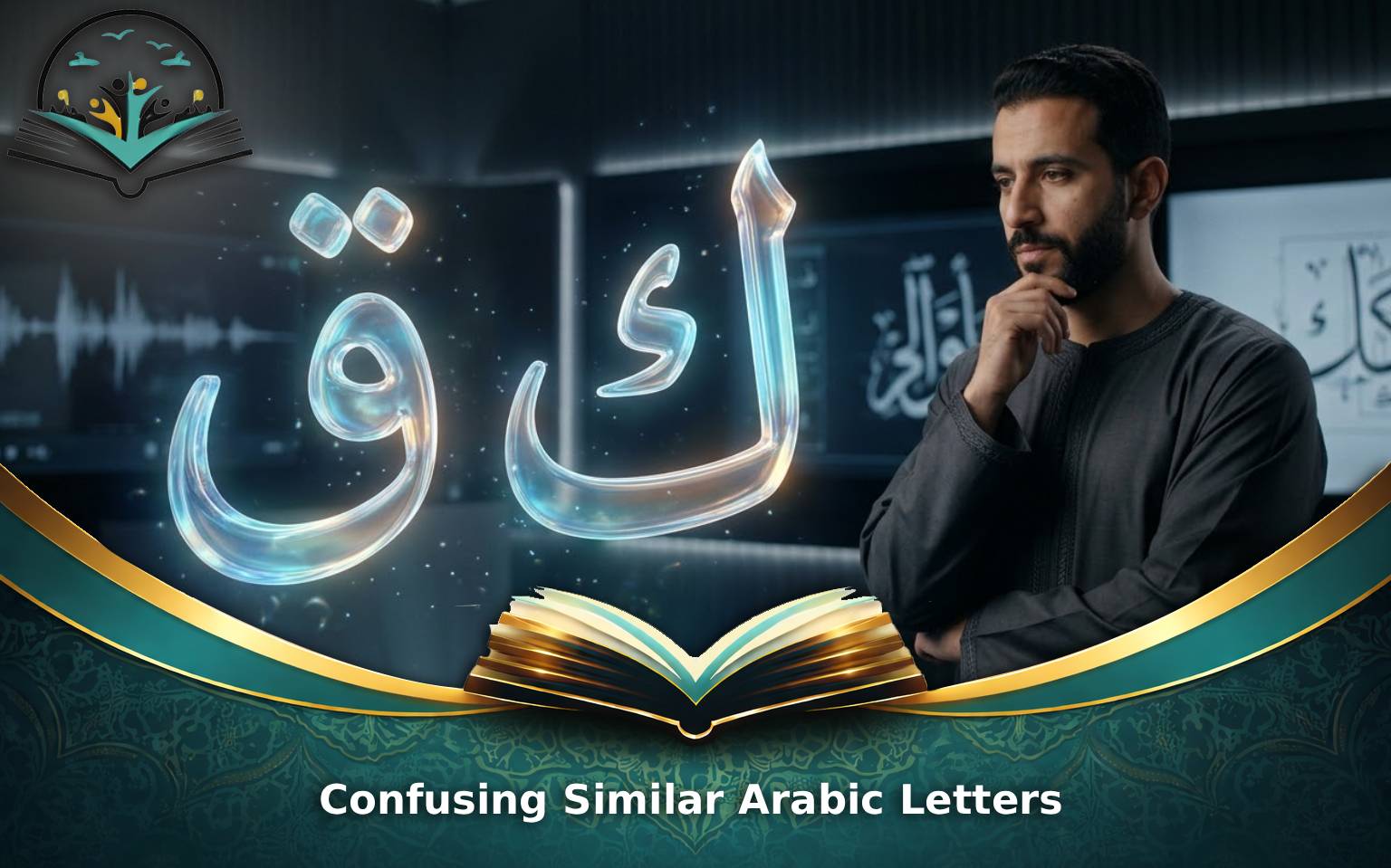
Some Arabic letters share certain characteristics, which makes them difficult for beginners to distinguish. However, similarity does not mean that their sounds are identical. Differences in articulation, heaviness, and other characteristics must be preserved during Quran recitation.
Examples include س and ص, ت and ط, ذ and ظ, and ق and ك. Learners may also need additional practice distinguishing ض from د or other letters that they find difficult to pronounce.
Examples of Letter Confusion
| Letters | Common difficulty | Practice focus |
|---|---|---|
| س and ص | Failing to preserve the distinction between the two sounds | Correct articulation and the characteristics of ص |
| ت and ط | Pronouncing both with similar qualities | Maintaining the distinct characteristics of ط |
| ذ and ظ | Confusing their articulation and sound qualities | Tongue placement and the characteristics of each letter |
| ق and ك | Producing similar sounds for both letters | Correct articulation of ق and ك |
| ح and هـ | Using an insufficiently distinct throat sound | Learning the different articulation points |
The correct practice method is to compare the letters directly. First, pronounce each letter separately. Next, read words containing the letters and compare the results with a reliable recitation model. Finally, practice the words in complete verses.
Importantly, learners should not assume that every error can be corrected through listening alone. A teacher may need to explain tongue placement or identify a subtle pronunciation difference that is difficult for the learner to hear independently.
Incorrectly Applying Madd Rules
Madd refers to elongation in Quranic recitation. Depending on the relevant rule, a sound may need to be extended for a prescribed duration. Errors occur when readers shorten a required elongation, extend it beyond the appropriate duration, or fail to distinguish between different types of Madd.
These problems become more noticeable when a reader rushes or attempts to apply the same duration to every elongation.
How to Practice Madd Correctly?
Begin by learning the difference between natural Madd and the types of Madd that depend on additional conditions. The appropriate duration must be determined according to the specific rule and the recitation method being followed.
For example, the elongation in الضَّالِّينَ in Surah Al-Fatihah requires attention to its applicable Madd rule. A learner should not estimate its duration randomly or shorten it merely to maintain a faster pace.
The following routine can help:
- Identify the type of Madd in the selected word.
- Review the duration taught for that rule.
- Listen to a reliable recitation using the intended reading tradition.
- Repeat the word while maintaining a consistent duration.
- Read the surrounding phrase and check whether the elongation remains accurate.
Because the duration of Madd varies according to the rule, memorizing a single count for every situation is not a reliable method. Learners should practice with a qualified teacher who can explain the relevant distinctions. Understanding the benefits of different learning environments can also help learners choose a suitable approach, as explained in Online Quran Classes vs In-Person Classes.
Weak or Incorrect Ghunnah
Ghunnah is a nasal sound associated with particular Tajweed rules involving Noon and Meem. Some readers make this sound too short, omit it, or produce it without observing the required characteristics.
Others attempt to make every Noon or Meem sound nasal in the same way, even when the applicable rule differs. Therefore, learning Ghunnah requires understanding where it occurs and how its duration and quality depend on the rule.
Practical Ways to Improve Ghunnah
To correct this problem, learners should practice examples from different Tajweed categories rather than repeating one word without understanding the rule.
- Study the rules of Noon Sakinah and Tanween.
- Review the rules of Meem Sakinah.
- Identify words that require Ghunnah in the selected passage.
- Listen carefully to the nasal sound in a reliable recitation.
- Practice maintaining the required duration without exaggerating it.
- Ask a teacher to check whether the sound is clear and correctly applied.
For example, in مِن شَرِّ, the applicable Ikhfa rule requires attention to the nasal sound. The learner should practice the word within its Quranic context rather than isolate the sound so much that the natural connection between the letters is lost.
Regular feedback can help distinguish between a genuine Ghunnah error and a difference that arises from another aspect of pronunciation. Learners who also want to understand the relationship between Quranic recitation and interpretation can explore What is Tafseer and Why It Matters.
Practicing Without Regular Correction
Independent Quran practice can be valuable, but it has limitations. A learner may repeat a mistake for weeks without noticing it, particularly when the error involves a subtle articulation point, an elongation duration, or the application of a stopping rule.
Listening to experienced reciters provides a useful model. However, listening alone does not always reveal whether the learner is reproducing the same sounds accurately.
Build a Practice Routine That Identifies Errors
A practical routine should include reading, listening, correction, and review.
- Daily reading: Choose a manageable passage and focus on accuracy.
- Focused repetition: Identify one or two difficult words instead of repeating everything indiscriminately.
- Listening practice: Compare your recitation with a reliable model.
- Teacher feedback: Ask for specific corrections rather than general comments.
- Progress review: Return to previously corrected passages to check whether the errors have disappeared.
For example, a learner who struggles with ح may benefit from practicing the letter in different words and vowel combinations before reading a complete passage. Once the articulation improves, the learner can check whether the same accuracy is maintained during continuous recitation.
At Rattel W Artaqi Quran Academy, learners can seek structured guidance that addresses their current reading level and specific pronunciation challenges.
A clear learning plan makes it easier to recognize progress and decide what needs attention next. For learners interested in formal recognition of their recitation proficiency, What is Ijazah in Quran Recitation explains the concept of Ijazah and its place in Quran learning.
How Can You Identify Common Mistakes in Quran Recitation?
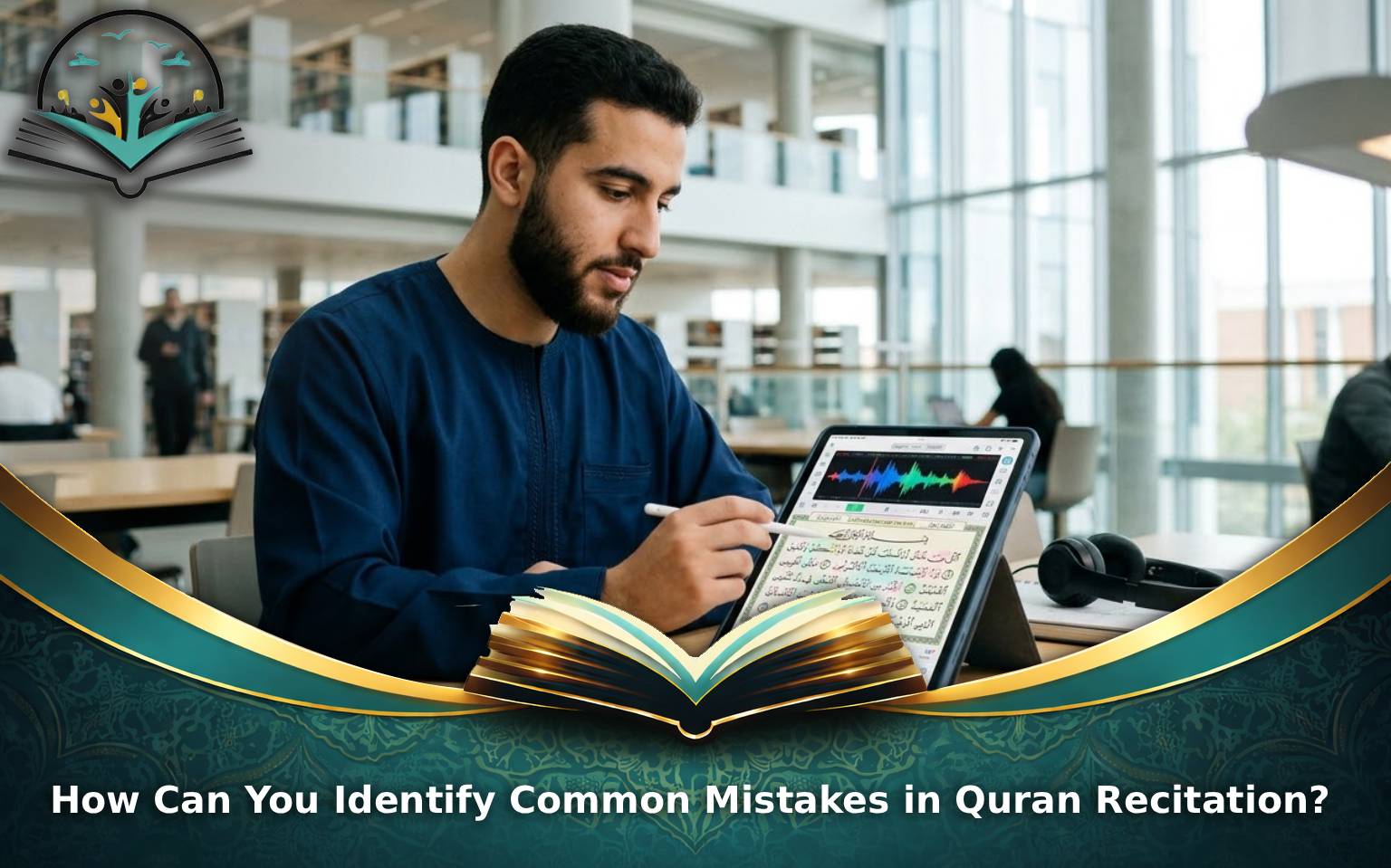
Recognizing a mistake is the first step toward correcting it. However, learners do not always know whether a difficulty comes from pronunciation, Tajweed, reading pace, or stopping and starting.
A simple review process can make self-assessment more useful.
1. Select a Short Passage
Choose a few verses that contain the rules or letters you want to practice. A short passage makes it easier to concentrate on individual sounds and review your performance carefully.
2. Listen Before Practicing
Listen to a reliable reciter who follows the intended reading tradition. Pay attention to the pronunciation of individual letters, the duration of Madd, the application of Ghunnah, and the way phrases connect.
3. Record Your Recitation
When possible, record yourself reading the same passage. Listen to the recording and compare it with the reference recitation. Look for unclear letters, inconsistent elongation, rushed words, and pauses that require review.
A recording can reveal differences, but it cannot always explain their cause. Therefore, use it as a self-review tool rather than a substitute for qualified instruction.
4. Ask for Specific Feedback
A qualified Quran teacher can help determine whether an apparent error involves a letter's articulation, a Tajweed rule, or another aspect of recitation. Specific feedback is more useful than trying to correct several unrelated issues simultaneously.
5. Recheck the Passage Later
After practicing the correction, return to the passage on another day. If the same mistake appears again, continue practicing it rather than assuming that one successful attempt has permanently resolved the issue.
This process helps learners turn general concerns about recitation into clear, manageable learning goals. Learners who want to maintain consistent progress can also apply the practical advice in How to Stay Consistent in Quran Memorization, especially when balancing recitation practice with memorization and revision.
How to Correct Quran Recitation Mistakes Step by Step?
Correcting Common Mistakes in Quran Recitation becomes easier when practice follows a consistent sequence. Instead of attempting to fix every weakness at once, focus on the errors that most affect accuracy.
Step 1: Assess Your Current Reading Level
Begin by reading a short passage aloud. Note whether your main difficulty involves Arabic letters, vowel marks, connected reading, Tajweed rules, or stopping signs.
Beginners may need to strengthen their letter recognition and pronunciation first. More experienced readers might focus on advanced Tajweed applications or consistency across longer passages.
Step 2: Choose One Main Skill
Select a specific target, such as distinguishing ق from ك or applying the correct Madd duration. Concentrating on one skill reduces confusion and makes improvement easier to evaluate.
Step 3: Practice in Small Sections
Divide the passage into manageable units. Practice the target sound or rule in individual words before applying it to the full verse.
This approach is particularly useful when a learner repeatedly makes the same error in several words.
Step 4: Receive Correction and Repeat
Read the passage to a qualified teacher, then repeat the corrected example. Ask for clarification whenever you do not understand the reason behind the correction.
Understanding the reason helps you recognize the same rule in other verses.
Step 5: Review Previously Corrected Errors
Keep a short list of recurring difficulties. During later sessions, return to these examples and check whether your pronunciation remains accurate without constant reminders.
Over time, this process can help learners develop more consistent recitation habits while continuing to study new material.
How Can Rattel W Artaqi Quran Academy Support Better Recitation?
Learning independently can help build familiarity with the Quran, but structured instruction offers an opportunity to receive direct feedback on errors that may otherwise remain unnoticed.
Rattel W Artaqi Quran Academy can be considered by learners who want to improve their recitation through organized Quran learning and teacher-guided practice. The most suitable learning plan depends on the student's current ability, goals, and the specific skills that need attention.
When evaluating a Quran learning program, consider the following points:
- Pronunciation assessment: Determine whether the teacher can identify your specific articulation difficulties.
- Tajweed instruction: Check whether lessons explain the rules and demonstrate how to apply them in actual verses.
- Individual feedback: Look for opportunities to read aloud and receive corrections.
- Appropriate lesson pace: Choose a structure that gives you enough time to practice difficult passages.
- Ongoing review: Make sure previously corrected mistakes can be revisited during later lessons.
- Clear learning objectives: Establish practical goals for pronunciation, fluency, and Tajweed.
These considerations are useful for both beginners and experienced readers. A beginner may need support with Arabic letters and basic reading, while an advanced learner may want more detailed feedback on articulation, Madd, Ghunnah, and Waqf.
Parents preparing children for online Quran learning can also review How to Prepare Your Child for Online Quran Classes for practical suggestions on creating a suitable learning environment and helping children prepare for lessons.
Rather than measuring progress only by the number of pages completed, learners should evaluate whether their pronunciation is becoming more accurate and whether they can apply the rules consistently.
How to Maintain Accurate Quran Recitation Over Time?
Correcting an error once does not necessarily mean that it will never return. Pronunciation habits can become less consistent when learners stop reviewing difficult passages or increase their reading speed too quickly.
For this reason, long-term improvement requires a balance between new learning and revision.
Use a Realistic Weekly Plan
A manageable plan is generally easier to maintain than a demanding schedule that leaves little time for correction.
Consider organizing practice around three activities:
- New practice: Work on a short passage or a specific Tajweed rule.
- Correction: Review mistakes identified during your previous session.
- Consolidation: Read a familiar passage to check whether corrected skills remain consistent.
The exact schedule should reflect your reading level and available time. A beginner may need more repetition of individual letters, whereas an experienced learner may benefit from reviewing selected rules in connected verses.
Avoid Correcting Too Many Errors at Once
When a teacher identifies several problems, record them and choose a sensible order for addressing them. Pronunciation difficulties may need attention before increasing speed, while stopping and restarting may require separate practice.
Additionally, do not assume that every difference you hear is necessarily an error. Some recitation details depend on the recognized reading tradition being followed. When uncertain, seek clarification from a qualified teacher.
Measure Progress by Accuracy
A useful measure of improvement is whether you can reproduce a corrected sound or rule reliably across different words and passages. Completing more pages can be a positive goal, but it should not replace attention to correct recitation.
With regular review and appropriate guidance, learners can gradually develop more stable habits and greater confidence when reading the Quran.
Frequently Asked Questions About Common Mistakes in Quran Recitation
This section answers common questions about correcting Quran recitation mistakes, improving pronunciation, distinguishing similar Arabic letters, and applying Tajweed rules correctly.
1. Can I correct my Quran recitation without starting the entire learning process again?
Yes. You can focus on the specific skills that need improvement while maintaining the reading abilities you already have. A teacher can help identify whether you need targeted pronunciation practice, additional Tajweed instruction, or a review of stopping rules.
2. Should I follow one Quran recitation style while learning Tajweed?
It is helpful to study consistently according to a recognized Qira'ah and its transmission, such as Hafs 'an Asim, under qualified guidance. This allows you to learn the relevant pronunciation and recitation rules without confusing differences between recognized traditions.
3. What should I do if I cannot hear the difference between two Arabic letters?
Begin by listening to clear examples of each letter in isolation and in Quranic words. Then practice producing the sounds and ask a qualified teacher to assess your articulation. Some distinctions are difficult to recognize through listening alone, so direct feedback can be particularly useful.
4. How can I tell whether my recitation has improved?
Compare recordings made at different stages, review feedback from your teacher, and check whether you can apply previously corrected rules consistently in unfamiliar passages. Improvement is better assessed through pronunciation accuracy, correct Tajweed application, and consistency than through reading speed alone.
In conclusion, Common Mistakes in Quran Recitation can involve letter pronunciation, Tajweed rules, reading speed, Madd, Ghunnah, and stopping or restarting in unsuitable places. Although these difficulties may seem minor at first, identifying them accurately can help learners improve the clarity and consistency of their recitation.
The most effective approach combines careful listening, focused repetition, qualified feedback, and regular review. Instead of rushing through long passages, concentrate on specific corrections and apply them consistently in connected Quranic verses.
Rattel W Artaqi Quran Academy is an option for learners seeking structured Quran instruction and support with recitation skills. Before choosing a learning program, consider your current level, the type of correction you need, and the opportunities available for direct feedback.
Begin with one identifiable difficulty, practice it carefully, and review your progress regularly. Over time, a focused learning routine can help you develop more accurate pronunciation and a stronger understanding of the Tajweed principles that guide Quran recitation.
Add New Comment