 العربية
 English


How to Prepare Your Child for Online Quran Classes is an important question for parents who want their children to begin learning the Quran through a comfortable and organized online environment.
Starting Quran lessons from home can be convenient, but a successful experience involves more than choosing a class and opening a laptop. Children may need time to understand the new learning format, become comfortable with their teacher, organize their study space, and develop confidence in speaking and reciting online.
For that reason, parents can make the first few lessons easier by preparing their child emotionally, practically, and academically. A calm introduction can help the child understand what to expect without making the experience feel stressful or overly formal.
At Rattel W Artaqi Quran Academy, parents can approach online Quran learning as a gradual process rather than expecting immediate confidence or perfect recitation. The goal is to create a learning routine in which the child understands the lesson structure, feels comfortable asking questions, and receives appropriate guidance according to their level.
This guide explains how to Prepare Your Child for Online Quran Classes, from setting expectations and arranging the learning space to supporting the child after each lesson. It also addresses common concerns that parents may have before starting online Quran education.
Why Preparation Matters Before Online Quran Classes?

Before asking how to Prepare Your Child for Online Quran Classes, parents should understand why preparation can influence the child's experience. A child who knows what will happen is less likely to feel surprised when the lesson begins.
Online learning introduces several elements that may be unfamiliar to younger children. Instead of sitting beside a teacher in a classroom, the child communicates through a screen. The teacher may ask the child to read, repeat Arabic letters, listen carefully, or correct pronunciation. Even simple activities can feel unfamiliar during the first session.
Therefore, preparation should focus on familiarity rather than pressure. Parents can explain that:
- The teacher will communicate with the child through the screen.
- The child may be asked to read or repeat Quranic verses.
- Mistakes are a normal part of learning.
- The teacher may correct pronunciation several times.
- Questions are welcome during the lesson.
- Learning gradually is more important than being perfect immediately.
This approach helps the child understand that an online Quran class is a learning environment, not a test.
Begin Your Spiritual Journey With Trusted Quran Guidance
Take the next step toward deeper Quran understanding with Rattel W Artaqi Quran Academy and start learning with confidence today. Our experienced teachers provide supportive online classes designed for children, adults, and beginners who want to improve recitation, Tajweed, and Islamic knowledge.
We focus on clear explanations, flexible schedules, and practical learning that fits your daily life. Join our academy now and build a stronger connection with the Holy Quran through engaging lessons that inspire spiritual growth, discipline, and lasting faith for every student.

How to Prepare Your Child for Online Quran Classes Emotionally?
Emotional preparation is often overlooked because parents naturally focus on practical details such as internet speed, headphones, and the learning platform. However, a child can have excellent technical conditions and still feel uncomfortable when the lesson begins.
The child may wonder who the teacher is, whether the teacher will ask difficult questions, or what will happen if they make a mistake. These concerns can become stronger when adults describe the lesson as something extremely important or difficult. Instead, use simple and reassuring language.
You can tell your child that they will meet a Quran teacher, listen carefully, practice reading, and learn something new. Avoid creating the impression that the first class must be perfect.
A relaxed conversation before the lesson can make the experience feel familiar. For example, parents can explain the basic sequence:
- The teacher will greet the child.
- The teacher may ask a few simple questions.
- The child will demonstrate what they already know.
- New material may be introduced according to the child's level.
- The teacher will provide corrections and practice.
- The lesson will end with a review or a simple task.
Knowing this sequence can reduce uncertainty and give the child a clearer mental picture of the class.
How to Prepare Your Child for Online Quran Classes Without Creating Pressure?
Children respond differently to expectations. Some become motivated when parents praise their efforts, while others become anxious when they believe they must perform perfectly.
For that reason, parents should avoid phrases that make mistakes sound serious. Saying, "You must read everything correctly today," may make a young learner afraid to speak. Similarly, comparing the child with a sibling or another student can make Quran learning feel like a competition. A better approach is to focus on effort and progress. You can say:
- "Try your best and listen carefully."
- "It is okay if you make a mistake."
- "Your teacher will help you."
- "You can ask if you do not understand."
- "We are learning step by step."
This type of encouragement supports confidence without lowering the importance of Quran education.
At Rattel W Artaqi Quran Academy, parents can reinforce the idea that learning is a gradual process. Children do not need to demonstrate complete mastery during their first online lesson. Instead, they need an environment where they can practice, receive corrections, and improve over time.
Create a Comfortable Quran Learning Space
One of the practical answers to how to Prepare Your Child for Online Quran Classes is to establish a suitable learning space. However, parents do not need to create an elaborate classroom at home. A comfortable and functional area is usually enough.
The child should have:
- A stable chair.
- A suitable desk or table.
- A screen positioned comfortably.
- Adequate lighting.
- A quiet environment.
- The Quran or required learning materials nearby.
- A reliable internet connection.
- Any necessary headphones or microphone.
The screen should allow the child to see the teacher clearly without constantly moving or adjusting the device.
Furthermore, avoid placing the child in an area with frequent interruptions. Television sounds, conversations, siblings playing nearby, or constant movement can make it harder for a young learner to concentrate.
The purpose of the space is not to make the home look like a traditional classroom. Rather, it should signal to the child that this is a specific time for learning.
Prepare the Quran and Learning Materials in Advance
Another useful part of How to Prepare Your Child for Online Quran Classes is organizing the materials before the lesson starts.
A child should not spend the first several minutes searching for a Quran, notebook, pencil, or lesson information. Preparing these items beforehand allows the lesson to begin smoothly. Depending on the child's level, the teacher may use:
- Mushaf.
- Arabic alphabet materials.
- Noorani Qaida or another foundational resource.
- Tajweed exercises.
- Memorization material.
- A notebook.
- A pencil.
- Previous lesson notes.
Parents should ask the teacher which materials the child needs rather than purchasing unnecessary resources.
Preparation also gives the child a small responsibility. Older children can arrange their own materials before class, while younger learners may need help from a parent.
This simple routine can eventually become part of the child's independent learning habits.
Test the Technology Before the Lesson
Technology should support Quran learning rather than become the main problem during the class.
A few minutes before the lesson, check the internet connection and make sure the device has enough battery power. Parents can also confirm that the camera and microphone are working properly. A basic checklist includes:
- Internet connection.
- Camera.
- Microphone.
- Speaker or headphones.
- Learning platform.
- Device battery.
- Correct lesson link.
- Quran and study materials.
It is also useful to position the camera so that the teacher can communicate naturally with the child.
However, parents should avoid turning technical preparation into a complicated routine. Once the setup works reliably, keep it consistent.
Children often benefit from familiarity. Using the same device and learning location can make the transition into each lesson easier.
How to Prepare Your Child for Online Quran Classes When They Are Shy?
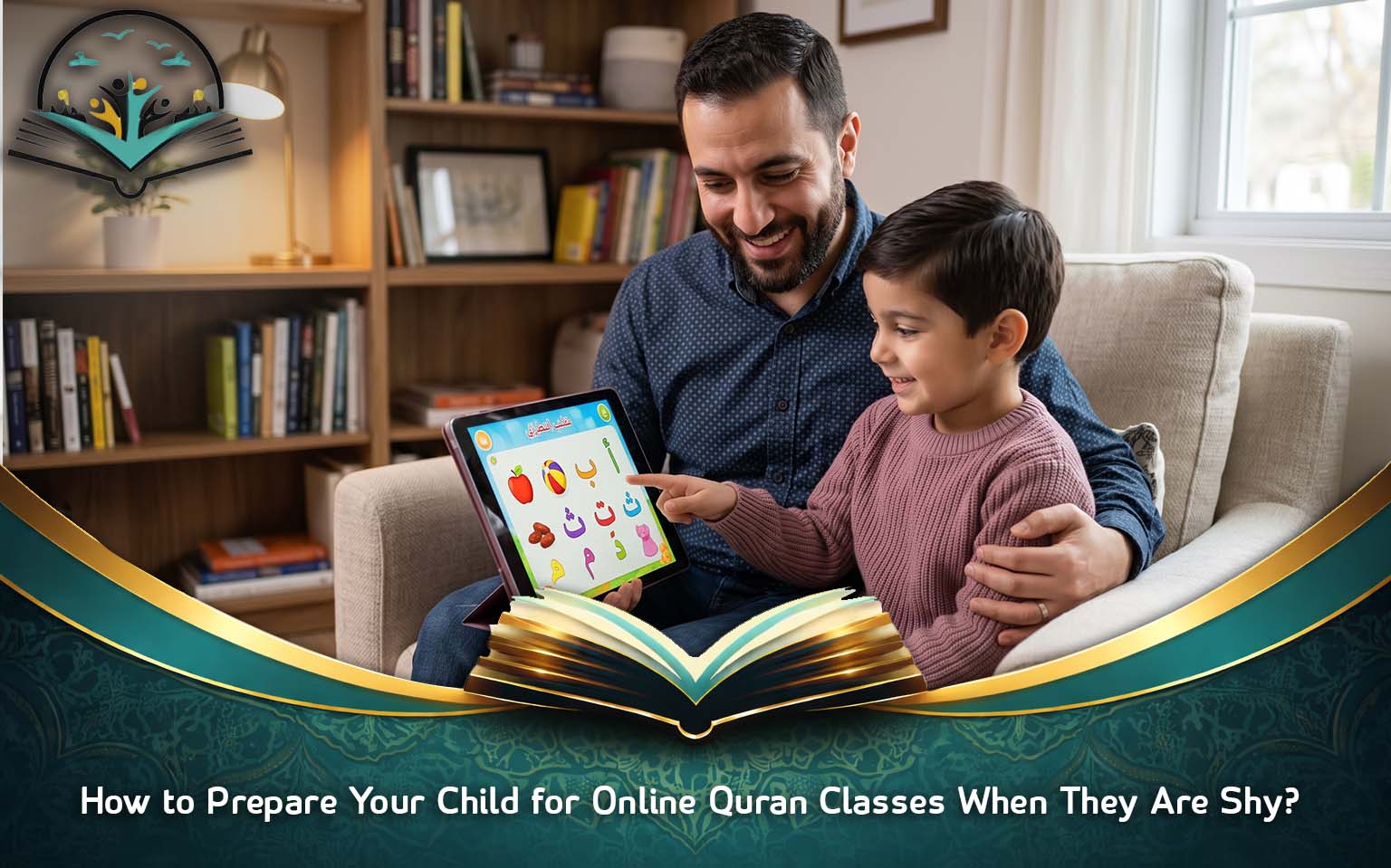
Shyness is one of the most common concerns parents may have when starting online Quran lessons. A quiet child may look away from the camera, answer with very short responses, or remain silent after the teacher asks a question.
This does not automatically mean the child dislikes Quran learning.
The child may simply need time to become comfortable with a new person and a new learning format. Online communication can initially feel unusual, especially for younger children who have limited experience speaking with adults through a screen. Parents can help by avoiding unnecessary intervention.
For example, if the teacher asks the child a question, give the child a few seconds to answer. Do not immediately answer on their behalf. Doing so may unintentionally teach the child to depend on the parent during every interaction.
Instead, remain nearby when appropriate and allow the teacher to build communication with the child.
With regular lessons, many children become more comfortable because the teacher's voice, teaching style, and expectations become familiar.
Help Your Child Understand That Mistakes Are Normal
A central part of How to Prepare Your Child for Online Quran Classes is teaching the child how to respond to mistakes.
Quran learning requires careful reading and pronunciation. Consequently, correction is a normal part of the process. A teacher may ask the child to repeat a letter, word, or verse several times to improve pronunciation.
Some children interpret correction as criticism. Parents can prevent this misunderstanding by explaining beforehand that correction helps them learn. You might tell your child:
"If your teacher corrects you, it means your teacher is helping you learn the right way."
This message is particularly important for children who become upset when they do not get an answer correct on the first attempt.
A supportive environment allows the child to make mistakes without feeling embarrassed. Over time, this can encourage more active participation and better communication with the teacher.
Choose a Lesson Time That Matches Your Child's Routine
Parents asking how to Prepare Your Child for Online Quran Classes should also consider timing.
A lesson scheduled when the child is exhausted, hungry, distracted, or already overwhelmed by schoolwork may be difficult even if the teacher and program are suitable.
Therefore, look at the child's daily routine before selecting a regular Quran class time. Consider:
- School hours.
- Homework.
- Meal times.
- Sleep schedule.
- Sports and activities.
- Family commitments.
- The child's natural concentration periods.
Younger children may need a different schedule from teenagers. Likewise, a child who concentrates better in the afternoon may struggle with a late evening lesson.
Consistency is also valuable. When lessons happen around the same time on scheduled days, the child can begin to recognize Quran study as a normal part of the weekly routine.
At Rattel W Artaqi Quran Academy, parents can approach scheduling with the child's concentration and existing responsibilities in mind rather than simply choosing a convenient time for adults.
What Parents Should Say Before the First Lesson?
Before an online Quran class, parents should keep their explanation simple. There is no need to give the child a long speech about academic performance or future goals. A young learner mainly needs to know what will happen next. A useful explanation might include:
- "You are going to meet your Quran teacher."
- "Your teacher will ask you about what you know."
- "You may read some Quran."
- "You can ask questions."
- "If you make a mistake, your teacher will help you."
- "You do not have to know everything from the beginning."
Parents should also avoid promising that the lesson will always be easy or entertaining. Learning Quran involves concentration, repetition, correction, and practice. Children can handle these expectations when they are presented honestly and positively.
The objective is to create realistic expectations rather than guarantee a particular emotional reaction.
How to Prepare Your Child for Online Quran Classes With a Simple Routine?
A predictable pre-class routine can make online learning easier. For example, parents can create a 10- to 15-minute preparation period before the lesson. During that time, the child can finish other activities, get some water, use the bathroom, prepare the Quran, and sit in the learning space. A simple routine may look like this:
- Finish unrelated activities.
- Prepare the Quran and notebook.
- Check the device.
- Sit comfortably.
- Review a small part of the previous lesson.
- Begin the class calmly.
The routine should not become another source of pressure. If the child is young, parents may need to guide each step. As the child becomes older and more responsible, some of these tasks can become independent.
This gradual shift is useful because Quran education is not only about memorizing or reading. It can also help children develop discipline and responsibility.
How Parents Can Support Online Quran Learning During the Lesson?
Parents may wonder whether they should remain beside the child throughout every class. There is no single answer for every family. Younger children may need supervision, while older children may be able to participate independently.
However, parents should avoid answering every teacher's question for the child. The purpose of an online Quran lesson is for the student to communicate directly with the teacher. Instead, parents can stay close enough to provide support when necessary.
For example, if the connection fails or the child cannot find a page, the parent can help solve the practical problem. However, when the teacher asks the child to recite, the child should generally have the opportunity to respond independently.
This balance allows the child to feel supported without becoming dependent on parental intervention.
Build Confidence Before Focusing on Speed
Parents sometimes measure progress by how quickly a child can memorize or recite a large amount of Quran. While measurable progress matters, speed should not become the only goal.
A child who reads carefully and understands corrections may be developing stronger foundations than a child who moves quickly but repeats the same pronunciation errors.
Therefore, parents should encourage:
- Accurate pronunciation.
- Careful listening.
- Regular revision.
- Consistent attendance.
- Willingness to ask questions.
- Patience during difficult lessons.
At Rattel W Artaqi Quran Academy, parents can support the learning process by recognizing that different children progress at different rates.
The most useful question is not always, "How much did you memorize today?" Sometimes a better question is, "What did you learn today that you did not know before?"
What If Your Child Refuses to Join the Class?
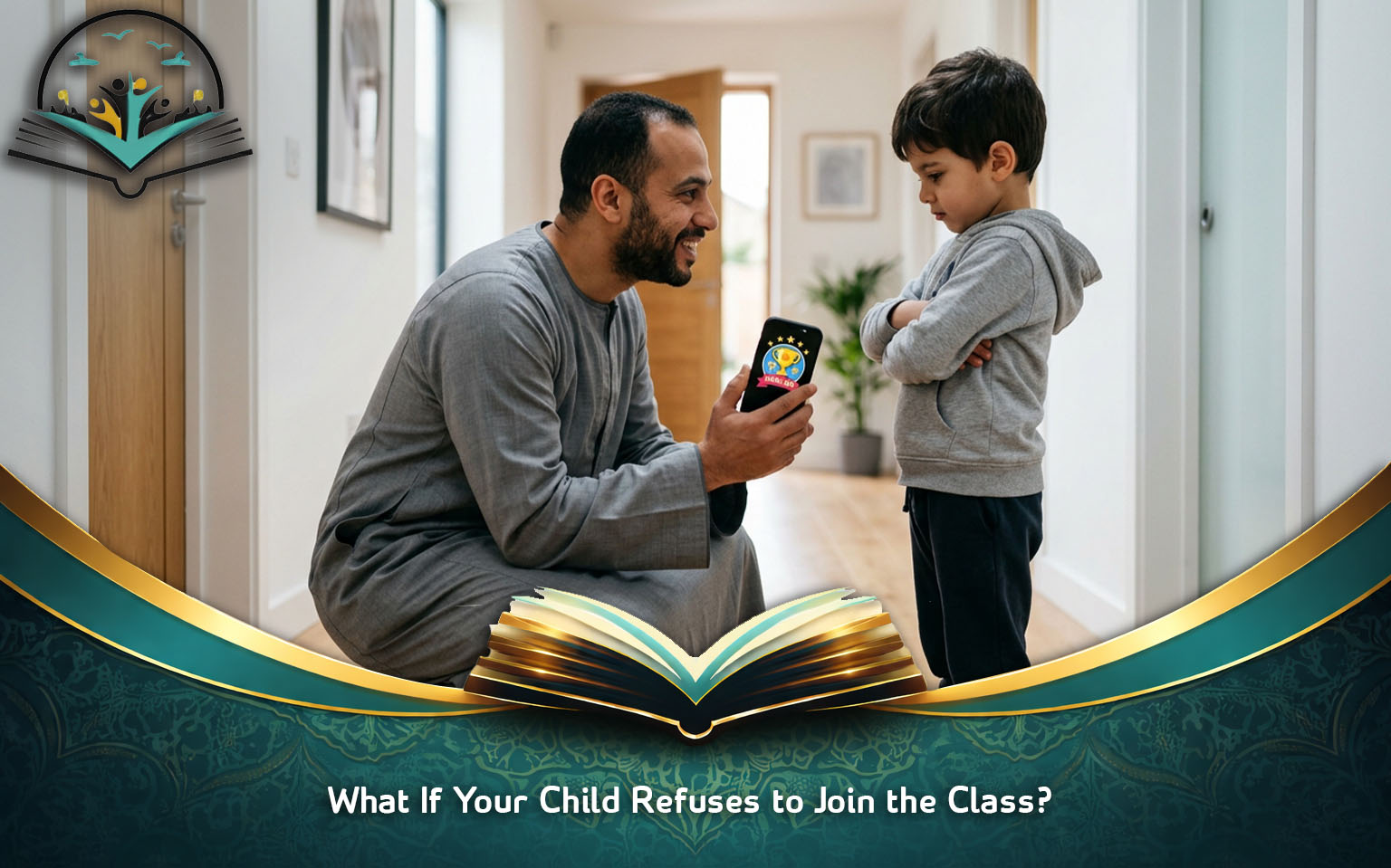
Even after careful preparation, a child may occasionally refuse to join an online Quran lesson. The first step is to understand why.
The reason could be tiredness, fear, boredom, frustration, technical problems, difficulty with the material, or a negative experience during a previous lesson.
Instead of immediately forcing the child to continue, parents can ask simple questions:
- "What is making you uncomfortable?"
- "Was something difficult last time?"
- "Do you feel tired today?"
- "Is there something you want your teacher to explain differently?"
The answer may reveal a problem that can be addressed.
If the child is repeatedly distressed, parents should discuss the situation with the teacher. Adjustments to lesson structure, communication style, difficulty, or routine may sometimes make participation easier.
How to Prepare Your Child for Online Quran Classes After a Difficult First Lesson?
A difficult first lesson does not necessarily mean that online Quran learning is unsuitable for the child.
Perhaps the child was tired. Maybe the lesson contained unfamiliar material. The teacher and student may also have needed time to establish communication. After the lesson, avoid turning the experience into a major family discussion.
Instead, ask the child what they found easy and what they found difficult. Listen carefully before deciding what needs to change. Parents can then communicate useful observations to the teacher.
For example, if the child became nervous when asked to recite immediately, the teacher might begin the next class with familiar material. If the child struggled to concentrate, a shorter activity followed by a brief change of pace might help.
The important point is to identify the cause rather than simply labeling the lesson as unsuccessful.
Encourage Practice Between Quran Lessons
Online Quran classes are more effective when children have opportunities to review what they learned between sessions.
However, practice at home does not need to become a second formal class.
Depending on the child's age and level, parents can encourage short activities such as:
- Reviewing previously learned verses.
- Practicing difficult Arabic letters.
- Listening to a selected passage.
- Revising memorized surahs.
- Repeating pronunciation corrections.
- Reading a small section aloud.
Short, regular practice can be easier for children than occasional long sessions.
Parents should also avoid turning every family moment into a Quran test. The child needs opportunities to enjoy family life without constantly being evaluated.
A balanced approach can help Quran learning remain positive and sustainable.
How to Prepare Your Child for Online Quran Classes According to Age?
Age can influence the type of preparation a child needs.
Younger Children
Young children usually need more direct parental support. Parents may need to prepare the device, organize the materials, stay nearby, and explain the lesson in simple language. The learning environment should be calm and free from unnecessary distractions.
School-Age Children
Older children can gradually take responsibility for preparing their Quran materials and joining the class on time. Parents can still monitor progress while allowing the child more independence. This age group may also benefit from clear weekly goals.
Teenagers
Teenagers may prefer greater privacy and independence. Parents can focus more on communication, scheduling, and progress rather than sitting beside them during every lesson.
At the same time, parents can remain involved by discussing goals and asking whether the current learning approach is helping.
Regardless of age, the principle remains the same: provide the amount of support the child actually needs.
How to Prepare Your Child for Online Quran Classes With Rattel W Artaqi Quran Academy?
When parents choose Rattel W Artaqi Quran Academy, preparation can begin before the first lesson by discussing the child's current Quran level, previous learning experience, and areas that may require additional attention. Parents who are still comparing learning options can also review How to Choose the Right Online Quran Academy to understand the factors that may matter when selecting a suitable learning environment.
Parents should communicate relevant information honestly. For example, if the child recognizes Arabic letters but struggles with pronunciation, the teacher should know. If the child has already memorized several short surahs, that information can also help establish an appropriate starting point. Parents can also explain their child's learning habits. Useful information may include:
- Whether the child is shy.
- Whether they learn better through repetition.
- Whether they have previous Quran learning experience.
- Whether they need additional pronunciation practice.
- Whether they become distracted easily.
- Whether they prefer visual explanations.
This information can help create a clearer starting point for the learning relationship.
Questions Parents Should Ask Before Starting Online Quran Classes
Before beginning lessons, parents may want to understand how the program works and how the teacher approaches children. Useful questions include:
- How is the child's current level assessed?
- How are mistakes corrected?
- How is progress communicated to parents?
- What happens if the child struggles with a lesson?
- What materials should the child prepare?
- How much practice is recommended between classes?
- How can parents support learning without interrupting the lesson?
Parents may also want to understand whether the child will focus mainly on memorization, reading accuracy, or correct recitation. Understanding the Difference Between Hifz and Tajweed can help parents distinguish between memorizing Quranic passages and developing accurate recitation skills.
These questions are more useful than focusing only on the number of classes or lesson duration.
Parents are ultimately looking for an educational environment that fits their child's needs.
How to Keep Your Child Motivated Over Time?
The first few lessons are only the beginning. Maintaining motivation requires consistency without turning Quran learning into a source of constant pressure.
Parents can recognize meaningful improvements, even when they seem small. For instance, a child may:
- Pronounce a difficult letter more accurately.
- Memorize a short surah.
- Read with fewer corrections.
- Become more willing to answer the teacher.
- Remember a previous correction.
- Prepare for class without being reminded.
These moments are worth noticing.
Praise should be specific rather than excessive. Instead of repeatedly saying, "You are the best," parents can say, "You remembered the pronunciation your teacher corrected last time."
That type of feedback connects praise with genuine effort. Parents can also reinforce the value of accurate recitation by exploring the Importance of learning Quran with Tajweed as part of their child's broader Quran education.
What Parents Should Avoid During Online Quran Learning?
Knowing how to Prepare Your Child for Online Quran Classes also means knowing what not to do.
Parents should avoid several common habits that can unintentionally increase stress.
Avoid Comparing Children
Every child has a different learning pace. Comparing siblings or classmates may reduce confidence.
Avoid Correcting Every Word
If a teacher is already correcting the child, constant parental corrections can become confusing.
Avoid Using Quran Lessons as Punishment
Quran learning should not become associated with punishment or threats.
Avoid Expecting Immediate Results
New learners need time to develop reading, pronunciation, memorization, and listening skills.
Avoid Ignoring the Child's Feedback
A child may notice problems that adults cannot see. Their feedback can reveal whether they are confused, uncomfortable, or simply tired. A calm and consistent approach is generally more productive than pressure.
How to Prepare Your Child for Online Quran Classes on the Day of the Lesson?
On the day of class, preparation should be simple. Make sure the child has enough time to transition from school, play, homework, or meals into Quran learning. Avoid starting the lesson immediately after an exhausting activity whenever possible. Before the class:
- Prepare the Quran.
- Check the device.
- Reduce background noise.
- Make sure the child is comfortable.
- Review one small part of the previous lesson if appropriate.
- Remind the child of the class time without creating anxiety.
Once the lesson begins, allow the teacher to lead.
The parent can observe when necessary, but the child should have space to build a direct relationship with the teacher.
Supporting Your Child's Quran Teacher
Parents can support the learning process by understanding the difference between supervision and interruption. The teacher needs enough space to assess the child's reading, listening, pronunciation, and response without receiving constant corrections from another person.
If parents are deciding whether a male or female teacher would suit their child, factors such as age, comfort, communication style, and the child's individual needs can be considered. The comparison Female vs Male Quran Teachers: Which is Better can provide additional context for this decision.
A supportive parent can listen, encourage practice, and communicate relevant concerns after the lesson. This approach allows the teacher and child to develop a more effective learning relationship.
Building Consistency After Each Online Quran Class
Preparation should continue after the lesson rather than ending when the video call finishes.
A child benefits from knowing what to practice before the next class. Parents can ask the teacher what should receive attention during home practice and then keep the routine manageable.
Short, regular practice can be easier for children than occasional long sessions. The goal is to reinforce what the child has already learned without creating unnecessary pressure.
For children working on memorization, consistency becomes especially important. Parents can use practical strategies from How to Stay Consistent in Quran Memorization to help establish a sustainable practice routine.
How Rattel W Artaqi Quran Academy Can Support a Child's Learning Journey?
Rattel W Artaqi Quran Academy can be presented to parents as part of a structured approach to online Quran education. However, parents should still evaluate the learning experience according to their child's individual needs.
The most useful learning environment is one in which the child can understand the material, receive appropriate correction, practice regularly, and gradually become more confident.
Parents can support this process by maintaining communication with the teacher and paying attention to progress over time.
Rather than judging a program after a single lesson, consider the broader experience. Is the child becoming more comfortable? Are recurring mistakes being addressed? Does the child understand what they are practicing? Can they explain what they learned?
These questions provide a more meaningful picture of progress than one difficult class.
A Simple Parent Checklist Before the First Quran Class
For parents looking for a quick answer to how to Prepare Your Child for Online Quran Classes, the following checklist can make preparation easier:
Before the Lesson
- Choose a quiet learning location.
- Prepare the Quran and required materials.
- Test the internet connection.
- Check the camera and microphone.
- Confirm the lesson time.
- Make sure the child is comfortable.
- Explain what will happen during the class.
During the Lesson
- Allow the child to answer independently.
- Avoid interrupting unnecessarily.
- Help only when practical support is needed.
- Observe the child's comfort level.
- Let the teacher guide the learning process.
After the Lesson
- Ask the child what they learned.
- Discuss any difficulties calmly.
- Praise specific effort.
- Follow the teacher's practice recommendations.
- Avoid turning the review into a stressful test.
This checklist can become a regular routine as the child becomes more familiar with online Quran education.
How to Prepare Your Child for Online Quran Classes for Long-Term Success?

The most important preparation is not something parents can buy or install. It is the development of a healthy attitude toward learning.
Children need to understand that Quran education takes time. Reading accurately, improving pronunciation, memorizing verses, and developing confidence cannot always happen in a few sessions.
Therefore, parents should focus on consistency.
A child who attends regularly, listens carefully, practices appropriately, and receives constructive feedback has opportunities to develop gradually.
At Rattel W Artaqi Quran Academy, parents can support this journey by creating a stable routine around the child's lessons. The objective is not simply to complete individual classes. Instead, the broader goal is to help the child develop sustainable Quran learning habits.
That difference matters because long-term learning depends on what happens between lessons as much as what happens during them.
Frequently Asked Questions
Provide clear answers to common questions parents may have about preparing their children for online Quran classes, from creating a suitable learning environment to supporting their child’s progress.
1. Should a child eat immediately before an online Quran class?
A heavy meal immediately before class may make some children uncomfortable or less attentive. A regular meal schedule with enough time for digestion can help the child feel more comfortable. If the lesson is close to mealtime, a light snack may be more practical than starting the class when the child is very hungry.
2. Can children learn Quran online if they have limited experience using computers?
Yes, although younger children may initially need help with basic device functions. Parents can teach them simple actions such as joining the lesson, muting or unmuting the microphone when appropriate, and positioning the device correctly. The amount of technical independence can increase gradually as the child becomes familiar with the platform.
3. Should parents record their child's Quran lessons?
Parents should first check the academy's policies and obtain any required permission before recording a lesson. Recording may also raise privacy considerations for the teacher or other participants if the lesson is not strictly one-to-one. Therefore, families should follow the specific rules of the learning program.
4. What should parents do if a child becomes sleepy during an evening Quran class?
If sleepiness happens repeatedly, the lesson time may not match the child's natural concentration period. Parents can discuss the issue with the teacher and consider whether an earlier schedule would be more suitable. A well-rested child may participate more actively than one who is consistently studying when already tired.
In conclusion, How to Prepare Your Child for Online Quran Classes is ultimately about creating the right conditions for learning rather than trying to make the child perform perfectly from the first session. A comfortable environment, realistic expectations, suitable timing, organized materials, and supportive communication can make online Quran education easier to begin.
Parents should also remember that every child responds differently. Some children become comfortable immediately, while others need several lessons before they speak confidently with their teacher. Therefore, patience is an important part of the process.
With Rattel W Artaqi Quran Academy, parents can approach online Quran education as a gradual learning journey. Preparing the child emotionally and practically, communicating useful information with the teacher, and maintaining a consistent routine can help create a stronger foundation for future lessons.
Most importantly, children should understand that making mistakes does not mean they are failing. Quran learning is a process of listening, practicing, correcting, reviewing, and improving. When parents provide encouragement without unnecessary pressure, the child can gradually develop confidence and a more consistent relationship with Quran learning.
Add New Comment