 العربية
 English

Is Online Quran Learning Safe for Kids? is one of the most important questions parents should ask before choosing an online Quran program. Virtual Quran education can give children convenient access to qualified teachers, flexible schedules, and personalized lessons. However, convenience should never come at the expense of privacy, supervision, or child protection.
Fortunately, online Quran learning can be a safe and positive experience when parents choose an academy that takes student safety seriously. The learning platform, teacher selection process, communication policies, data protection measures, and parental involvement all play an important role.
For families considering Rattel W Artaqi Quran Academy, safety should be viewed as part of the complete educational experience rather than as an additional feature. A reliable academy should create an environment where children can learn the Quran comfortably while parents understand how lessons are delivered and how their child's information is handled.
This guide explains the major safety factors parents should evaluate before enrolling their children. More importantly, it provides practical questions that can help families make an informed decision instead of relying only on advertisements or attractive course descriptions.
Why Is Online Quran Learning Safe for Kids an Important Question?
Parents naturally want to know what happens when their child enters a virtual classroom. Unlike traditional face-to-face lessons, online learning takes place through a device and an internet connection. Therefore, parents need to consider both educational quality and digital safety.
When asking Is Online Quran Learning Safe for Kids, families should look beyond the simple question of whether video lessons work properly. They should also examine who teaches the child, how communication takes place, whether access to the classroom is controlled, and what happens to personal information.
Moreover, safety is not limited to preventing inappropriate online interactions. It also includes creating a respectful learning environment where children feel comfortable asking questions, making mistakes, and developing their Quran skills without unnecessary pressure.
A trustworthy online Quran program should therefore have clear procedures rather than relying on informal arrangements. Parents deserve understandable answers about teacher qualifications, classroom access, privacy, communication, and support.
Begin Your Spiritual Journey With Trusted Quran Guidance
Take the next step toward deeper Quran understanding with Rattel W Artaqi Quran Academy and start learning with confidence today. Our experienced teachers provide supportive online classes designed for children, adults, and beginners who want to improve recitation, Tajweed, and Islamic knowledge.
We focus on clear explanations, flexible schedules, and practical learning that fits your daily life. Join our academy now and build a stronger connection with the Holy Quran through engaging lessons that inspire spiritual growth, discipline, and lasting faith for every student.
What Should Parents Evaluate Before Enrollment?
Before selecting an online Quran academy, consider these areas:
- Teacher qualifications and experience
- Instructor screening and professional conduct
- Security of the learning platform
- Classroom access and communication procedures
- Protection of children's personal information
- Parental visibility and involvement
- Technical support and complaint procedures
- Clear policies for unexpected situations
These factors provide a much better picture of online safety than price or promotional claims alone.
Is Online Quran Learning Safe for Kids With the Right Learning Platform?
The technology used for Quran lessons can significantly affect a child's online safety. A professional learning environment should use reliable communication tools and appropriate access controls. Parents should understand how their children connect with teachers and whether unauthorized people can enter a lesson.
For example, classroom links should not be shared publicly. Access should be limited to the student, teacher, and authorized participants. In addition, accounts should be protected with strong passwords and other reasonable security measures.
When evaluating whether online Quran learning is safe for Kids, parents should also ask whether the academy guides using the learning platform safely. Children may need simple instructions on keeping login details private, avoiding links from unknown sources, and informing a parent when something unusual happens online.
At Rattel W Artaqi Quran Academy, families should look for a structured learning process where technology supports education rather than creating unnecessary risks. A well-organized virtual classroom allows students to focus on Quran reading, memorization, Tajweed, and Islamic learning while parents remain aware of how lessons are conducted.
Secure Access Matters
A safer online classroom should have:
- Controlled access to virtual lessons
- Private communication between authorized participants
- Appropriate account protection
- Clear procedures for technical problems
- Reasonable restrictions on sharing classroom information
- Guidance for parents and children about online safety
These measures do not eliminate every possible online risk. Nevertheless, they can significantly reduce avoidable problems when they are applied consistently.
Teacher Screening and Child Protection
One of the most important parts of answering Is Online Quran Learning Safe for Kids is understanding who will teach the child. An excellent curriculum cannot compensate for weak teacher selection.
Parents should therefore ask about the academy's recruitment process. Teacher qualifications matter, but so do teaching experience, communication skills, professionalism, and the ability to work appropriately with children.
Furthermore, instructors who teach young learners need patience. Children may have different attention spans, learning speeds, and personalities. A suitable teacher should know how to maintain a respectful classroom without using fear, humiliation, or inappropriate pressure.
Families considering Rattel W Artaqi Quran Academy should pay attention to how teachers communicate with both students and parents. Clear expectations from the beginning can prevent misunderstandings later.
Questions Parents Can Ask About Teachers
Before enrollment, parents can ask:
- What qualifications does the teacher have?
- What experience does the instructor have with children?
- How does the teacher communicate with parents?
- What happens if a child feels uncomfortable during a lesson?
- Who should parents contact if they have a concern?
- Does the academy have professional conduct guidelines for teachers?
As a result, parents can evaluate the academy based on its procedures instead of making a decision based solely on a teacher's profile.
Is Online Quran Learning Safe for Kids When Parents Can Monitor Lessons?
Parental involvement can provide an additional layer of confidence, especially when a child is new to online learning. Parents do not necessarily need to sit beside their children during every lesson. However, they should understand how the classes work and know how to raise concerns.
For younger students, occasional observation can also help parents understand the teaching style. They can see whether the child is engaged, whether instructions are clear, and whether communication remains respectful.
When considering Is Online Quran Learning Safe for Kids, parents should ask whether the academy supports reasonable parental visibility. A transparent academy should not make families feel that asking about classroom procedures is inappropriate.
At the same time, children need some independence. Constant parental intervention may distract a student or prevent them from developing confidence. Therefore, the ideal approach combines appropriate supervision with gradual independence.
Creating a Healthy Balance
Parents can support safe online learning by:
- Checking the learning environment regularly
- Discussing online safety rules with the child
- Asking the child how lessons are going
- Remaining available when the child needs help
- Communicating concerns directly with the academy
- Encouraging the child to report anything uncomfortable
This balanced approach helps children understand that online safety is a shared responsibility.
Is Online Quran Learning Safe for Kids When Personal Data Is Protected?
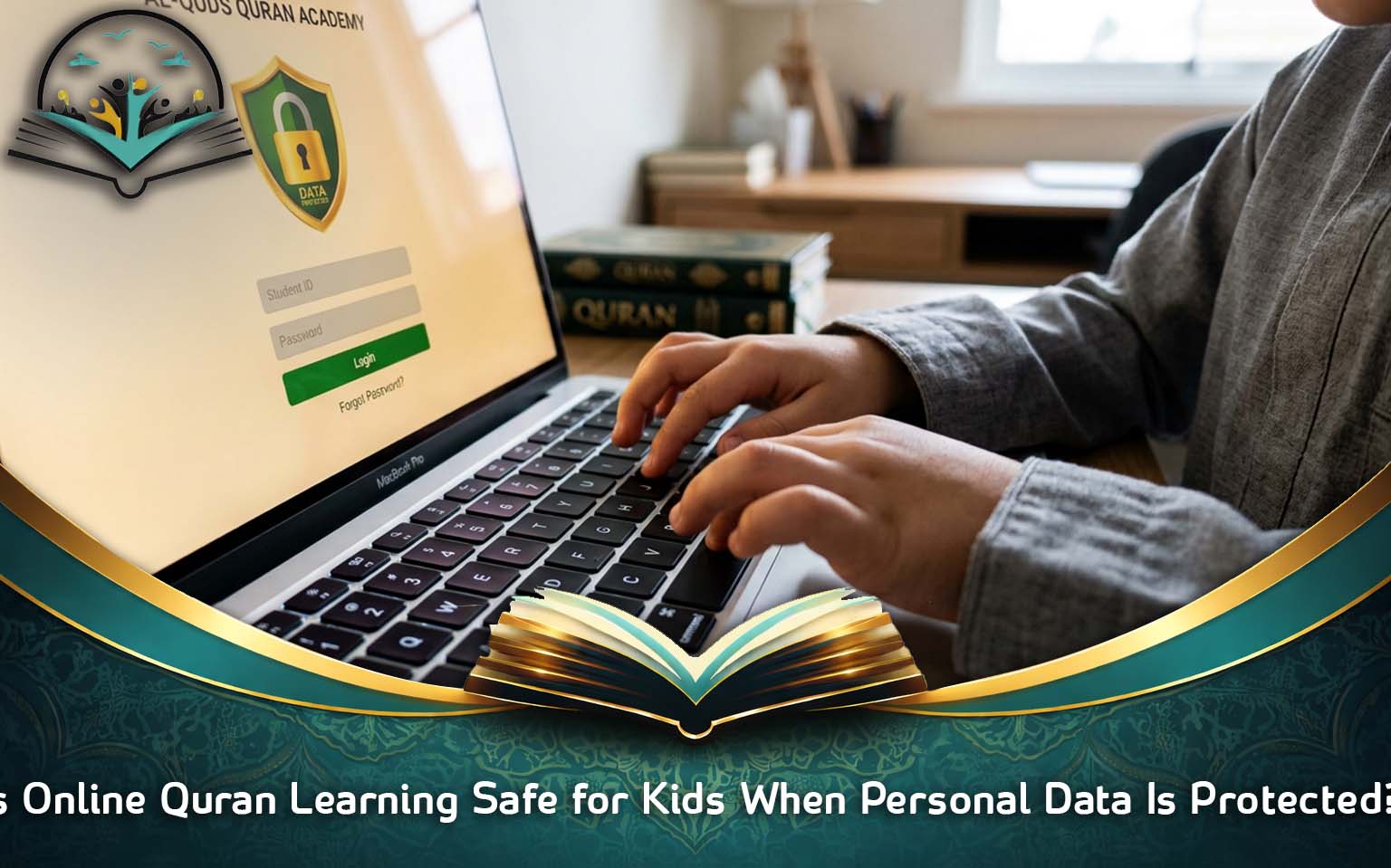
Privacy deserves the same attention as classroom safety. During enrollment, an academy may collect information such as a student's name, age, contact details, schedule, and educational requirements.
Consequently, parents should know why this information is collected and how it is protected. They should also understand who can access it and whether the academy keeps records of lessons or student progress.
The question Is Online Quran Learning Safe for Kids therefore includes a privacy question: how carefully does the academy handle children's information?
Parents should look for clear explanations instead of vague statements. A trustworthy educational provider should be able to explain its approach to personal information in language families can understand.
Information Parents Should Ask About
Before registration, consider asking:
- What information is required for enrollment?
- Why is each piece of information collected?
- Who can access student records?
- How is personal information stored?
- Are lessons recorded?
- How are recordings handled if they exist?
- Can parents request information about their child's records?
Clear answers can make the enrollment process more transparent and help families understand their responsibilities.
Understanding Recording and Classroom Privacy
Some parents are particularly concerned about whether online Quran lessons are recorded. Recording can sometimes be useful for educational or administrative purposes, but it also raises privacy questions.
Therefore, families should never assume that lessons are recorded or not recorded. Instead, they should ask the academy directly about its policy.
If recordings are used, parents should understand their purpose, who can access them, how long they are retained, and whether they are shared outside the educational environment.
For families asking Is Online Quran Learning Safe for Kids, these details can provide valuable insight into an academy's overall approach to privacy.
Likewise, children should be taught not to record, screenshot, or share lessons without permission. This simple rule can help protect the privacy of both students and teachers.
Is Online Quran Learning Safe for Kids During Private Communication?
Communication outside the actual lesson deserves careful attention. Parents should understand how teachers communicate with students and whether communication is handled through official academy channels.
A professional learning arrangement should avoid unnecessary private communication between an adult instructor and a young child outside established educational procedures. Parents should know how messages, scheduling information, homework, and feedback are delivered.
When parents ask Is Online Quran Learning Safe for Kids, they should therefore examine the complete communication system rather than focusing only on the video lesson.
For example, an academy may establish communication through parents or designated support channels. This creates greater transparency and makes it easier to address questions or concerns.
Safer Communication Practices
Parents should look for:
- Clearly defined communication channels
- Parent involvement in important messages
- Professional language and boundaries
- Appropriate handling of scheduling requests
- Clear procedures for reporting concerns
- No unnecessary sharing of personal contact information
These practices can create a more accountable relationship between families, teachers, and the academy.
Preparing Children for Safe Online Quran Lessons
Even the best safety policies cannot replace basic digital awareness. Children should understand simple rules before attending their first online Quran lesson.
First, explain that they should never share passwords or private information with strangers. Next, teach them to tell a parent if someone sends an unexpected message or asks for something that makes them uncomfortable.
Parents can also establish a dedicated learning area. A quiet location helps the child concentrate while making it easier for parents to remain aware of the lesson environment.
In addition, children should understand that they can pause and ask for help. They should never feel that they must keep something secret from their parents because an adult online tells them to do so.
For Rattel W Artaqi Quran Academy, families can make safety part of the child's normal learning routine. The goal is not to frighten children about the internet. Instead, it is to teach them practical habits that support confidence and responsible digital behavior.
Is Online Quran Learning Safe for Kids on Shared Devices?
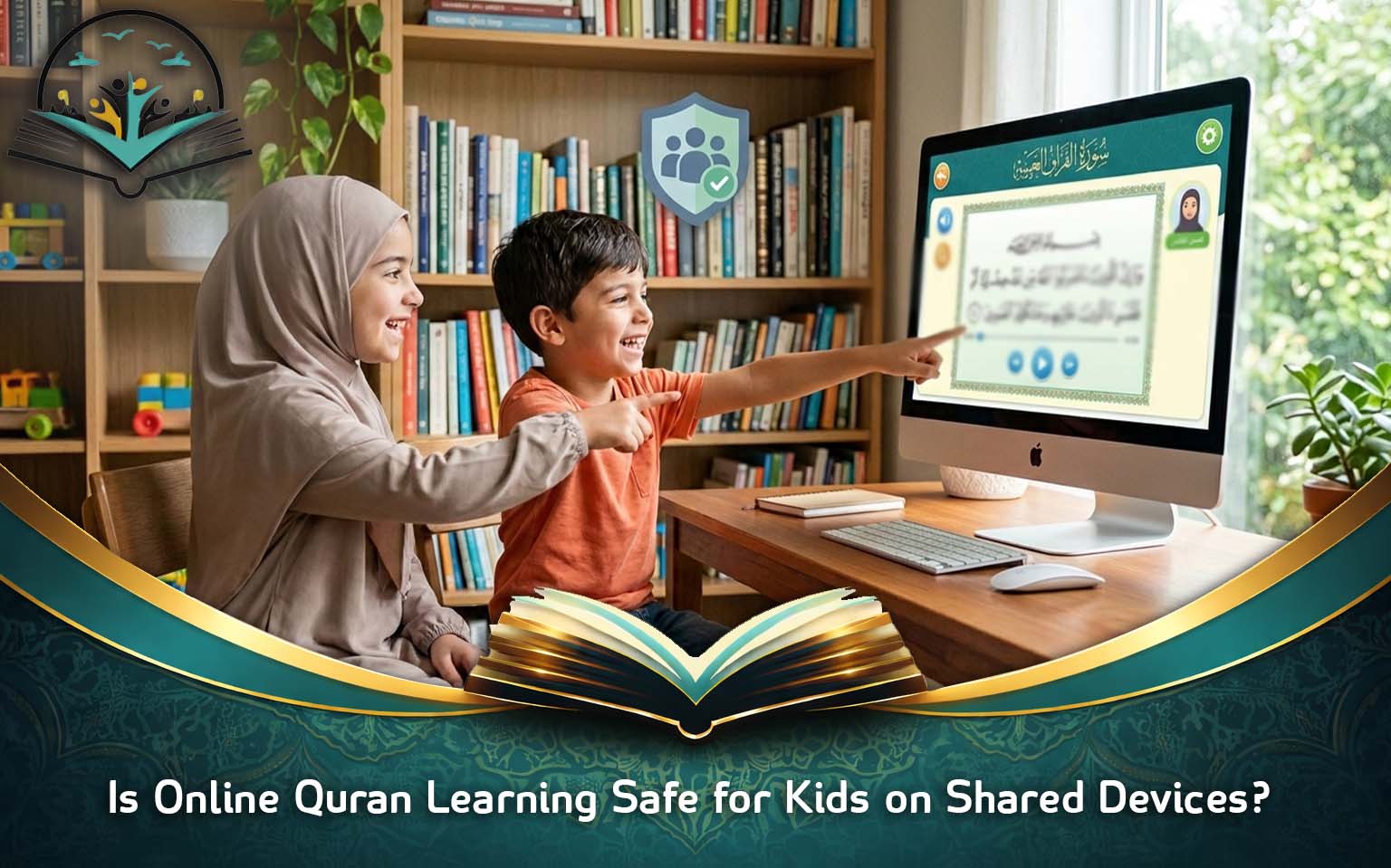
Families sometimes use a shared computer, tablet, or smartphone for online classes. Although this can be convenient, parents should take a few precautions. A secure device also makes it easier for children to focus on their lessons without unnecessary digital distractions. In fact, understanding the Benefits of learning Quran Online can help parents see why creating a well-organized home learning environment matters.
For instance, children should use their own protected profile when possible. After lessons, parents can make sure that accounts are logged out when necessary and that saved passwords are not accessible to unauthorized users.
The device itself should also receive regular software and security updates. Additionally, families should avoid installing unknown applications simply because a link appears in a message. Keeping the learning device organized can also make virtual Quran lessons smoother and more productive.
When considering Is Online Quran Learning Safe for Kids, device security may seem like a small issue. However, everyday digital habits can influence the overall safety of online education. Parents can also use this opportunity to establish simple technology rules that children follow before, during, and after every Quran lesson.
Simple Device Safety Steps
Parents can:
- Keep the operating system updated
- Use reputable security protections
- Create separate child accounts where possible
- Protect the device with a password or PIN
- Avoid unknown downloads
- Review installed applications periodically
- Teach children not to click suspicious links
These habits are useful beyond Quran classes and can benefit children whenever they use the internet. Furthermore, maintaining a dedicated learning routine can help children transition smoothly from basic Quran reading to more advanced subjects, including the Tajweed Rules for Beginners.
How Can Rattel W Artaqi Quran Academy Support a Safer Experience?
Choosing Rattel W Artaqi Quran Academy should involve more than comparing lesson schedules. Parents should consider whether the academy communicates clearly, provides appropriate teacher support, and treats student protection as part of its educational responsibility.
A positive online Quran experience should combine effective teaching with clear boundaries. Children need instructors who understand their learning needs, while parents need confidence that their concerns will be taken seriously. This is particularly important for younger students who may need additional guidance when starting Quran education online.
Moreover, safety should not prevent children from enjoying the learning process. Quran education can remain interactive, encouraging, and personalized while still maintaining sensible privacy and communication practices. For beginners, understanding foundational concepts such as the What is Noorani Qaida can also make the learning journey more structured and easier to follow.
For that reason, families should discuss expectations before beginning lessons. Asking questions about classroom procedures, teacher communication, data protection, and parental involvement can help establish a strong foundation.
The best decision is not necessarily the academy with the lowest price or the most impressive advertisement. Instead, parents should choose an environment where educational quality and student wellbeing are treated as connected priorities.
Is Online Quran Learning Safe for Kids Compared With Traditional Classes?
Online and traditional Quran education both have advantages and challenges. A physical classroom may provide face-to-face interaction, while online learning can offer greater scheduling flexibility and access to teachers regardless of location.
Therefore, the question Is Online Quran Learning Safe for Kids should not be answered by assuming that one format is automatically safer than the other. Instead, families should compare the learning environment, teacher support, supervision, flexibility, and communication standards before making a decision.
Instead, safety depends on how the educational environment is organized. A physical classroom also requires appropriate teacher conduct, supervision, privacy, and child protection. Similarly, an online classroom requires digital security, controlled communication, and responsible use of technology.
For some families, online learning may provide a particularly practical option because children can study from home. Parents can remain nearby while the child receives individualized instruction. This arrangement can also make it easier to establish regular Quran practice at home, especially when children are working toward specific memorization goals. Helpful strategies such as Tips to Memorize Quran Fast can complement a consistent study routine.
However, families should still establish clear household rules. A safe home learning environment, responsible device use, and open communication can strengthen the overall experience.
Warning Signs Parents Should Never Ignore
Parents should be cautious when an online Quran academy refuses to answer reasonable safety questions. Transparency is especially important when children are involved.
For example, unclear teacher identities, unexplained communication methods, pressure to enroll immediately, or reluctance to discuss privacy policies should encourage parents to investigate further.
Another warning sign is a lack of clear support when something goes wrong. Even well-organized online programs can experience technical problems or misunderstandings. What matters is whether the academy has a clear process for responding.
When evaluating Is Online Quran Learning Safe for Kids, parents should therefore pay attention to how an academy responds to questions before enrollment. The quality of that communication can reveal a great deal about the organization's professionalism.
Red Flags to Consider
Be cautious if an academy:
- Avoids explaining its safety procedures
- Provides unclear information about teachers
- Encourages children to communicate privately without appropriate oversight
- Has no clear complaint process
- Requests unnecessary personal information
- Cannot explain its recording or privacy practices
- Pressures parents into immediate enrollment
These signs do not automatically prove that an academy is unsafe. Nevertheless, they justify asking more questions before making a commitment.
Building a Safe and Comfortable Quran Learning Routine
Safety becomes easier when children have a predictable learning routine. A consistent schedule can reduce distractions and help parents know when lessons take place. It also gives children a clear distinction between study time and recreational screen time.
Before class, the child can prepare the Quran, notebook, headphones if appropriate, and learning device. During the lesson, the child should remain in a suitable area with minimal distractions.
Afterward, parents can briefly ask what the child learned. This simple conversation encourages children to communicate openly and allows parents to notice anything unusual.
At Rattel W Artaqi Quran Academy, families can approach online Quran learning as a partnership. Teachers provide instruction, parents provide support at home, and children gradually develop responsibility for their own learning. For younger children, parents can also use practical guidance on How to Teach Quran to Kids at Home to reinforce lessons between scheduled classes.
Furthermore, parents should avoid turning every lesson into a safety inspection. Children need to associate Quran learning with encouragement, curiosity, and spiritual growth rather than anxiety.
Questions Parents Should Ask Before Choosing an Online Quran Academy
Before enrolling, prepare a short list of questions. This makes the decision more objective and prevents important details from being overlooked.
Parents can ask about teacher qualifications, class structure, lesson duration, communication procedures, privacy, and technical support. They can also ask how the academy handles complaints or changes in teachers.
Another useful step is to understand the trial or introductory process. If a trial lesson is available, parents can observe how the teacher interacts with the child and whether the child feels comfortable.
For families considering Rattel W Artaqi Quran Academy, this evaluation process can help determine whether the program matches the child's age, learning level, schedule, and family expectations.
A Practical Pre-Enrollment Checklist
Before making a final decision, confirm that:
- The teacher is suitable for the child's age and learning level.
- The academy explains its communication procedures.
- Parents know whom to contact for concerns.
- The learning platform is appropriate for children.
- Personal information is handled responsibly.
- The child understands basic online safety rules.
- The lesson environment is comfortable and distraction-free.
- The academy communicates clearly with parents.
Is Online Quran Learning Safe for Kids? What Parents Need to Know
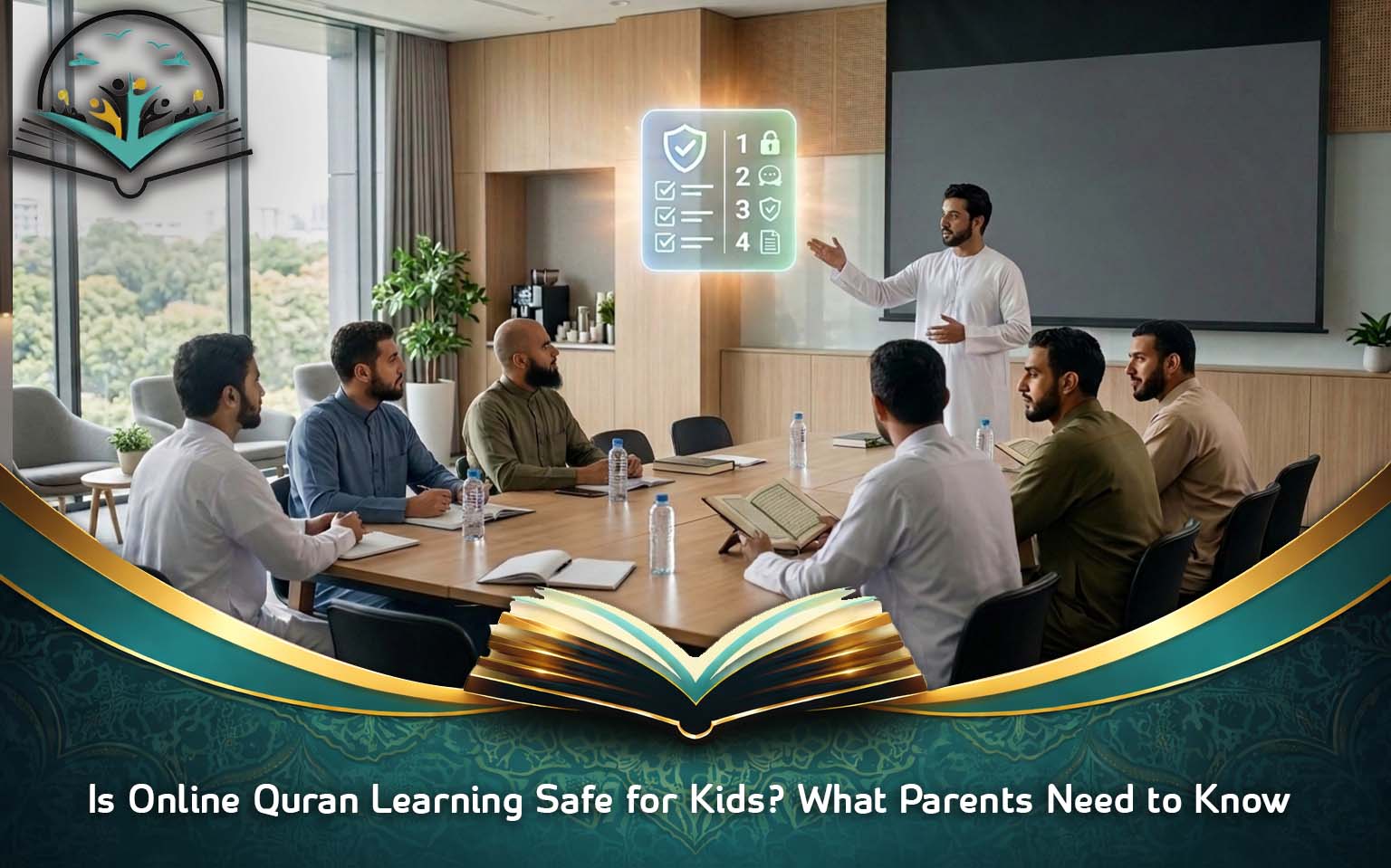
So, Is Online Quran Learning Safe for Kids? It can be, provided that the academy follows responsible safety practices and parents remain appropriately involved.
There is no single feature that makes an online Quran program completely safe. Instead, safety comes from several layers working together. Qualified teachers, controlled classroom access, responsible communication, privacy protection, parental awareness, and child-friendly digital habits all contribute to a stronger learning environment.
At the same time, parents should remember that online education is a shared responsibility. An academy can establish professional procedures, but families should also teach children how to protect their privacy and speak up when something feels wrong.
Ultimately, Rattel W Artaqi Quran Academy should be evaluated according to the same principles parents would use for any educational provider: transparency, professionalism, communication, teaching quality, and commitment to student wellbeing.
The goal is not simply to find an online Quran class. Rather, the goal is to find a learning environment where children can develop Quran skills confidently while parents feel informed and respected.
Frequently Asked Questions: Is Online Quran Learning Safe for Kids
Here are the most common questions parents ask about online Quran classes, child safety, teacher selection, and secure learning environments.
Can a child attend online Quran lessons without knowing how to use a computer?
Yes. Many children can begin with basic device skills because the teacher or parent can help them learn how to join the classroom, use the microphone, and follow simple instructions. The required technical skills are usually much easier than learning the Quran itself.
What should a child do if the internet suddenly disconnects during a lesson?
The child should follow the academy's agreed procedure, such as reconnecting through the same classroom link or informing a parent. Having a backup contact method can also make unexpected interruptions easier to manage.
Is online Quran learning suitable for children with short attention spans?
It can be suitable when lessons are age-appropriate and divided into manageable activities. Parents should discuss the child's attention level with the teacher so that the lesson structure can be adjusted when necessary.
How can parents tell whether their child is enjoying online Quran learning?
Parents can look for changes in the child's attitude toward lessons, willingness to participate, and interest in practicing between classes. Asking open-ended questions about what the child enjoyed or found difficult can provide better insight than simply asking whether the lesson was “good.”
In conclusion, Parents have every right to ask detailed questions before allowing their children to study online. In fact, asking Is Online Quran Learning Safe for Kids is an important part of responsible decision-making.
Online Quran education can offer children personalized attention, flexible scheduling, and access to structured religious learning from home. However, those benefits become more valuable when safety is built into the learning process.
Before choosing Rattel W Artaqi Quran Academy, families should review teacher standards, communication procedures, privacy practices, platform security, and parental involvement options. They should also discuss simple online safety rules with their children.
Most importantly, parents should look for transparency. An academy that welcomes reasonable questions and communicates clearly gives families a stronger foundation for a positive educational relationship.
With thoughtful preparation and responsible practices, online Quran learning can become a comfortable, structured, and rewarding part of a child's educational journey.
Add New Comment