 العربية
 English

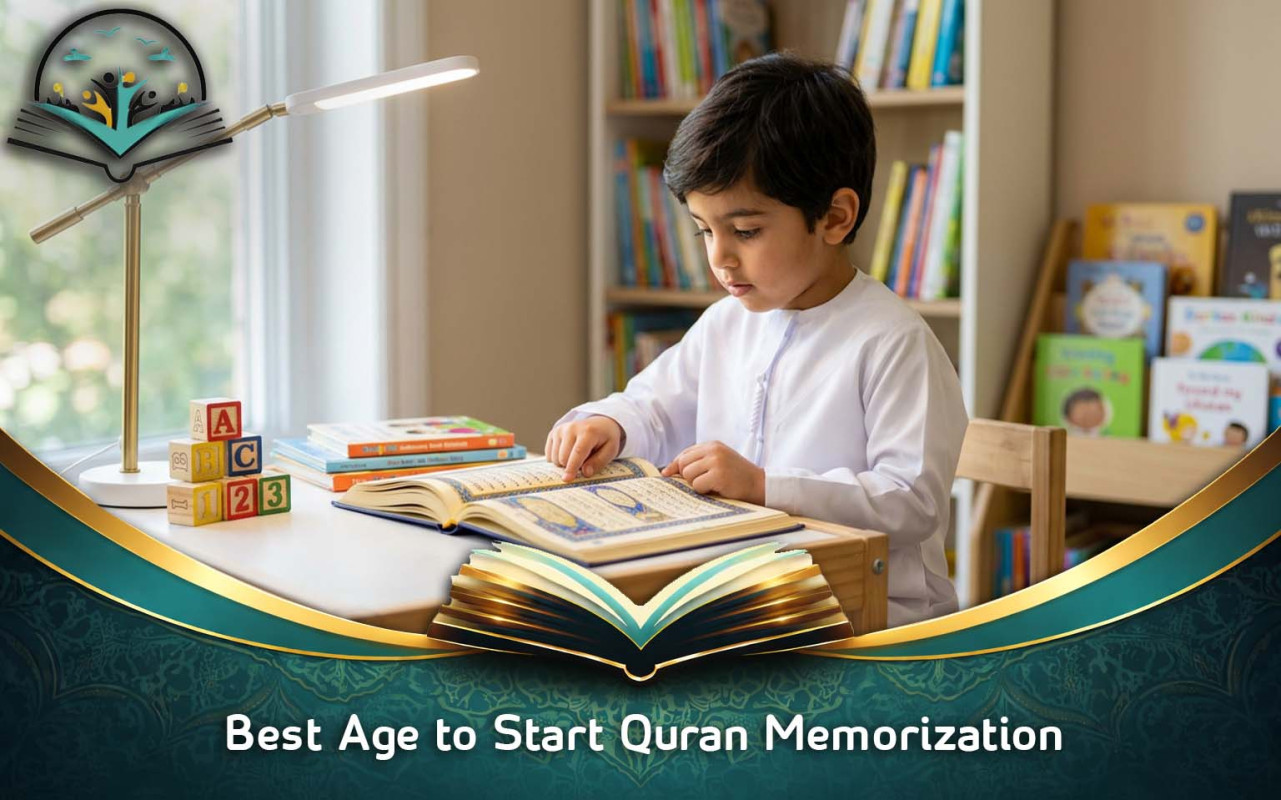
Best Age to Start Quran Memorization is a question many parents ask when they want to introduce their children to the Noble Quran in a meaningful and lasting way. While some children may show an interest in memorization at a very young age, there is no single age that works perfectly for every child. Readiness, attention span, Quran reading ability, pronunciation, motivation, and family support can all influence the right starting point.
For many children, the early school years can provide a practical opportunity to begin structured memorization. However, preparation can start much earlier through listening, simple recitation, Quran stories, and positive family routines. In this way, memorization becomes a gradual journey rather than a demanding task imposed on the child.
Parents who are looking for structured guidance can also consider Rattel W Artaqi Quran Academy, where an organized learning environment can help children develop consistent Quran habits while progressing according to their individual abilities.
What Is the Best Age to Start Quran Memorization?

There is no universally prescribed age for beginning Hifz. Instead, the Best Age to start Quran Memorization depends on whether a child is emotionally and academically prepared for regular practice.
Some children may be ready around six or seven, while others may benefit from waiting until they are older. Likewise, a younger child might successfully memorize short Surahs if they already recognize Arabic letters, listen attentively, and enjoy repeating Quranic verses.
Therefore, parents should look beyond the child's birthday. A more useful question is: Is my child ready to participate consistently without developing a negative association with Quran learning?
Several signs can help answer that question:
- The child can sit and focus for a short lesson.
- They enjoy listening to Quran recitation.
- They can repeat words and short verses accurately.
- They recognize some Arabic letters or Quranic words.
- They respond positively to encouragement.
- They can follow simple instructions.
- They are willing to practice regularly.
When these abilities appear, parents can gradually introduce memorization while keeping expectations realistic.
Begin Your Spiritual Journey With Trusted Quran Guidance
Take the next step toward deeper Quran understanding with Rattel W Artaqi Quran Academy and start learning with confidence today. Our experienced teachers provide supportive online classes designed for children, adults, and beginners who want to improve recitation, Tajweed, and Islamic knowledge.
We focus on clear explanations, flexible schedules, and practical learning that fits your daily life. Join our academy now and build a stronger connection with the Holy Quran through engaging lessons that inspire spiritual growth, discipline, and lasting faith for every student.

Why Is the Best Age to Start Quran Memorization Different for Every Child?
Children develop at different rates. Consequently, two children of the same age may have completely different levels of concentration, language development, confidence, and memory.
One child might remember a short Surah after several repetitions, whereas another may need considerably more practice. Neither situation means that one child is better than the other. Instead, it shows why Quran memorization should be personalized.
Moreover, the child's previous exposure to Quran can make a significant difference. A child who has listened to the Quran at home for years may find memorization more familiar than a child encountering structured recitation for the first time.
For this reason, parents should avoid comparing siblings or classmates. Comparisons can create unnecessary pressure and may turn an otherwise rewarding experience into a competition.
A better approach is to establish an achievable routine, celebrate progress, and allow the child's abilities to guide the pace.
Should Children Learn Quran Before They Start Memorizing?
Yes. Learning Quran and memorizing Quran are connected, but they are not exactly the same activity.
Before expecting a child to memorize substantial portions, parents should help them become comfortable with basic Quran reading and pronunciation. Early exposure can include listening to recitation, recognizing Arabic letters, practicing simple words, and repeating short Surahs.
This preparation makes the memorization process easier because the child is not trying to learn pronunciation and memorize unfamiliar words at the same time.
Additionally, understanding the general meaning of what the child recites can make the verses more memorable. Parents do not need to provide complicated explanations. Simple, age-appropriate conversations about the themes of a Surah can be enough.
Thus, the Best Age to Start Quran Memorization should be considered alongside the child's Quran literacy. A child who needs more time to develop reading skills may benefit from preparation before beginning a demanding memorization schedule.
Signs Your Child Is Ready for Quran Memorization
Age provides only one part of the answer. A child's behavior and learning habits can offer more useful clues.
1. Your Child Can Concentrate
Memorization requires attention. A child does not need to sit for an hour, but they should be able to focus during a short lesson without becoming overwhelmed.
2. Your Child Enjoys Repetition
Repetition is central to Hifz. If a child naturally enjoys repeating words, songs, phrases, or short Surahs, that can be a positive indication that memorization may suit them.
3. Your Child Can Follow Instructions
A teacher may ask the child to listen, repeat, correct a word, or recite independently. Being able to follow these simple steps makes lessons much more productive.
4. Your Child Is Comfortable Making Mistakes
Nobody memorizes perfectly from the first attempt. A child should understand that mistakes are part of learning rather than something embarrassing.
5. Your Child Shows Personal Interest
Perhaps the strongest sign is genuine curiosity. If a child asks to learn a Surah, repeats verses independently, or enjoys Quran-related activities, parents should encourage that interest.
Best Age to Start Quran Memorization: Preparing Before Hifz
Preparation can begin years before formal memorization. In fact, early Quran exposure can create familiarity without placing pressure on the child.
Parents can create a calm Quran-centered environment through simple activities such as:
- Playing appropriate Quran recitations during quiet family time.
- Reading short Quranic stories in an age-appropriate manner.
- Encouraging children to repeat familiar short Surahs.
- Teaching Arabic letters gradually.
- Practicing correct pronunciation without excessive correction.
- Including Quran time in the child's daily routine.
- Allowing children to see parents reading the Quran.
These activities are valuable because they associate the Quran with consistency, family connection, and positive experiences.
Furthermore, preparation allows parents to observe how their child learns. Some children respond strongly to hearing, while others remember better when they see words or write them down.
How Can Parents Make Quran Memorization Enjoyable?

A successful memorization routine does not have to feel like schoolwork. Children often learn better when lessons are predictable, encouraging, and appropriate for their age.
Instead of demanding a large amount every day, parents can establish small goals. For example, a young learner might work on a few verses and then spend time reviewing previous material.
Positive reinforcement can also help. A simple word of encouragement, a progress chart, or a family celebration can make an achievement feel meaningful.
However, rewards should not become the only reason a child memorizes. The long-term objective is to develop love and respect for the Quran.
Most importantly, parents should avoid using fear, humiliation, or constant comparisons. If a child associates memorization with anxiety, maintaining a long-term routine can become difficult.
Practical Methods for Memorizing Quran
Different children respond to different memorization techniques. Therefore, families should experiment with methods while maintaining consistency.
Listen Before You Memorize
Listening to a reliable recitation allows the child to become familiar with pronunciation, rhythm, and verse structure.
The child can listen to a selected passage several times before attempting to recite it. Afterward, they can repeat the passage while following the Quran.
Repeat One Verse at a Time
Rather than presenting a large section at once, divide the material into manageable portions.A simple routine can look like this:
- Listen to the verse.
- Read it carefully.
- Repeat it several times.
- Recite it without looking.
- Correct mistakes.
- Connect it with the previous verse.
- Review the complete section.
Use Visual Memory
Some learners remember better when they repeatedly see the same page. Keeping the Quran format consistent can help them remember where a verse appears visually.
Writing selected verses may also reinforce learning for children who benefit from combining reading and handwriting.
Recite Aloud
Quiet reading has value, but speaking the verses aloud allows the learner to hear their own recitation. This can make pronunciation errors easier to notice.
Consequently, reciting aloud should form part of the practice routine whenever possible.
Best Age to Start Quran Memorization and the Role of Revision
Memorization does not end when a child successfully recites a new passage once. Without regular revision, previously learned material can become difficult to recall.
For that reason, revision should be included from the beginning.
A balanced routine can contain three elements:
- New memorization: learning a manageable amount.
- Recent revision: reviewing material learned during the previous few days.
- Older revision: revisiting earlier Surahs or portions.
The exact amount should depend on the child's level. Younger children may need a smaller new portion and more repetition, while experienced students may gradually increase their workload.
Moreover, parents should remember that slower progress is not necessarily bad progress. Strong retention is more valuable than rushing through large sections and forgetting them later.
How Can Online Quran Learning Support Children?
Online learning can provide a practical solution for families who need flexible scheduling. A child can attend lessons from home while receiving guidance from a qualified teacher.
For many families, this format offers several practical benefits:
- Flexible lesson times.
- Individual attention.
- Regular teacher feedback.
- Convenient access from home.
- Easier communication with parents.
- Structured memorization plans.
- Opportunities for frequent recitation practice.
Nevertheless, online learning works best when the home environment supports concentration. Parents should prepare a quiet learning area and ensure that the child has the necessary materials before the lesson begins.
Rattel W Artaqi Quran Academy can be considered by families looking for an organized approach to online Quran education and memorization.
Choosing a Quran Memorization Program for Your Child
Selecting a suitable program requires more than looking at the number of lessons offered. Parents should consider whether the teaching approach matches their child's age and learning style.
Before enrolling, ask questions such as:
- How does the teacher assess the child's current level?
- Is the memorization plan individualized?
- How often is previous material reviewed?
- How are pronunciation mistakes corrected?
- How does the teacher maintain the child's motivation?
- Can parents receive progress updates?
- Are lesson times suitable for the child's routine?
A good program should recognize that children are learners, not machines. The objective should be consistent improvement while preserving enthusiasm for the Quran.
For families considering a structured online option, Rattel W Artaqi Quran Academy can provide a setting in which memorization is approached as a gradual educational journey.
Best Age to Start Quran Memorization Without Putting Pressure on Children
Parents naturally want their children to succeed. However, excessive pressure can work against that goal.
A child who struggles with a particular passage may simply need additional repetition. Increasing the workload immediately can create frustration rather than improvement.
Instead, parents can reduce the amount of new material temporarily and focus on strengthening previous memorization.
It is also useful to distinguish between encouragement and pressure. Encouragement communicates confidence: “You can learn this, and we will practice together.” Pressure often communicates fear: “You must finish this today.”The first approach supports a healthier learning relationship.
Therefore, when considering the Best Age to Start Quran Memorization, parents should focus not only on when memorization begins but also on how the experience is introduced.
How Long Should a Child Practice Quran Memorization?
There is no universal number of hours that every child should spend memorizing Quran. The appropriate duration depends on age, concentration, previous knowledge, and the amount of material being reviewed.
Young children usually benefit from shorter, focused sessions rather than lengthy lessons. As their concentration improves, practice time can gradually increase.
A practical session may include:
- A short warm-up with familiar Surahs.
- New memorization.
- Repetition of difficult verses.
- Review of recently learned material.
- A final independent recitation.
Short sessions can be repeated throughout the week. Consistency matters more than forcing a child to study for long periods once or twice.
Furthermore, children need time for school, sleep, play, family activities, and rest. A sustainable Quran routine should fit naturally into the child's overall life.
What If My Child Is Older?
It is never necessary to assume that a child has missed the right opportunity simply because they did not begin memorization at six or seven. Older children can still develop strong memorization skills. In some cases, they may have advantages because they can concentrate for longer periods, understand instructions more clearly,
and take greater responsibility for their own practice. Learning the Quran online can also provide flexibility for older students who have school responsibilities and need a schedule that fits their daily routine. Parents can explore the Benefits of Learning Quran Online to understand how structured online learning may support their child's progress.
Teenagers may also be capable of setting personal goals and tracking their progress. Thus, the Best Age to Start Quran Memorization is not a deadline. Starting later with commitment and consistency can be far more beneficial than beginning early under intense pressure.
Parents should focus on the child's current abilities rather than regretting when the journey could have started.
Building a Daily Quran Routine at Home
A predictable routine can make memorization easier to maintain. Children often respond well when they know exactly when Quran practice takes place. For example, a family can choose a consistent time after school, before bedtime, or during another calm period of the day.
A simple weekly structure might include:
- Day 1: Introduce new verses.
- Day 2: Review and add a small portion.
- Day 3: Strengthen pronunciation and recall.
- Day 4: Connect the verses.
- Day 5: Recite the complete section.
- Day 6: Review older material.
- Day 7: Light revision or rest.
Before increasing the memorization target, parents should make sure that the child can pronounce the verses correctly. Learning the Tajweed Rules for Beginners can help establish accurate pronunciation and recitation habits from the beginning.
The schedule does not need to be identical for every family. What matters is creating a rhythm that the child can realistically maintain.
How Can Parents Track Memorization Progress?

Tracking progress can help parents identify patterns without turning Quran learning into a stressful performance. A simple record can include:
- Surah or passage being studied.
- Date new verses were introduced.
- Number of successful recitations.
- Common pronunciation difficulties.
- Sections requiring additional review.
- Teacher feedback.
- Overall confidence level.
However, parents should measure more than the number of verses memorized. Improvement in pronunciation, confidence, consistency, and independent recitation are also meaningful achievements.
For children who are still developing their basic Arabic reading skills, understanding What is Noorani Qaida can provide useful background on the foundational skills needed for reading Quranic Arabic accurately.
Over time, these records can help the teacher and family adjust the learning plan.
Best Age to Start Quran Memorization: Avoiding Common Mistakes
Several common mistakes can make memorization unnecessarily difficult.
Starting With Too Much Material
Large daily targets may look impressive, but they can overwhelm beginners. A smaller amount that remains strong is often more useful. Children should gradually increase their workload as their confidence and retention improve.
Ignoring Revision
Learning new verses without reviewing older ones can create a weak foundation. Therefore, regular revision should remain part of the routine even when the child is eager to memorize new passages.
Correcting Every Mistake Harshly
Correction is essential, but the manner of correction matters. Children need to know that mistakes can be fixed without feeling embarrassed or discouraged.
Comparing Children
Every learner has a different pace. Comparison can reduce confidence and motivation. Instead, parents should focus on individual progress and celebrate genuine improvement.
Changing Methods Too Often
Trying a new technique every few days may prevent the child from developing a consistent routine. Give a suitable method enough time to work and adjust it only when necessary.
Treating Memorization as a Race
The Quran is not a competition where speed is the only measure of success. Retention, correct recitation, understanding, and love for the Quran all matter. Parents looking for practical strategies can also review Tips to Memorize Quran Fast while keeping accuracy and revision as priorities.
How to Keep Memorized Surahs Strong?
Once a child has memorized a Surah, it should remain part of their regular recitation. One practical approach is to incorporate memorized passages into daily prayers when appropriate. Reciting familiar portions in different settings can also strengthen recall.
Additionally, occasional testing can identify weak points before they become forgotten sections. Parents should not wait until a child forgets a Surah completely before reviewing it. Regular maintenance is much easier than rebuilding lost memorization.
A teacher can also listen to older portions periodically and identify verses that need additional attention. At home, parents can use age-appropriate activities and structured practice to reinforce what the child has learned. For families who want practical guidance on supporting Quran learning at home, How to Teach Quran to Kids at Home can provide additional ideas.
Best Age to Start Quran Memorization: A Balanced Approach
Ultimately, the right starting point combines readiness, support, and realistic expectations.
A young child who enjoys Quran activities may begin learning short Surahs early. Another child may need additional preparation before structured Hifz. Both paths can be successful.
The most important principles are:
- Start according to readiness rather than comparison.
- Build Quran familiarity before demanding extensive memorization.
- Keep lessons age-appropriate.
- Prioritize accurate recitation.
- Review consistently.
- Encourage rather than intimidate.
- Adapt the pace when necessary.
- Choose qualified guidance when additional support is needed.
With this approach, parents can turn Quran memorization into a sustainable part of childhood rather than a short-term challenge.
Starting Quran Memorization With Rattel W Artaqi Academy
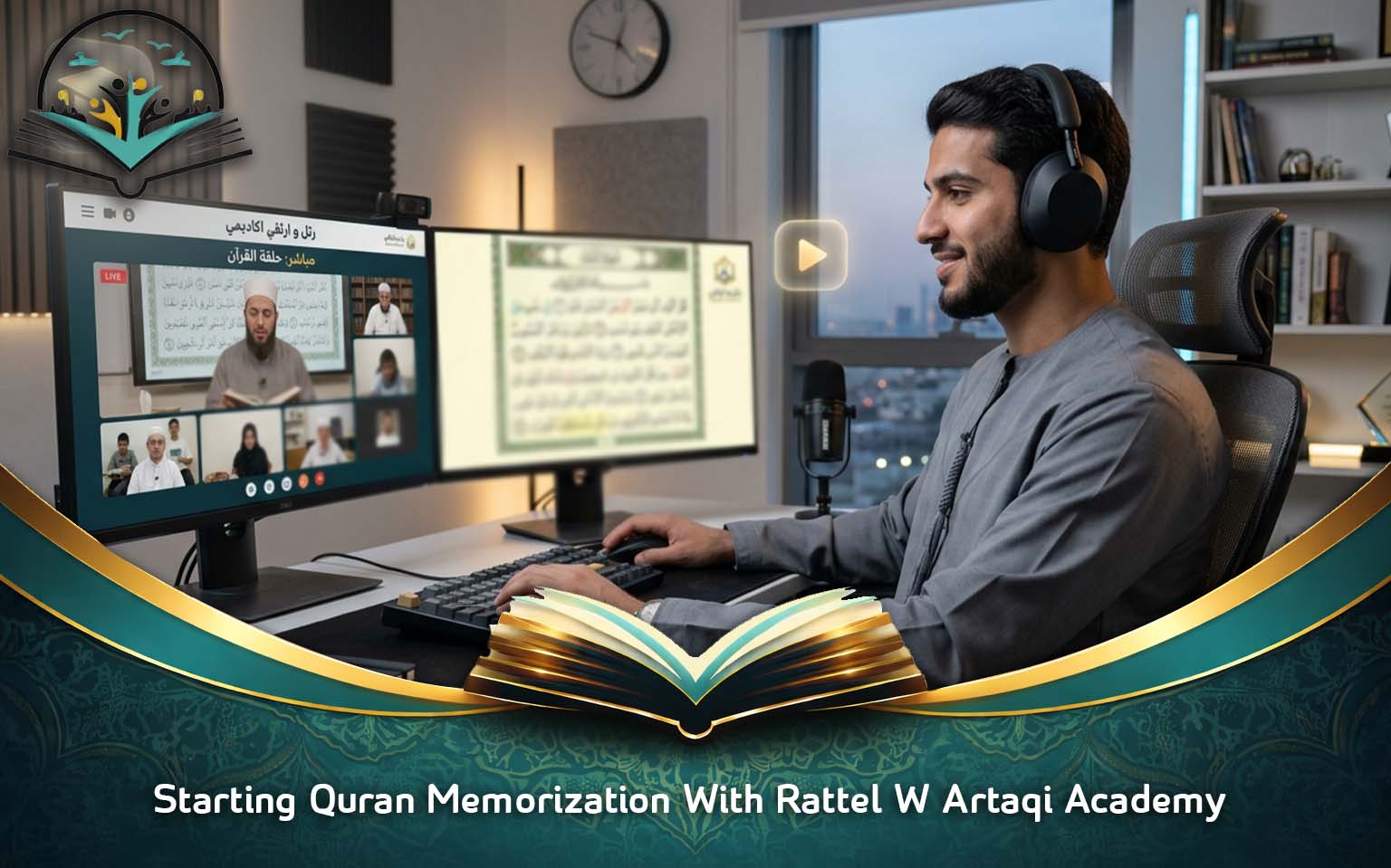
Families looking for structured support can explore Rattel W Artaqi Quran Academy as part of their child's Quran learning journey. A suitable learning environment can provide regular instruction, teacher feedback, guided practice, and a clear progression from one stage to another.
The goal should not simply be to increase the number of memorized pages. Instead, children need a learning experience that balances memorization with correct recitation, revision, confidence, and positive engagement.
When parents combine professional guidance with supportive practice at home, children can develop habits that remain useful throughout their Quran journey.
Frequently Asked Questions: Best Age to Start Quran Memorization
Frequently Asked Questions answers common questions about the Best Age to Start Quran Memorization and helps parents choose the right approach for their children.
1. What should I do if my child forgets a Surah after memorizing it?
Forgetting can happen during the learning process. Rather than starting from zero, return to the difficult verses, listen to the passage, and reconnect it with the surrounding verses. Frequent short reviews can gradually restore confidence and accuracy.
2. Should a child memorize Quran in Arabic if they do not speak Arabic?
Yes, a child can memorize the Quran without speaking Arabic as their everyday language. However, learning basic Arabic pronunciation and understanding the general meaning of the verses can make the experience more meaningful and help the child recite with greater awareness.
3. How can I tell whether my child's memorization is strong?
Ask the child to recite the passage at different times without looking at the Quran. You can also ask them to begin from different verses or continue after a selected stopping point. This helps reveal whether they genuinely remember the passage rather than simply following a familiar sequence.
4. What should I do when my child refuses to memorize Quran?
First, identify the reason behind the resistance. The child may be tired, bored, confused, or uncomfortable with the lesson style. Reduce pressure, discuss the difficulty calmly, and consider adjusting the lesson length or teaching approach. A positive relationship with Quran learning should remain the priority.
In conclusion, the Best Age to start Quran Memorization is not determined by a specific number. Every child develops differently, so parents should consider readiness, concentration, reading ability, motivation, and emotional comfort before beginning a structured Hifz journey. Starting with manageable goals, regular revision, and positive encouragement can help children build confidence while developing a lasting relationship with the Quran.
With patient guidance and a suitable learning environment, Quran memorization can become a rewarding part of a child’s routine. Rattel W Artaqi Quran Academy can provide structured support to help learners progress according to their individual abilities. Ultimately, consistency, accurate recitation, and love for the Quran are more important than memorizing as quickly as possible.
Add New Comment