 العربية
 English


How to learn the Quran with Tajweed is a question many Muslims ask when they want to improve their recitation while studying from the comfort of their homes. Whether you are a complete beginner, a parent helping a child, or an adult returning to Quran learning after a long break, developing correct recitation requires a clear learning plan, consistent practice, and an understanding of the basic Tajweed rules.
Learning at home offers flexibility, but it also comes with responsibilities. Students need to understand Arabic letter pronunciation, recognize the different articulation points, practice recitation regularly, and identify mistakes before they become established habits. Moreover, listening to skilled Quran reciters and receiving feedback from a qualified teacher can make the learning process more accurate and organized.
This guide explains the essential stages of learning Quranic recitation at home, from mastering the Arabic alphabet to applying advanced pronunciation rules. It also explores useful learning resources, practical exercises, common mistakes, and the role of structured online lessons. By following these recommendations, beginners and experienced learners can develop a realistic routine and gradually improve their confidence when reciting the Holy Quran.
Why Is Learning Quran with Tajweed Important?

Tajweed is the set of rules that explains how Quranic letters and words should be pronounced during recitation. It covers articulation points, letter characteristics, elongation, nasal sounds, pauses, and other pronunciation principles. Therefore, learning Tajweed is not simply about making the recitation sound beautiful; it is also about preserving the correct pronunciation of the Quranic text.
Understanding these principles helps students recognize the differences between Arabic sounds that may initially seem similar. It also teaches them how to give every letter its appropriate characteristics without adding unnecessary sounds or changing its pronunciation.
How to Learn Quran with Tajweed and Improve Recitation Accuracy?
Correct letter pronunciation: Learners understand where Arabic letters originate and how to pronounce them accurately.
- Avoiding recitation mistakes: Knowledge of pronunciation rules helps students recognize and correct errors.
- Better understanding of recitation: Students become more familiar with the structure and rhythm of Quranic words.
- Improved memorization: Correct pronunciation from the beginning can make memorized verses easier to review accurately.
- Greater confidence: Understanding the rules allows learners to approach unfamiliar verses with better preparation.
- Consistent recitation: Tajweed provides a framework that students can apply throughout their Quran reading journey.
Furthermore, learning these rules gradually makes Quran practice more organized. Instead of guessing how a letter should sound, students develop the ability to recognize its articulation point and apply the appropriate rule.
Improve Your Quran Recitation with Expert Guidance
Are you ready to overcome common Quran recitation mistakes and recite the Holy Quran with greater accuracy and confidence? At Rattel W Artaqi Quran Academy, you can work on your pronunciation, strengthen your understanding of Tajweed rules, and improve your reading fluency through structured learning and guided practice.
Whether you are a beginner or an experienced reader, focusing on your individual challenges can help you build better recitation habits step by step. Join Rattel W Artaqi Quran Academy today and take the next step toward more accurate Quran recitation with guidance tailored to your learning needs.
Start your journey toward clearer pronunciation, consistent Tajweed application, and a stronger connection with the words of the Holy Quran.

What Is the Difference Between Reading and Reciting with Tajweed?
Reading the Quran involves recognizing words and pronouncing their letters, while reciting with Tajweed requires applying specific rules to preserve the correct characteristics and pronunciation of those letters.
For example, a student may recognize a word correctly but still pronounce one of its letters from an incorrect articulation point. Similarly, overlooking a nasalization rule or extending a vowel incorrectly can affect the quality of recitation.
Consequently, students should work on both reading fluency and pronunciation accuracy. Improving one without paying attention to the other may leave important weaknesses in their recitation.
How to Learn Quran with Tajweed at Home Step by Step?
A structured approach makes learning easier because each stage prepares students for the next one. Beginners should avoid studying several complicated rules simultaneously. Instead, they should build a strong foundation before moving toward more detailed Tajweed concepts.
The following steps provide a practical learning path for students who want to develop their recitation skills independently while receiving appropriate guidance when necessary.
Step 1: Master the Arabic Alphabet and Letter Sounds
The first stage is learning to recognize Arabic letters and pronounce each one correctly. This is especially important for students who do not speak Arabic or have limited experience reading the Quran. Adults beginning this journey can also benefit from guidance on how to learn quran as an adult.
Although some Arabic letters share similar shapes or sounds, their pronunciation can differ significantly. For this reason, learners should study the alphabet carefully rather than depending entirely on visual recognition. Focus on the following exercises:
- Recognize all Arabic letters in their isolated forms.
- Learn how letters appear at the beginning, middle, and end of words.
- Practice the short vowel marks: Fathah, Kasrah, and Dammah.
- Recognize Sukoon and Shaddah.
- Read simple combinations of letters and vowel marks.
- Repeat difficult sounds until their pronunciation becomes more consistent.
Additionally, students should distinguish between letters that may sound similar to beginners, such as س and ص or ت and ط.
A useful exercise is to select three or four letters each day, listen to their correct pronunciation, and repeat them in different combinations. Once recognition becomes comfortable, learners can move to short Quranic words.
Step 2: Understand Makharij Al-Huroof
Makharij Al-Huroof refers to the articulation points from which Arabic letters are produced. Understanding these points is essential because a letter may be recognized visually while still being pronounced incorrectly. The articulation points are generally studied through five main areas:
- Al-Jawf (The Oral and Throat Cavity): Associated with the articulation of the elongated vowel sounds.
- Al-Halq (The Throat): Includes letters produced from different areas of the throat.
- Al-Lisan (The Tongue): Includes several letters articulated through different positions of the tongue.
- Ash-Shafatan (The Two Lips): Includes letters produced using the lips.
- Al-Khayshum (The Nasal Passage): Associated with the nasal sound known as Ghunna.
For practical learning, students should listen to each letter separately before practicing it within words. A teacher can demonstrate the correct tongue or lip position and identify subtle errors that may be difficult to notice independently. When selecting a suitable learning provider, students can also review How to Choose the Right Online Quran Academy.
Step 3: Study Sifaat Al-Huroof
After understanding articulation points, learners should become familiar with Sifaat Al-Huroof, which refers to the characteristics of Arabic letters.
These characteristics explain how a letter is produced and how its sound differs from other letters. Some characteristics are permanent, while others relate to specific pronunciation conditions. Important examples include:
- Hams and Jahr.
- Shiddah and Rikhawah.
- Isti'la and Istifal.
- Itbaq and Infitah.
- Qalqalah.
Students do not need to memorize every technical detail immediately. Instead, they should begin by understanding the most important characteristics and listening to examples.
For instance, recognizing the difference between heavy and light letters helps prevent common pronunciation mistakes. Regular repetition also allows students to apply these characteristics more naturally during Quran recitation. Developing accurate pronunciation first provides a helpful foundation for learning how to read quran fast without compromising the correct articulation of letters.
Step 4: Learn the Basic Tajweed Rules Gradually
Once the alphabet, articulation points, and letter characteristics become familiar, students can begin studying the main Tajweed rules. Understanding the Importance of Learning Quran with Tajweed helps learners recognize why these rules matter for accurate Quran recitation.
A gradual approach is preferable because each rule requires explanation, listening, and practical application.
Some essential topics include:
Rules of Noon Sakinah and Tanween
These rules explain how Noon Sakinah and Tanween are pronounced when followed by particular Arabic letters. They include:
- Izhar.
- Idgham.
- Iqlab.
- Ikhfa.
Rules of Meem Sakinah
These rules describe the pronunciation of Meem Sakinah in different contexts:
- Ikhfa Shafawi.
- Idgham Shafawi.
- Izhar Shafawi.
Madd (Elongation)
Madd concerns extending vowel sounds for the prescribed duration according to the applicable rule. Students should learn the difference between natural Madd and other types of elongation.
Ghunna (Nasalization)
Ghunna is a nasal sound associated with specific letters and recitation rules. Learners should practice producing it correctly without exaggerating its duration.
Qalqalah
Qalqalah refers to the characteristic echoing sound produced when certain letters have sukoon. Its letters are commonly remembered through the expression قطب جد.
Rather than trying to master everything in one lesson, students should study one topic, listen to examples, and apply the rule in short Quranic passages.
Step 5: Listen to Skilled Quran Reciters
Listening is an important part of developing accurate recitation. It allows learners to hear how Tajweed rules are applied in complete verses rather than studying them only as theoretical definitions.
Students can choose reliable recordings from recognized reciters, such as Sheikh Mahmoud Khalil Al-Husary and Sheikh Mohamed Siddiq El-Minshawi. Their recitations provide useful listening material for learners who want to follow clear pronunciation. To make listening more effective:
- Choose a short passage from the Quran.
- Listen to the recitation without reading at first.
- Listen again while following the Mushaf.
- Pause after each verse or short phrase.
- Repeat the passage while paying attention to the letters and vowel sounds.
- Compare your pronunciation with the original recording.
However, listening should support instruction rather than replace it. A recording cannot identify whether a student is making a mistake or explain how to correct an individual articulation problem. Learners who later wish to pursue formal Quran recitation certification can explore how to get ijazah in quran online and understand the learning path involved.
Step 6: Practice Quran Recitation Every Day
Consistency is more valuable than completing a large amount of material in a single session. Even a short daily practice period can help students maintain their progress.
A beginner may start with 10 to 15 minutes and gradually increase the duration according to their ability and available time. A practical daily session can include:
- Five minutes reviewing Arabic letters or previously studied rules.
- Five minutes listening to a short Quranic passage.
- Five minutes reading aloud and repeating difficult words.
- Additional time for teacher feedback or correcting mistakes when available.
Moreover, students should avoid rushing through verses simply to finish a planned amount of reading. Pronunciation accuracy should remain a priority throughout the learning process.
Step 7: Apply Tajweed Rules While Reading Short Surahs
Learning individual rules is useful, but students must also understand how those rules appear in actual Quranic verses. Short Surahs provide suitable practice material because learners can repeat them regularly and become familiar with their vocabulary.
Surah Al-Fatihah, Surah Al-Ikhlas, Surah Al-Falaq, and Surah An-Nas can be included in a beginner's practice routine, depending on the student's current reading ability. During each exercise, focus on:
- Pronouncing every letter from its correct articulation point.
- Applying the relevant vowel marks.
- Recognizing places where elongation is required.
- Paying attention to nasalization.
- Observing appropriate stopping and starting rules.
- Avoiding unnecessary pauses within connected words.
As confidence improves, learners can gradually practice longer passages. Nevertheless, they should continue reviewing earlier material to maintain accuracy.
How to Learn Quran with Tajweed Using Effective Home Learning Resources?

Having suitable learning resources makes home study more organized. However, students do not need expensive equipment or a complicated collection of materials to begin. A reliable Mushaf, suitable audio recordings, a notebook, and access to qualified instruction can provide a useful starting point.
The most important consideration is choosing resources that support correct pronunciation instead of encouraging students to depend entirely on written explanations.
Choose a Suitable Tajweed Mushaf
A color-coded Tajweed Mushaf can help beginners recognize certain pronunciation rules through visual differences. Depending on the edition, colors may indicate rules such as Ghunna, Ikhfa, Idgham, or Madd.
These visual markings can make revision easier, especially for students who are still learning to recognize the rules.
Nevertheless, learners should understand that colors are educational aids rather than substitutes for studying Tajweed. Different editions may use different color systems, so students should check the explanation provided with their Mushaf.
Use Audio Recordings for Repetition
Audio materials allow learners to listen to individual letters, words, and complete Quranic passages whenever they have time.
For better results, organize recordings according to the topics being studied. For example, keep separate materials for articulation points, Madd, Noon Sakinah, and short Surahs.
In addition, avoid switching between too many recordings during one session. Following one clear recitation at a manageable pace makes comparison easier.
Keep a Tajweed Notebook
Writing down important rules helps students organize information and remember previous lessons. A useful notebook can contain:
- The name of each Tajweed rule.
- A simple explanation in the student's preferred language.
- Quranic examples.
- Difficult letters or words.
- Corrections received from the teacher.
- Topics that need additional revision.
This record also helps learners prepare for their next lesson because they can review the areas that previously required attention.
Use Digital Learning Materials Carefully
Online lessons, educational videos, digital Mushafs, and downloadable worksheets can support Quran study. However, students should evaluate the accuracy and reliability of their sources before relying on them.
Prefer educational materials that explain rules clearly and provide examples from the Quran. Furthermore, use one consistent learning plan instead of collecting unrelated lessons from multiple sources.
A well-organized set of materials makes it easier to identify what has already been studied and which topics still need practice.
How to Learn Quran with Tajweed Through an Online Teacher?
Self-study can introduce learners to Arabic letters and basic Tajweed concepts. Nevertheless, correct Quranic pronunciation involves details that cannot always be identified through reading or listening alone.
For example, a beginner may believe that a letter is pronounced correctly because it sounds similar to an audio recording. However, the articulation point may still be inaccurate. This is why direct listening and correction from a qualified teacher are important parts of the learning process.
Why Teacher Feedback Improves Recitation
A qualified Quran teacher can evaluate a student's recitation and identify mistakes that may otherwise remain unnoticed. Personalized instruction can help learners:
- Correct articulation problems.
- Understand the practical application of Tajweed rules.
- Distinguish between similar Arabic sounds.
- Improve their reading fluency.
- Practice difficult Quranic words.
- Receive explanations based on their current ability.
- Follow a structured learning sequence.
Furthermore, regular feedback helps prevent students from repeatedly practicing the same mistake. Correcting pronunciation early can make later learning more manageable.
How to Learn Quran with Tajweed in Individual Online Lessons
One-to-one lessons can be useful for beginners who need focused attention. During an individual session, the teacher can listen to the student's reading, explain specific rules, and select exercises based on their weaknesses. A productive online lesson should include several elements:
- A short review of the previous lesson.
- Explanation of a new pronunciation rule.
- Listening to the teacher's demonstration.
- Student recitation and repetition.
- Immediate correction of identified mistakes.
- A simple practice assignment for the next session.
Additionally, learners should have enough opportunities to read aloud. A lesson that consists mainly of explanations without practical recitation may not provide sufficient pronunciation practice.
Why Self-Study Alone May Not Be Enough
Studying independently has several advantages, particularly when it comes to flexibility and reviewing familiar topics. However, it also has limitations. Students who rely entirely on recordings and written resources may experience difficulties such as:
- Confusing two letters with similar sounds.
- Misunderstanding a Tajweed rule.
- Applying a rule in the wrong context.
- Repeating incorrect pronunciation without noticing it.
- Struggling to identify their actual learning weaknesses.
- Finding it difficult to evaluate their progress objectively.
For these reasons, independent practice works best when combined with appropriate teacher supervision. Students can use their personal study time for repetition while reserving lessons for correction, explanation, and assessment.
How to Learn Quran with Tajweed with a Consistent Weekly Plan?

A weekly learning plan helps students balance new lessons, revision, and practical recitation. It also reduces the possibility of studying several unrelated topics without mastering any of them. The following example can be adjusted according to the student's age, available time, and current reading level.
| Day | Learning Activity |
|---|---|
| Saturday | Review Arabic letters and articulation points |
| Sunday | Study one basic Tajweed rule |
| Monday | Listen to a short Quranic passage and repeat it |
| Tuesday | Practice applying the studied rule |
| Wednesday | Recite previously studied Surahs |
| Thursday | Attend a teacher-led lesson or review corrections |
| Friday | Revise the week's material and assess progress |
How to Learn Quran with Tajweed Without Feeling Overwhelmed?
Some learners lose motivation because they set unrealistic targets at the beginning. They may attempt to memorize several rules, read long passages, and complete multiple lessons within a short period. A more sustainable approach involves setting small, measurable goals. For instance:
- Learn the articulation of three Arabic letters.
- Understand one Tajweed rule.
- Practice five Quranic examples.
- Correct one recurring pronunciation mistake.
- Review a short Surah with attention to specific rules.
After completing these goals, students can gradually increase the difficulty of their exercises.It is also useful to reserve time for revision rather than treating every session as an opportunity to study something new. Revisiting previously learned rules strengthens familiarity and makes their application more consistent.
Common Mistakes to Avoid When Learning Quran at Home
Recognizing common learning mistakes can save time and prevent unnecessary frustration. Although every student develops at a different pace, certain habits can make Tajweed practice less effective.
Moving to Advanced Rules Too Quickly
Some beginners start studying complicated Tajweed topics before mastering the Arabic alphabet. As a result, they may understand the definitions but struggle to apply them during recitation.
The solution is to follow a logical sequence. Begin with letter recognition, vowel marks, and articulation points before moving toward more detailed rules.
Depending on Written Explanations Alone
Books and worksheets are useful for understanding theoretical information. However, pronunciation is a practical skill that requires listening and speaking.
Therefore, learners should combine written explanations with audio examples and direct correction whenever possible.
Practicing Without Reviewing Mistakes
Repeating the same passage many times does not necessarily improve recitation if the student continues making the same errors.
Instead, identify difficult words, record corrections in a notebook, and practice them slowly. If the problem continues, ask a qualified teacher to explain the correct pronunciation.
Ignoring Stopping and Starting Rules
Tajweed is not limited to the pronunciation of individual letters. Students should also learn the principles of Waqf and Ibtida, which concern stopping and beginning during recitation.
These principles help learners understand where pauses are appropriate and how to resume reading without disrupting the intended meaning.
Setting Unrealistic Daily Goals
Studying for long periods occasionally may seem productive, but an inconsistent routine can make progress difficult to maintain. It is generally more practical to establish a manageable daily schedule and increase the workload gradually as reading ability improves.
Learning Quran with Tajweed for Children and Adults
Students have different learning needs depending on their age, previous experience, and familiarity with Arabic. Consequently, teaching methods should be adjusted rather than applying exactly the same approach to everyone.
Helping Children Learn Tajweed at Home
Children often benefit from short, interactive activities that combine listening, repetition, and visual learning. Parents can support their children's practice by:
- Choosing short learning sessions.
- Using age-appropriate Arabic alphabet materials.
- Repeating letters through simple exercises.
- Playing suitable Quran recitations.
- Encouraging children to read short Surahs.
- Praising effort and improvement rather than expecting immediate perfection.
Moreover, parents should avoid correcting every mistake harshly. Positive encouragement helps children develop a comfortable relationship with Quran learning.
Supporting Adult Beginners
Adults may have different challenges, particularly when they have little previous experience with Arabic reading.
However, they can make steady progress by following a structured plan and choosing lesson times that fit their responsibilities.
Adult learners should focus on understanding the rules rather than memorizing technical terms without practical application. They should also feel comfortable asking questions whenever a pronunciation point is unclear.
Helping Non-Arabic Speakers Understand Tajweed
Students who do not speak Arabic may need additional explanations in a language they understand. This can help them connect the technical rule with its practical application.
Nevertheless, explanations alone are not sufficient. They must listen to accurate Arabic pronunciation and practice speaking under appropriate guidance.
With patience, repeated exposure, and structured exercises, non-Arabic speakers can gradually become more familiar with Quranic pronunciation.
How to Learn Quran with Tajweed Through Rattel W Artaqi Quran Academy?
Choosing an appropriate learning environment can make a significant difference in a student's experience. While independent resources help learners review at home, organized Quran lessons can provide a clearer learning path and opportunities for direct feedback.
Rattel W Artaqi Quran Academy is an option for students interested in online Quran education, memorization, Arabic language learning, and Islamic studies. When exploring its programs, learners can ask about the availability of Tajweed instruction and whether the lessons match their current reading level.
What Should You Look for in an Online Quran Program?
Before enrolling in any Quran learning program, consider the following points:
- Teacher qualifications: Ask about the teacher's Quranic recitation background and Tajweed teaching experience.
- Beginner-friendly instruction: Check whether the lessons start with Arabic letters and pronunciation when necessary.
- Practical recitation: Make sure students have enough time to read aloud during lessons.
- Individual attention: Ask whether one-to-one instruction is available.
- Learning flexibility: Consider lesson schedules that suit your family or personal responsibilities.
- Progress assessment: Find out how teachers evaluate pronunciation and identify areas requiring improvement.
- Revision opportunities: Check whether students receive guidance on reviewing previously studied material.
These factors help learners make an informed decision instead of choosing a course based only on promotional descriptions.
How Can Rattel W Artaqi Quran Academy Support Your Learning Journey?
Rattel W Artaqi Quran Academy offers an online learning environment focused on Quran memorization, Arabic language, and Islamic studies.
Students interested in developing their recitation can contact the academy to ask about suitable Tajweed lessons, teacher availability, and the learning arrangements offered for different levels.
An appropriate learning plan should consider whether the student is a complete beginner, can already read Arabic, or needs to correct existing pronunciation habits. 1Furthermore, students should clarify the following details before starting:
- Which Tajweed topics are included in the available lessons?
- Are lessons suitable for children and adults?
- Is individual instruction available?
- How much time is allocated to practical Quran recitation?
- How are mistakes corrected and progress reviewed?
- What learning materials should students prepare?
By asking these questions, learners can understand whether the available program meets their educational needs.
Choosing the Right Learning Path with Rattel W Artaqi Quran Academy
Rattel W Artaqi Quran Academy may be worth considering for learners who prefer an organized online learning experience. Its Quran memorization, Arabic language, and Islamic studies offerings provide different educational areas that students can explore according to their goals.
However, anyone specifically seeking Tajweed instruction should confirm the current course details directly with the academy. This includes the curriculum, teaching format, available lesson times, and the qualifications of the assigned teacher.
A suitable program should not focus only on completing lessons. Instead, it should help students understand pronunciation rules, apply them in Quranic passages, and receive useful feedback throughout their learning journey.
Ultimately, the best learning arrangement is one that matches the student's ability and provides enough opportunities for practical recitation and revision.
How to Measure Your Progress in Quran Recitation?
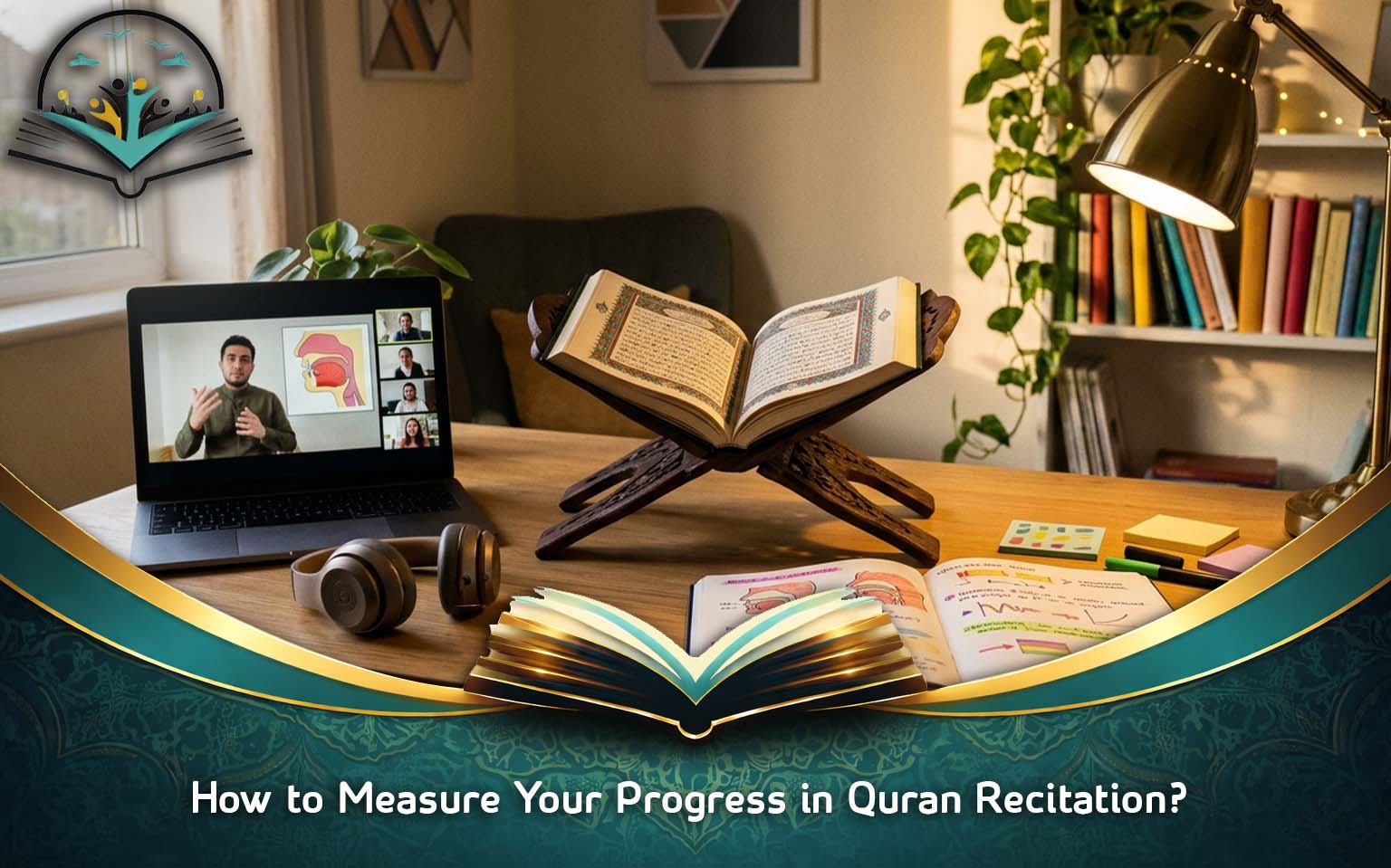
Progress in Tajweed should be evaluated through pronunciation accuracy and the ability to apply rules during actual recitation. Completing a certain number of lessons does not automatically mean that every rule has been mastered.
Students can use several indicators to understand their development.
Create a Personal Progress Checklist
A simple checklist can help learners monitor important skills:
- Can I recognize Arabic letters in different word positions?
- Can I pronounce the main Arabic letters correctly?
- Do I understand the articulation points?
- Can I recognize short vowels and Sukoon?
- Can I identify common Noon Sakinah and Tanween rules?
- Do I understand basic Madd and Ghunna?
- Can I apply the rules while reading short Surahs?
- Have I corrected the mistakes identified in previous lessons?
Review this checklist periodically. If a particular skill remains difficult, spend more time practicing it before moving to a more advanced topic.
Record Your Recitation for Personal Review
Recording your voice can help you compare your current performance with previous attempts.Choose the same short Quranic passage and record it at regular intervals. Listen carefully for improvements in pronunciation, fluency, and the application of familiar rules.
Nevertheless, recordings should be treated as a supplementary tool. A student may not recognize every technical mistake independently, so teacher feedback remains important when evaluating accuracy.
Frequently Asked Questions About Learning Quran with Tajweed
Find clear answers to common questions about learning Quran with Tajweed at home, choosing the right learning resources, improving pronunciation, and developing consistent recitation skills.
1. Should I learn Tajweed in Arabic or in my native language?
Beginners can study Tajweed explanations in their native language because understanding the rules is easier when technical concepts are explained clearly. However, the practical exercises must involve listening to and pronouncing Arabic letters correctly. As students become more familiar with the terminology, they can gradually learn the Arabic names of the rules.
2. What should I do if I cannot distinguish between two Arabic letters?
Start by listening to the two letters separately and paying attention to their articulation points. Then practice them in short syllables and Quranic words. Avoid repeating them too quickly. If the distinction remains difficult, ask a qualified teacher to demonstrate the difference and assess your pronunciation.
3. Can I use a mobile phone as my main Quran learning tool?
Yes, a smartphone can provide access to Quran recordings, digital Mushafs, educational resources, and online lessons. However, it is important to use reliable materials and maintain a distraction-free study environment. A larger screen or printed Mushaf may be more comfortable for some learners during longer reading sessions.
4. What is the best way to revise Tajweed rules after completing a lesson?
Use a combination of short written summaries, Quranic examples, and practical recitation. Review the rule's definition, listen to relevant examples, and then identify where it appears in the passages you are reading. Periodically revisit older topics so that previously learned rules remain familiar and easier to apply.
Conclusion
Learning the Quran with correct pronunciation at home is a realistic goal when students follow a structured approach and practice consistently. The process begins with Arabic letter recognition, followed by articulation points, letter characteristics, and the essential rules of Tajweed. Afterward, learners can apply their knowledge through listening, repetition, and regular Quran recitation.
Understanding How to Learn Quran with Tajweed also means recognizing that progress requires patience. Students should avoid rushing through advanced topics, practice manageable portions every day, and seek qualified feedback whenever they encounter pronunciation difficulties.
For those exploring structured online Quran education, Rattel W Artaqi Quran Academy is an option to investigate. Contacting the academy to confirm available Tajweed programs, teaching arrangements, and suitable learning levels can help you decide whether its services match your goals.
Start with the basics, maintain a realistic practice routine, and give yourself enough time to develop accurate recitation. Every carefully practiced lesson can contribute to a stronger and more confident relationship with the Holy Quran.
Add New Comment