 العربية
 English


How Long Does It Take to memorize the Quran is one of the first questions many Muslims ask before beginning Hifz. The short answer is that there is no single timeline that fits everyone. Some dedicated students may complete memorization in around one to two years, while part-time learners may need three, four, or even five years.
The difference does not mean that one learner is more capable or sincere than another. It usually reflects differences in daily time, previous Quran experience, Arabic familiarity, age, learning method, revision habits, and personal responsibilities.
At Rattel Wartaqi Quran Academy, students can approach Quran memorization through a structured learning path that takes individual ability, available time, and memorization progress into consideration.
This guide explains the main factors that influence the timeline, how to estimate your own pace, how much you can reasonably memorize each day, and how a structured program such as Rattel Wartaqi Quran Academy can help you progress without sacrificing accuracy.
How Long Does It Take to Memorize the Quran?

For many consistent part-time learners, a realistic estimate is approximately two to five years. A student who studies full-time and follows an intensive schedule may complete the Quran considerably faster. However, these numbers should be treated as planning ranges rather than promises.
The standard Madinah Mushaf contains about 604 pages. If a learner memorizes one page every day and maintains that pace throughout the year, the new memorization alone could theoretically be completed in roughly 20 months. In practice, however, memorization is not only about adding new pages. Time must also be reserved for revision, correction, rest, and periods when normal life interrupts the schedule.
For example, a student who memorizes half a page each day may need roughly twice as long for the new material as someone memorizing one page daily. Yet the slower learner may develop stronger retention if the additional time allows careful revision.
The best answer to How Long Does It Take to Memorize the Quran is therefore based on the fastest pace you can maintain accurately and consistently.
Begin Your Spiritual Journey With Trusted Quran Guidance
Take the next step toward deeper Quran understanding with Rattel W Artaqi Quran Academy and start learning with confidence today. Our experienced teachers provide supportive online classes designed for children, adults, and beginners who want to improve recitation, Tajweed, and Islamic knowledge.
We focus on clear explanations, flexible schedules, and practical learning that fits your daily life. Join our academy now and build a stronger connection with the Holy Quran through engaging lessons that inspire spiritual growth, discipline, and lasting faith for every student.

Memorize the Quran Without a Fixed Deadline
A fixed deadline can sound motivating, but it can also create unnecessary pressure. Two students may attend the same lessons and receive the same amount of homework while progressing at completely different speeds.
One learner may already know several surahs and have strong recitation skills. Another may still be learning Arabic letters and pronunciation. One may have three uninterrupted hours available every morning. Another may have only 30 minutes after work. These differences naturally affect progress.
There is also a difference between memorizing a passage temporarily and memorizing it so securely that you can recite it confidently weeks or months later. A student who rushes through new pages without adequate revision may appear to progress quickly at first, but forgotten material can later force them to slow down.
A sustainable Hifz journey should therefore focus on three goals: accurate recitation, reliable retention, and steady progress.
Memorize the Quran Based on Daily Pages
Daily memorization is one of the simplest ways to estimate a possible timeline. Because the standard Mushaf has approximately 604 pages, you can use your average daily amount as a rough planning tool.
Here are some examples:
- One page per day: around 20 months for new memorization.
- Half a page per day: around 40 months.
- One-quarter page per day: around 80 months.
- Two pages per day: around 10 months.
These calculations are theoretical. They do not include days when you cannot study, nor do they account for the substantial revision required to preserve earlier portions.
A learner should also avoid assuming that every page has the same difficulty. Some passages may be easy because the vocabulary and structure are familiar. Others may contain similar verses, unfamiliar words, or transitions that require more attention.
For this reason, calculating your timeline from your actual average over four to eight weeks is usually more useful than choosing an ambitious daily target on the first day.
How Long Does It Take to Memorize the Quran at Different Ages?
Age can influence learning, but it does not determine success. Children often have fewer professional and family responsibilities and may therefore have more time for repetition. Their learning environment may also be designed specifically around Hifz.
Adults, however, have important advantages. They can understand the meaning of verses, make deliberate study choices, organize their schedules, and recognize the spiritual value of consistency. Many adults also approach memorization with a strong personal motivation that helps them continue during difficult periods.
Teenagers may fall somewhere between these experiences. Their academic workload, social activities, and changing routines can affect consistency.
The important lesson is simple: do not use age as an excuse to postpone the journey. Choose a schedule that fits your current stage of life and make it sustainable.
Learn the Quran Without Knowing Arabic?
Familiarity with Arabic can make Quran memorization easier because understanding the words gives the learner additional mental connections. When you know the meaning and grammatical structure of a passage, you are not relying only on sound and visual memory.
Non-Arabic speakers can still memorize successfully. However, they may need additional time to develop correct pronunciation, recognize recurring vocabulary, and understand the structure of verses.
Learning Quranic Arabic alongside Hifz can be particularly useful. You do not need to become fluent in every aspect of Arabic before starting memorization. Instead, gradually learning vocabulary and meanings can strengthen your connection with what you are memorizing.
Understanding the message also helps distinguish between similar passages. When two verses sound alike, knowing their meanings and context can provide an additional memory cue.
The Quran With Previous Experience?
Memorization becomes easier when the brain has experience with repetition and recall. Someone who has previously memorized poetry, school material, speeches, or long passages may already understand how to break information into smaller units.A beginner can develop the same skill through practice.
One effective approach is to divide a page into manageable sections. Read the first verse carefully, listen to a reliable recitation, repeat it several times, and then recite it without looking. Once it is stable, connect it to the following verse. Continue until the entire section can be recited smoothly.
When considering How Long Does It Take to Memorize the Quran, the goal is not simply to repeat words many times. Active recall is essential. Looking at the page creates familiarity, but closing the Mushaf and reciting from memory tests whether the information has actually been stored.
How Long Does It Take to Memorize the Quran With a Full-Time Schedule?
A full-time Hifz student may progress much faster than someone who studies after school or work. With several focused hours available each day, a learner can dedicate substantial time to both new lessons and revision.
Some intensive students may complete the Quran in approximately one to two years. Nevertheless, an accelerated schedule should not be adopted simply because it sounds impressive.
A full-time plan requires discipline. The student needs a carefully balanced routine that includes new memorization, recent revision, older revision, listening, correction, and rest.
The danger of an aggressive schedule is that the student may accumulate new pages faster than the brain can consolidate them. When that happens, the learner may reach a large amount of memorization but struggle to recall it independently. Speed is valuable only when it is supported by retention.
How Long Does It Take to Memorize the Quran With Daily Consistency?
Consistency is one of the strongest predictors of long-term progress. Studying for a manageable amount every day generally produces better results than alternating between extreme effort and long breaks.
For example, a learner who spends 45 minutes daily may accumulate more dependable progress over several months than someone who studies five hours on one weekend and then stops for several days.
A practical routine might include:
- 10 to 15 minutes reviewing yesterday's lesson.
- 20 to 30 minutes learning new material.
- 20 to 30 minutes reviewing older memorized portions.
- A few minutes listening to the passage before or after study.
The exact schedule can change according to the learner's circumstances. The principle remains the same: establish a routine that can survive busy days.
Regular Revision to Memorize the Quran
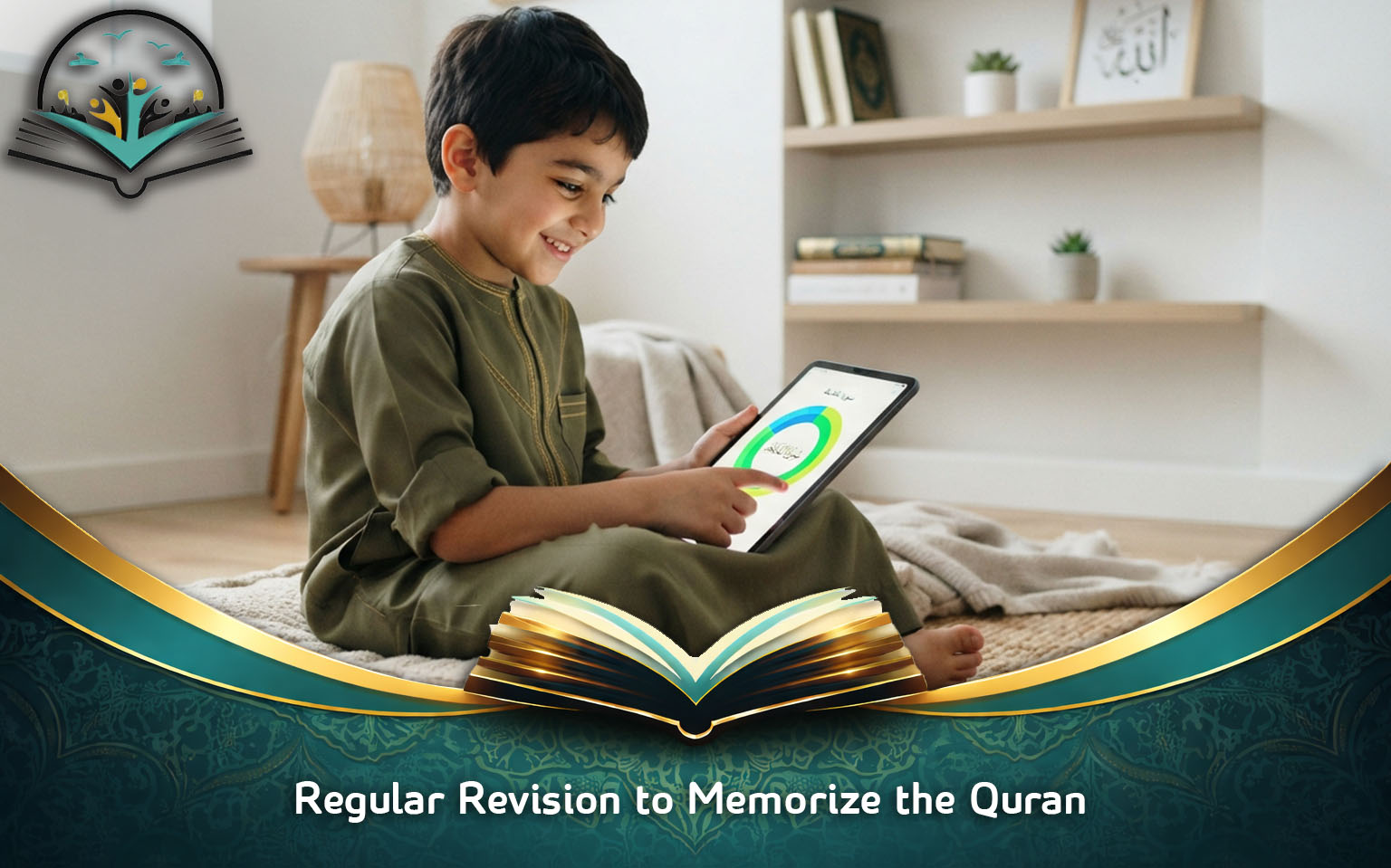
New memorization attracts attention because it creates visible progress. Revision is less exciting, but it is what protects that progress.
A useful Hifz plan should divide study time between new material and previous material. The precise ratio depends on how much you have memorized and how stable it is. Beginners may devote more time to establishing their current lesson, while students with larger amounts of Hifz may need substantial daily revision.
Revision can be organized into layers:
- Very recent material from the previous day.
- Material memorized during the previous week.
- Older portions from earlier months.
- Periodic review of the complete memorized section.
This system reduces the chance that older passages disappear from memory while new ones continue to accumulate.
If you constantly forget what you previously memorized, the solution is usually not to memorize faster. It is to strengthen your revision system.
How Can a Quran Teacher Improve Your Progress?
A qualified teacher provides something independent study cannot easily provide: immediate correction. A learner may become accustomed to a pronunciation error without realizing it. A teacher can identify mistakes in articulation, elongation, stopping, continuation, and other Tajweed details before they become habits.
Teacher supervision also creates accountability. Knowing that you will recite your lesson to someone encourages preparation and regular practice.
A teacher can additionally adjust the workload. If a student is struggling to retain a certain amount, reducing the new lesson can protect long-term progress. If the student is consistently mastering the assigned portion, the teacher can gradually increase the workload.
This individualized approach is one reason structured Hifz programs can be more effective than following a generic timetable.
How Long Does It Take to Memorize the Quran With a Teacher?
The presence of a teacher does not automatically create a specific completion date, but it can make the learning process more organized and accurate.
With professional guidance, students can avoid repeating preventable mistakes, receive feedback on their recitation, and follow a revision plan based on their actual performance.
At Rattel Wartaqi Quran Academy, students can follow a structured memorization path with guidance that takes individual ability and schedule into account. The objective is not to pressure learners into an artificial deadline, but to help them build accurate and lasting memorization.
A teacher can also help students recognize when they are ready to increase their daily lesson and when they need additional revision.
Daily Routine to learn the Quran
There is no universally perfect hour for everyone, but many learners find that memorization is easier when the mind is fresh and distractions are limited.
For some people, early morning is ideal. Others may concentrate better after a rest later in the day. What matters most is choosing a consistent period when you can focus.
Try to avoid studying in an environment filled with notifications, conversations, television, or frequent interruptions. Even a short session can be productive when it receives your complete attention.
A quiet location, the same Mushaf, and a regular routine can create useful mental associations. Over time, sitting in the same place at the same time can help signal to your mind that it is time to focus.
Listening Can Strengthen Memorization
Listening to the Quran can support visual and auditory memory. Hearing the same passage repeatedly helps learners become familiar with pronunciation, rhythm, verse endings, and transitions.
However, listening should complement active memorization rather than replace it.
Choose one reliable recitation and listen carefully. Follow along with the Mushaf first. Then attempt to recite without looking. If you only listen passively while doing unrelated activities, the benefit may be less significant than focused listening.
Repeating the same passage consistently can also help when verses contain similar wording.
Understanding Meaning Makes Memorization More Meaningful
Memorizing the Quran is primarily an act of worship, but understanding what you recite can deepen your relationship with the verses.
Learning a basic translation or explanation of the passage can help you connect ideas and remember the sequence. Meaning can act as a mental map: instead of recalling isolated sounds, you remember the progression of an argument, story, command, description, or supplication.
This does not mean every learner needs advanced Tafsir before memorizing. Even learning key vocabulary and the general meaning can provide valuable support.
The spiritual dimension should remain central. The objective is not merely to store memory pages, but to carry the Quran with understanding, respect, and practice.
Common Reasons Students Take Longer Than Expected

Many learners begin with an ambitious schedule and then become discouraged when reality does not match the original plan.
One common reason is setting a daily target that is too high. Another is neglecting revision. Some students also change methods frequently, move between different Mushafs, or study without a clear system.
Other causes include:
- Irregular attendance.
- Lack of sleep.
- Excessive distractions.
- Trying to memorize while multitasking.
- Avoiding teacher correction.
- Taking long breaks.
- Focusing only on new pages.
- Comparing personal progress with someone else's schedule.
Recognizing these problems early can save months of frustration.
How to Build a Realistic Hifz Schedule?
Start by measuring your actual capacity instead of choosing a target because it sounds impressive. During the first two weeks, test different amounts. You might try three lines, a quarter page, or half a page. Record how much you can memorize accurately and how much you can still recite the following day. Then examine your retention after one week.
If half a page feels easy but becomes unstable after several days, your new lesson may be too large. If a quarter page remains strong and leaves enough time for revision, it may be the better starting point.
Once your routine becomes stable, you can gradually increase the amount.A good schedule should answer four questions:
- What will I memorize today?
- What will I review today?
- When will I recite to my teacher?
- How will I review older portions?
The clearer these answers are, the easier it becomes to maintain progress.
How Long Does It Take to Memorize the Quran for Adults?
Adults should not assume that Hifz is only realistic for children. Many adults successfully memorize substantial portions of the Quran while working, studying, raising families, or managing other responsibilities.
When asking How Long Does It Take to memorize the Quran as an adult, the main difference is often available time.
An adult who can consistently dedicate 30 to 60 minutes a day may progress steadily, even if the total timeline is longer than that of a full-time student. The advantage is that the schedule can be built around existing responsibilities rather than requiring a complete lifestyle change.
Adults should also permit themselves to progress slowly during demanding seasons. Travel, work deadlines, family responsibilities, and other temporary circumstances may reduce study time. What matters is returning to the routine instead of abandoning the journey altogether.
How to Stay Motivated During a Long Hifz Journey?
Motivation naturally rises and falls. Waiting to feel motivated before studying can make consistency difficult. Instead, create habits that continue even when enthusiasm is low.
Set short-term goals such as completing a certain number of pages during a month, strengthening a particular Juz, or improving recitation accuracy. Celebrate progress without turning the Quran into a competition.
It can also help to remember why you started. The purpose is not simply to announce that you have completed a certain number of pages. The deeper aim is to develop a lasting relationship with Allah's Book.
When progress feels slow, look backward. A page that once seemed difficult may now be easy. That evidence can restore confidence.
The Spiritual Side of Memorizing the Quran
Hifz is an act of worship, so intention matters. A learner should seek Allah's pleasure and approach the Quran with humility.
Dua can accompany every stage of the journey. Ask Allah for sincerity, understanding, ease, steadfastness, and the ability to retain what you learn.
Allah says:
“وَلَقَدْ يَسَّرْنَا الْقُرْآنَ لِلذِّكْرِ فَهَلْ مِن مُّدَّكِرٍ”
“And We have certainly made the Quran easy for remembrance, so is there any who will remember?” (Quran 54:17)
This verse gives hope to learners who sometimes feel that memorization is beyond their ability. Difficulty does not mean impossibility. With sincere effort, proper guidance, patience, and reliance upon Allah, the journey can become manageable.
How Rattel Wartaqi Quran Academy Supports Hifz Students
A structured program at Rattel Wartaqi Quran Academy can help learners establish a consistent lesson schedule, receive correction, organize revision, and adjust the workload according to performance. For younger learners, an online Islamic center for kids can provide a supportive environment where Quran education becomes part of a routine.
A structured learning environment is especially useful for students who want to develop their memorization with guidance rather than relying on an uncertain self-study routine. In addition, working with an online quran tutor allows students to receive direct feedback and correct recitation mistakes before they become difficult habits.
At Rattel Wartaqi Quran Academy, the emphasis should remain on quality, accuracy, and sustainable progress. Students do not need to measure success only by the number of pages they complete. Strong retention and correct recitation are equally important. Through online Quran learning for kids, young students can follow lessons that match their age, ability, and individual learning pace.
The flexibility of online learning can also make Quran memorization more accessible for students whose schedules do not allow them to attend a traditional program. A well-organized quran memorization course can combine new lessons with regular revision, helping learners build strong and lasting Hifz.
How to Know When You Are Ready to Increase Your Daily Lesson?
Increasing your daily amount should be based on retention rather than excitement. You may be ready to increase the workload when:
- You consistently complete your current lesson.
- You can recite recent material without frequent prompts.
- Older portions remain reasonably strong.
- Your Tajweed mistakes are decreasing.
- You still have enough time for revision.
- The current workload does not cause exhaustion.
If these conditions are not present, maintaining your current pace is not a failure. It is responsible learning. The best Hifz schedule grows gradually. A small increase that remains stable is better than a large increase that causes repeated forgetting.
What If You Fall Behind?
Falling behind does not mean that the plan has failed. Life changes, and memorization schedules sometimes need to change with it.
If you miss several days, do not try to compensate by doubling your new lesson immediately. First, rebuild your routine and restore the strength of your previous memorization.
Speak with your teacher about adjusting the schedule. A temporary reduction in new material can prevent a larger problem later.
Avoid negative comparisons. Your journey belongs to you, and the Quran is not something that becomes more valuable simply because you finish faster.
A Practical Long-Term Hifz Roadmap
A beginner can divide the journey into stages. During the first stage, focus on correct reading, pronunciation, and establishing a daily habit. Do not rush to increase the amount. Students who need stronger foundations can also benefit from a quran reading course before moving toward more intensive memorization.
During the second stage, develop a predictable system for new lessons and recent revision. Learn how your memory responds to different amounts.
During the third stage, as your memorized portion grows, increase attention to older revision. The larger your Hifz becomes, the more important maintenance becomes.
During the final stage, completion should not mean the end of revision. A completed Hifz requires ongoing review to remain strong.
This is why the question of completion time should always be connected to the question of retention.
How Long Does It Take to Memorize the Quran Successfully?

Successful memorization should be measured by more than the date on which the final page is completed.A learner who finishes quickly but forgets large portions has not necessarily achieved a stronger result than someone who takes longer and maintains accurate recall.
Success includes correct pronunciation, confidence in recitation, reliable revision, understanding of the memorized material, and the ability to continue reviewing after completion.
A realistic timeline might therefore be longer than the most ambitious estimate. That is acceptable. The Quran deserves patience and care.
Frequently Asked Questions
Provide clear answers about realistic timelines, daily memorization goals, revision, and effective Hifz strategies.
Can I memorize the Quran while working full-time?
Yes. Many adults build Hifz into a busy schedule by setting aside a consistent daily period. The amount may be smaller, but regular practice can produce meaningful long-term progress.
Should I memorize the Quran before learning Tajweed?
It is better to develop correct pronunciation from the beginning. Basic Tajweed should accompany memorization so that mistakes do not become established habits.
Is it possible to memorize the Quran without knowing Arabic?
Yes. Many non-Arabic speakers successfully memorize the Quran. Learning basic Quranic Arabic alongside Hifz can make the process easier and deepen understanding.
What should I do if I keep forgetting what I memorized?
Increase and organize your revision before increasing new memorization. Review recent and older portions regularly, and ask a qualified teacher to identify weaknesses in your routine.
Do I need to memorize every day?
Daily consistency is highly beneficial, but your exact schedule can vary. During unusually busy periods, maintaining a smaller amount of revision is often better than stopping completely.
In conclusion, the answer to How Long Does It Take to Memorize the Quran depends on the learner, the daily schedule, the memorization method, previous Quran experience, Arabic familiarity, revision habits, and the quality of guidance. For many part-time students, two to five years can be a realistic range, while intensive full-time learners may finish sooner.
The clearest lesson about How Long Does It Take to memorize the Quran is not to chase a deadline. Build a routine that you can maintain, learn accurately, review consistently, and ask Allah for help throughout the journey.
At Rattel Wartaqi Quran Academy, students can pursue a structured Hifz journey that respects individual ability and focuses on lasting results. Whether your daily target is a few lines or a full page, steady progress matters.
The Quran is a lifelong companion. Therefore, the real achievement is not simply reaching the final page. It is developing a strong relationship with the Quran and preserving what you have learned through continuous recitation, revision, understanding, and practice.
Add New Comment