 العربية
 English


How to Choose an Online Quran Teacher for Your Child is an important question for parents who want their children to learn the Quran correctly, confidently, and with a genuine connection to its teachings. Choosing a teacher is not simply about finding someone who can recite the Quran. The right teacher should have sound Quranic knowledge, strong Tajweed skills, experience with children, patience, clear communication, and a teaching approach that suits the child's age and ability.
The best decision comes from looking beyond attractive advertisements or low prices. Parents should examine the teacher's qualifications, teaching style, lesson structure, communication skills, progress tracking, and ability to create a positive learning environment.
This guide explains the most important factors to consider before choosing an online Quran teacher for your child. It also provides practical questions parents can ask during a trial lesson and highlights warning signs that should not be ignored.
Why Choosing the Right Online Quran Teacher Matters?

A Quran teacher can influence much more than a child's pronunciation. During regular lessons, children develop habits that may remain with them for years. They learn how to approach the Mushaf, how to pronounce Arabic letters, how to observe Tajweed rules, and how to respond when they make mistakes.
A supportive teacher can make Quran learning enjoyable. When children feel comfortable asking questions and trying again after an error, they are more likely to remain motivated. On the other hand, an overly strict or impatient teacher may cause a child to associate Quran lessons with anxiety or pressure.
The teacher also needs to understand that children learn at different speeds. One student may memorize quickly but struggle with pronunciation. Another may read accurately but need more repetition before memorizing new verses. A skilled teacher recognizes these differences and adjusts the lesson accordingly.
For this reason, parents should not ask only, "Is this teacher qualified?" They should also ask, "Is this teacher qualified and suitable for my child?"
Begin Your Spiritual Journey With Trusted Quran Guidance
Take the next step toward deeper Quran understanding with Rattel W Artaqi Quran Academy and start learning with confidence today. Our experienced teachers provide supportive online classes designed for children, adults, and beginners who want to improve recitation, Tajweed, and Islamic knowledge.
We focus on clear explanations, flexible schedules, and practical learning that fits your daily life. Join our academy now and build a stronger connection with the Holy Quran through engaging lessons that inspire spiritual growth, discipline, and lasting faith for every student.

How to Choose an Online Quran Teacher for Your Child Based on Qualifications?
The first step is to examine the teacher's Quranic and educational background. Qualifications do not automatically make someone an excellent teacher, but they provide an important foundation.
Parents should ask about the teacher's Quran memorization, Tajweed education, Ijazah if applicable, and previous teaching experience. It is also useful to understand whether the teacher specializes in children or mainly teaches adults.
A teacher who has studied Quranic sciences and received instruction from qualified scholars may have a stronger understanding of correct recitation. However, academic knowledge should be combined with the ability to communicate that knowledge in a way a child can understand.
For example, a teacher may know a detailed Tajweed rule but still struggle to explain it to a seven-year-old. Children generally need short explanations, practical examples, repetition, and encouragement. Therefore, qualifications should be viewed as one part of the decision rather than the entire decision.
Check the Teacher's Quran Recitation
Correct recitation should be one of the first things parents evaluate. A teacher does not need to have a famous or exceptionally beautiful voice. Accuracy is much more important than style.
Listen carefully during a trial lesson. Does the teacher pronounce Arabic letters clearly? Can the teacher identify common pronunciation mistakes? Does the teacher correct the child immediately when necessary? Does the teacher distinguish between similar Arabic sounds?
A strong teacher should be able to demonstrate the correct pronunciation and then guide the child through repeated practice.
This is particularly important for children who are beginning with Arabic letters or Noorani Qaida. Early pronunciation habits can become difficult to change later if incorrect sounds are repeated for a long time.
Parents should therefore pay attention to how the teacher responds when the child makes a mistake. Instead of simply saying, "Wrong," an effective teacher may explain the sound, demonstrate it slowly, and allow the child to try again. That approach teaches correction without discouraging the learner.
How to Choose an Online Quran Teacher for Your Child With Strong Tajweed Knowledge?
Tajweed is an essential part of accurate Quran recitation. A teacher should understand Tajweed rules and, equally importantly, know how to teach them.
Children do not necessarily need long theoretical explanations. They need practical guidance that connects the rule with what they are reading.
For instance, when teaching a particular type of Madd, the teacher can demonstrate the sound, explain its duration in simple language, and then ask the child to repeat it. This makes the rule practical rather than abstract.
Parents should listen for whether the teacher corrects:
-
Makharij, or articulation points
-
Letter characteristics
-
Madd rules
-
Ghunnah
-
Noon Sakinah and Tanween
-
Meem Sakinah
-
Qalqalah
-
Rules of stopping and starting
-
Common recitation mistakes
The teacher should also avoid overwhelming beginners with too many rules at once. A child should gradually develop accurate reading habits while becoming familiar with the rules appropriate to their level.
Consider the Teacher's Experience With Children
Teaching children requires a different approach from teaching adults. A teacher may have excellent Quranic knowledge but little experience managing a young learner's attention.
Children can become distracted, tired, shy, or frustrated during an online lesson. A successful teacher knows how to handle these moments without turning the class into a stressful experience.
Ask how long the teacher has worked with children and what age groups they usually teach. Experience with children between five and ten years old, for example, can be particularly valuable because young learners often need shorter explanations and frequent interaction.
A good children's Quran teacher may use:
-
Simple explanations
-
Repetition
-
Encouragement
-
Short questions
-
Visual learning aids when appropriate
-
Regular revision
-
Positive feedback
-
Small achievable goals
The purpose is not to entertain the child throughout the entire lesson. Instead, the teacher should maintain enough interaction to keep the child attentive while preserving the seriousness and respect appropriate for Quran learning.
How to Choose an Online Quran Teacher for Your Child Who Understands Different Learning Speeds?
Every child progresses differently. Parents should be cautious of teachers who promise that every student will memorize a specific amount within a fixed period.
Memorization depends on age, previous knowledge, daily practice, reading ability, concentration, and available study time. A realistic teacher considers these factors before setting targets.
One child might memorize half a page comfortably, while another may need several days to master the same amount. Neither situation necessarily indicates failure.
The teacher should establish a manageable routine involving new material and revision. Revision is especially important because memorizing new verses without reviewing previous portions can result in rapid forgetting.
A personalized plan may include:
-
Review of previously memorized passages.
-
Correction of reading mistakes.
-
Introduction of new verses.
-
Repetition with the teacher.
-
Independent recitation by the child.
-
A short assignment for practice.
-
Follow-up during the next lesson.
This structure gives the child a clear path without creating unrealistic pressure.
Evaluate the Teacher's Communication Skills
Online learning depends heavily on communication. The teacher and child may not be in the same room, so explanations need to be clear and direct.
Parents should observe whether the teacher speaks at a suitable pace. If the teacher speaks too quickly, young learners may struggle to understand instructions. If explanations are unnecessarily complicated, children may lose confidence.
Language is another important consideration. Some children understand Arabic well, while others need explanations in English or another familiar language. Parents should confirm that the teacher can communicate effectively with the child.
The goal is not necessarily for the teacher to speak perfect English. The important point is that the child understands what to do and why a correction is being made.
Communication should also be respectful. A teacher should correct mistakes firmly when necessary but without embarrassment, sarcasm, shouting, or humiliating comments.
How to Choose an Online Quran Teacher for Your Child During a Trial Class?
A trial class is one of the best opportunities to evaluate compatibility. Parents should not treat it as a formality.
Before the class, identify a few things you want to observe. Then watch how the teacher interacts with the child.
During the trial, consider:
-
Does the teacher greet the child warmly?
-
Does the teacher ask about the child's current level?
-
Is the lesson organized?
-
Does the teacher listen carefully?
-
Are mistakes corrected clearly?
-
Does the teacher give the child enough time to respond?
-
Is the pace appropriate?
-
Does the child appear comfortable?
-
Does the teacher explain the next steps?
The trial should reveal more than the teacher's ability to recite. It should show how the teacher actually teaches.
Parents should also ask the child what they thought after the lesson. A child's reaction can provide useful information. If the child consistently says that the lessons are frightening, confusing, or excessively difficult, parents should investigate why.
Look for a Structured Quran Learning Plan
A strong online Quran program should have a clear learning pathway. Children should know what they are currently studying and what they will work toward next.
The plan may differ depending on the student's goals. Some children need basic Quran reading instruction. Others want to improve Tajweed, memorize Juz Amma, complete Hifz, or prepare for an Ijazah.
A structured plan prevents lessons from becoming random reading sessions.
Parents can ask:
-
What will my child study during the first month?
-
How often will progress be assessed?
-
How is memorization reviewed?
-
When will the teacher introduce new Tajweed rules?
-
How are weak areas identified?
-
What happens if the child falls behind?
A good plan should remain flexible. Structure does not mean forcing every child into exactly the same schedule.
How to Choose an Online Quran Teacher for Your Child for Memorization
If the child's primary goal is Quran memorization, the teacher should have a clear Hifz methodology.
Memorization requires consistent revision. A child who memorizes new pages every day without revisiting older material may appear to progress quickly at first, but the memorized portions can become weak.
An effective Hifz teacher should balance:
- New memorization: The child learns a manageable amount of new Quran.
- Recent revision: Recently memorized passages are reviewed frequently.
- Older revision: Previous portions are revisited to maintain long-term retention.
- Recitation correction: Memorization should not come at the expense of pronunciation.
- Regular assessment: The teacher should periodically check whether the child can recite independently.
The teacher should also recognize signs of fatigue. If the child is struggling repeatedly, reducing the daily target may produce better long-term results than increasing pressure.
The goal of memorization is not simply to finish quickly. It is to retain the Quran accurately and develop a sustainable relationship with revision.
Check Whether the Teacher Provides Progress Reports

Parents should know how their child's learning is progressing. Online education can sometimes make parents feel disconnected from the actual lesson. A useful progress system can record areas such as:
-
Surahs completed
-
Verses currently being memorized
-
Tajweed topics covered
-
Reading weaknesses
-
Revision performance
-
Attendance
-
Homework or practice tasks
-
Teacher comments
Regular feedback helps parents understand whether the child is improving. It also makes it easier to identify problems early. If a child has been making the same pronunciation mistake for several weeks, the teacher and parent can work together to address it.
Progress reports do not need to be complicated. Even a short weekly summary can provide valuable information.
How to Choose an Online Quran Teacher for Your Child With a Safe Learning Environment?
Safety should always be considered when selecting an online teacher for a child. Parents should understand how communication is handled and whether lessons take place through an organized platform. They should also know who supervises the educational process and how concerns can be reported.
For younger children, parents may prefer to remain nearby during lessons, especially during the first few classes. This does not mean interrupting the teacher constantly. Instead, parents can make sure the child is comfortable and that the lesson environment is appropriate.
The teacher should maintain professional boundaries and communicate with families through appropriate channels. Parents should be cautious if a teacher:
-
Requests unnecessary personal information
-
Encourages secret communication with the child
-
Becomes angry when parents ask reasonable questions
-
Refuses to explain the learning process
-
Makes inappropriate personal comments
-
Attempts to isolate the child from parental involvement
Compare Lesson Frequency and Duration
The number of weekly lessons should match the child's age, goals, and ability to practice independently. A young beginner may benefit from shorter and more frequent lessons. Another student preparing for serious memorization may require a more intensive schedule.
Parents should avoid choosing a program simply because it offers the largest number of classes. More lessons do not automatically mean better learning. Instead, consider the balance between:
-
Lesson duration
-
Weekly frequency
-
Home practice
-
Revision time
-
School responsibilities
-
Rest
-
The child's attention span
A sustainable schedule is more valuable than an ambitious schedule that the child cannot maintain.
How to Choose an Online Quran Teacher for Your Child at the Right Price
Price matters, but it should not be the only deciding factor. Extremely cheap lessons may appear attractive, yet parents should ask what is included. Is the teacher qualified? Is progress monitored? Is there a structured curriculum? Is there academic supervision? Are missed lessons handled clearly?
Likewise, a higher price does not automatically guarantee superior teaching. Parents should compare value rather than price alone. A slightly more expensive program may provide better teacher matching, progress reports, qualified instructors, structured curricula, and stronger follow-up.
The most useful question is: What educational value will my child receive for the amount I am paying?
A transparent provider should explain its pricing, lesson duration, schedule, and policies before enrollment.
How to Choose an Online Quran Teacher for Your Child Who Builds Long-Term Motivation?
Children are more likely to continue Quran learning when they can see their progress. Teachers can support motivation by setting small goals. Completing a Surah, improving a particular Tajweed rule, reading a page without major mistakes, or successfully revising a previously difficult passage can all provide meaningful milestones.
However, motivation should not depend entirely on rewards. Children should gradually understand the spiritual and personal value of learning the Quran.
The teacher can help by creating a respectful atmosphere and explaining the importance of what the child is learning in an age-appropriate way.
Parents also have an important role. They can create a quiet practice space, establish a consistent routine, and praise effort rather than comparing the child with siblings or classmates.
Review the Technology Used for Online Lessons
Technology should support Quran education rather than distract from it. Before enrollment, parents should check whether the child can easily access the lesson platform. The internet connection should be stable enough for clear audio because accurate recitation depends on hearing the teacher correctly.
A useful online setup may include:
-
Clear microphone audio
-
Stable video connection
-
Screen sharing when needed
-
Digital Quran or educational materials
-
Simple communication tools
-
Access to assignments or progress records
Parents should also consider what happens if the internet connection fails. A reliable program should have a clear policy for technical problems and missed lesson time.
Technology cannot replace a qualified teacher. It simply creates the environment in which the teacher and student interact.
Ask the Right Questions Before Enrollment
Parents can save time by preparing questions before contacting a teacher or academy. Useful questions include:
-
What qualifications does the teacher have?
-
How much experience does the teacher have with children?
-
Does the teacher specialize in Tajweed or Hifz?
-
How is the child's current level assessed?
-
How are mistakes corrected?
-
How is progress monitored?
-
How often will parents receive feedback?
-
Can the teacher adjust the pace for the child?
-
What happens if the teacher and child are not compatible?
-
What is included in the lesson fee?
The answers can reveal whether the provider has a serious educational system or is simply offering lessons without a clear plan.
Warning Signs Parents Should Not Ignore
Knowing what to avoid is just as important as knowing what to look for. Parents should reconsider their choice if the teacher consistently:
-
Arrives late without explanation
-
Cancels lessons frequently
-
Does not track progress
-
Gives the same lesson structure to every child regardless of ability
-
Becomes impatient with repeated mistakes
-
Cannot explain basic Tajweed concepts
-
Avoids questions about qualifications
-
Uses excessive pressure
-
Shows little interest in the child's level
-
Provides no clear learning objectives
One minor issue does not necessarily mean a teacher is unsuitable. However, repeated problems should be taken seriously.
Parents should also be careful with exaggerated promises. Claims that a child will memorize the entire Quran in an unrealistically short time should be evaluated carefully. Sustainable learning usually requires patience and consistency.
How to Choose an Online Quran Teacher for Your Child Through Rattel Wartaqi Quran Academy?
When considering an organized Quran learning provider, parents can look at how the educational process is structured from the first assessment through ongoing lessons. Rattel Wartaqi Quran Academy is one option families may consider when looking for online Quran education.
The important point is not simply selecting a recognizable name. Parents should still evaluate teacher qualifications, lesson quality, communication, scheduling, and progress monitoring.
A suitable program should make it easy for parents to understand what their child is learning and whether the lessons are producing steady improvement.
Teacher matching is also important. A child who is shy may need a patient instructor who creates opportunities to speak. A confident child may benefit from a teacher who provides more challenging reading and memorization tasks.
The best arrangement is the one that connects the child's needs with an appropriate teaching method.
Create a Consistent Home Routine
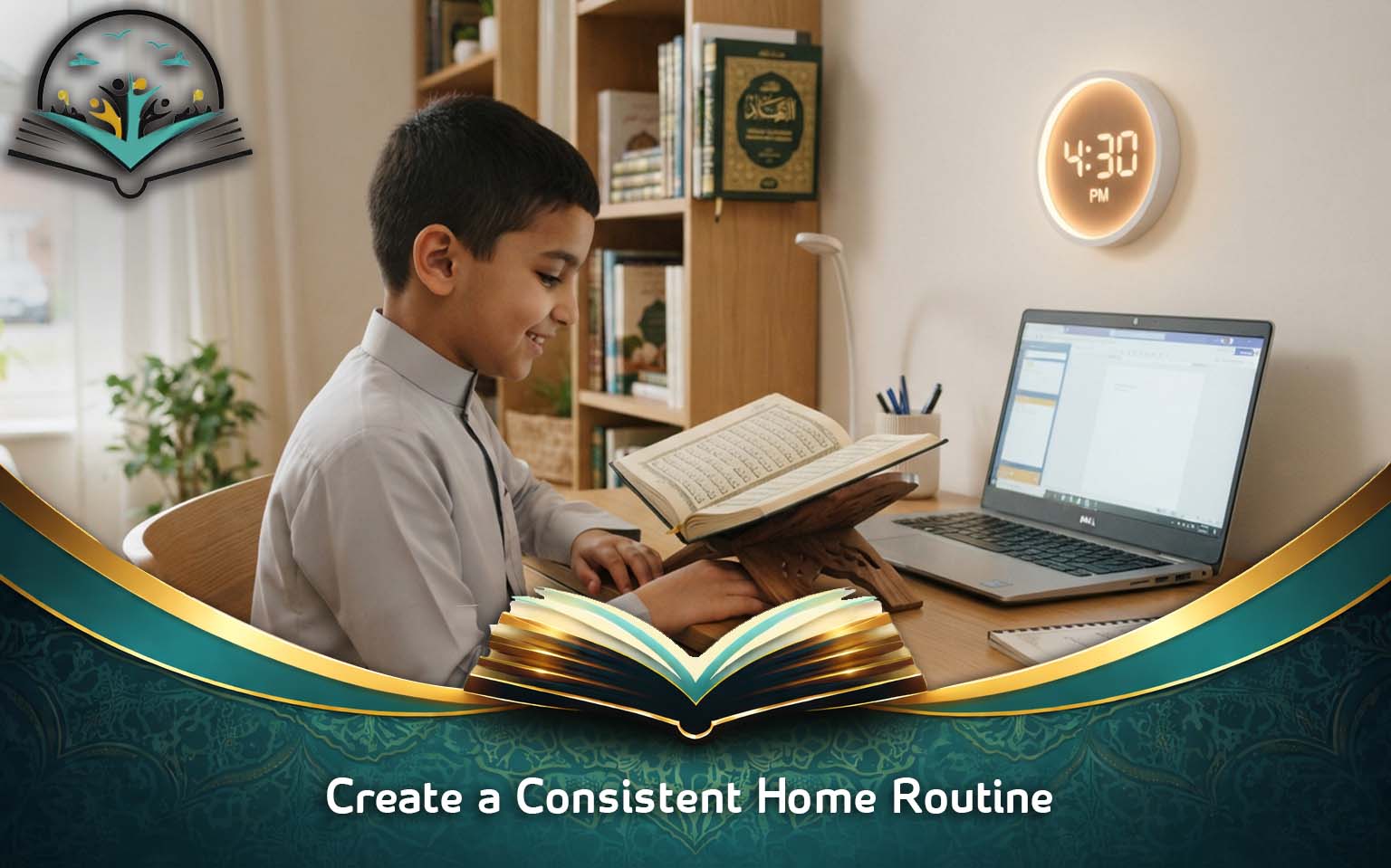
Even the best teacher cannot make significant progress if the child never practices between lessons.
Parents can support learning by establishing a simple home routine. The routine does not have to be long. Consistency is more important than occasional intensive study.
For example, a child might spend a short period reviewing the day's lesson and another brief period listening to the assigned passage.
The home environment should be calm. Parents can remove unnecessary distractions and keep the Quran practice time predictable.
Children also benefit when parents show interest without turning every practice session into an examination.
A simple question such as, "Would you like to recite what you learned today?" can feel very different from demanding an immediate performance.
Ask About Teacher Supervision and Quality Control
When learning through an individual tutor, the quality of the experience can depend entirely on that person's methods. An organized academy may provide additional layers of supervision.
For example, Rattel Wartaqi Quran Academy can be evaluated by parents based on the qualifications of its teachers, teaching structure, student support, and approach to monitoring learning.
Parents should ask whether teachers receive academic guidance and whether there is a process for addressing concerns.
Quality control can help maintain consistency. If a student struggles with a teacher's approach, there should be a professional way to discuss the issue and consider a different solution.
This is particularly useful for children because teacher-student compatibility can have a major impact on motivation.
How to Choose an Online Quran Teacher for Your Child Who Encourages Rather Than Pressures?
Children need discipline, but discipline should not become humiliation or constant pressure. A good teacher can maintain high standards while remaining patient. When a child makes a mistake, the teacher should focus on correcting the behavior rather than attacking the child's ability.
Helpful expressions include:
-
"Let's try that again."
-
"You are improving."
-
"Listen carefully to this sound."
-
"Take your time."
-
"You remembered most of it. Let's correct this part."
Such language does not mean lowering expectations. It means helping the child reach those expectations.
Parents should pay attention to the emotional atmosphere of the lesson. A child who feels respected is more likely to participate, ask questions, and practice between classes.
Check the Teacher's Approach to Mistakes
Mistakes are a normal part of learning Quran recitation. What matters is how the teacher responds to them.
A teacher should distinguish between occasional errors and repeated problems. If the child repeatedly mispronounces a letter, the teacher may need to return to the basic sound rather than simply correcting the word each time.
For example, if the child struggles with a particular Arabic letter, the teacher can isolate the sound, demonstrate the correct articulation, let the child repeat it, and then gradually place it back into words and verses.
This approach addresses the cause rather than merely correcting the symptom. Parents should therefore watch whether the teacher teaches through mistakes or simply points them out.
How to Choose an Online Quran Teacher for Your Child as a Long-Term Decision?
Parents should think beyond the first few lessons. A teacher who works well for basic reading may not necessarily be the right choice for advanced Tajweed or long-term Hifz.
As the child develops, educational needs change.
A beginner may need:
-
Arabic letter recognition
-
Basic reading
-
Noorani Qaida
-
Short Surahs
-
Fundamental Tajweed
An intermediate student may need:
-
More advanced Tajweed
-
Fluent reading
-
Consistent revision
-
Structured memorization
An advanced student may need:
-
Intensive Hifz revision
-
Detailed recitation correction
-
Advanced Tajweed
-
Preparation for Ijazah
Parents should therefore ask whether the teacher or academy can support the child's future development.
The Role of Parents in Successful Online Quran Learning
Choosing a teacher is only the beginning. Parents remain an important part of the learning process.
They can help by:
-
Ensuring the child attends lessons on time
-
Providing a quiet learning environment
-
Encouraging daily revision
-
Monitoring progress
-
Communicating concerns respectfully
-
Celebrating improvement
-
Avoiding negative comparisons
-
Keeping expectations realistic
Parents should also communicate with the teacher when something changes. If the child has school exams, a busy schedule, or difficulty with a particular lesson, the teacher may be able to adjust the plan.
Good communication between parents and teachers creates a stronger learning environment.
How to Choose an Online Quran Teacher for Your Child: A Practical Checklist?
Before making the final decision, parents can review the following points:
Quranic Knowledge
The teacher should demonstrate accurate Quran recitation and a solid understanding of Tajweed.
Teaching Experience
The teacher should have experience with the child's age group and learning level.
Patience
The teacher should correct mistakes without humiliating or frightening the child.
Communication
Instructions should be clear and understandable.
Personalization
The lesson should reflect the child's current ability and learning goals.
Progress Tracking
Parents should have a reasonable way to monitor improvement.
Schedule
The lesson schedule should fit the child's school and family routine.
Technology
The online classroom should provide sufficiently clear audio and reliable communication.
Safety
The learning environment should maintain appropriate professional boundaries.
Long-Term Planning
The teacher should be able to explain how the child can progress over time.
A teacher who meets these standards is more likely to provide an educational experience that is both productive and sustainable.
Choosing a Teacher Who Fits Your Child's Personality
Academic qualifications matter, but personality compatibility should not be overlooked.
Some children respond well to energetic teachers. Others prefer calm and quiet instructors. Some enjoy frequent questions and interaction, while others need time before answering. Parents should observe the child's behavior during and after lessons.
Does the child seem relaxed? Does the child want to continue learning? Does the child remember what was taught? Does the child feel comfortable admitting mistakes?
These signs can help parents understand whether the teacher's personality is a good match. A technically excellent teacher may still be unsuitable if the child cannot communicate comfortably with them.
How to Choose an Online Quran Teacher for Your Child Without Focusing Only on Price?
Cost is an understandable concern for families, but the cheapest option is not necessarily the best value.
Parents are investing in their child's Quran education, so the decision should consider quality, consistency, teacher expertise, and long-term support.
Instead of comparing only hourly rates, compare what each program actually provides.
For example, one option may provide only a lesson, while another may include teacher supervision, progress tracking, structured assignments, revision planning, and parent feedback.
The second option may offer greater value even if the advertised price is higher.
The objective should be to find a sustainable program that the family can maintain while giving the child an effective learning experience.
Key Tips for Choosing the Right Online Quran Teacher for Your Child

Finding the right teacher requires more than searching for the closest or cheapest online option. Parents should consider Quranic qualifications, Tajweed knowledge, experience with children, communication, patience, lesson structure, progress monitoring, safety, and long-term compatibility.
A good teacher does not simply help a child complete pages of the Quran. The teacher helps the child read accurately, develop confidence, build consistent habits, and approach Quran learning with respect and love.
Families can also consider established online learning providers such as Rattel Wartaqi Quran Academy, while still evaluating the actual teacher assigned to their child. The teacher-student relationship remains central to the quality of the learning experience.
Most importantly, parents should use the trial lesson as an opportunity to observe rather than simply listen to promotional claims. Watch how the teacher corrects mistakes, responds to questions, manages attention, explains Quranic rules, and adapts the lesson to the child's ability.
The right choice may not be the teacher with the most impressive advertisement or the longest list of promises. It is the teacher who combines sound Quranic knowledge with effective teaching, patience, professionalism, and a genuine understanding of the child's needs.
When parents make that decision carefully, online Quran education can become much more than a weekly class. It can become a consistent part of the child's spiritual, educational, and personal development.
Frequently Asked Questions
Find answers to the most common questions about the topic and discover helpful information to support your learning journey.
1. How old should a child be before starting online Quran lessons?
There is no single perfect age for every child. Many children can begin basic Quran and Arabic reading instruction when they are young, provided the lessons are age-appropriate and the child can focus for the duration of the class. Parents should choose shorter, engaging lessons for younger learners and gradually increase the workload as the child's attention and reading skills develop.
2. Should parents sit with their child during every online Quran lesson?
For very young children, having a parent nearby can be useful, particularly during the first few sessions. Older children may become more independent once they understand the lesson routine. Parents can remain involved through regular progress checks without necessarily sitting beside the child throughout every class.
3. Can an online teacher correct a child's pronunciation effectively?
Yes, provided the teacher has strong Tajweed knowledge and the online lesson has clear audio. Pronunciation correction requires the teacher to listen carefully and demonstrate the correct articulation. If audio quality is poor, however, accurate correction can become more difficult.
4. What should a child do if they do not feel comfortable with the teacher?
Parents should first try to understand the reason. The issue may be the teaching pace, communication style, lesson difficulty, or simply a personality mismatch. If the problem continues despite discussion and adjustment, requesting a different teacher may be a reasonable solution.
5. How can parents know whether their child's Quran learning is improving?
Parents can look for practical signs such as better pronunciation, fewer repeated mistakes, stronger memorization, more confident reading, improved revision, and greater independence during recitation. Regular teacher feedback can provide additional information about progress and areas that still require attention.
In conclusion, the process of selecting an online Quran teacher should be thoughtful rather than rushed. Parents are not simply choosing a service; they are choosing someone who may influence their child's Quran reading habits and attitude toward learning for years.
The strongest choice combines reliable Quranic knowledge, effective teaching skills, patience, clear communication, child-friendly methods, structured lessons, and consistent follow-up.
With careful evaluation and the right teacher-student relationship, online Quran learning can provide children with a convenient and meaningful way to improve their recitation, Tajweed, memorization, and understanding while learning from the comfort of home.
Add New Comment