 العربية
 English


Learn Arabic Alphabets Fast is the first essential step for children who want to read Quran correctly, and Rattel Wartaqi Quran Academy makes this stage clear, simple, and engaging.
Arabic letters can feel difficult at the beginning, especially for kids who do not speak Arabic at home. A structured program helps students recognize letters, understand sounds, practice pronunciation, and connect letters in words.
This foundation prepares children for Qaida, Quran reading, and Tajweed later. Online lessons allow regular practice with teacher correction and friendly repetition. When children master the alphabet early, they gain confidence and move toward Quran reading faster online.
Why Arabic Letters Feel Different First

Arabic letters feel different because the writing system does not behave like English. English letters usually keep the same shape, whether they appear at the start or end of a word. Arabic letters often change shape depending on their position. This is one reason beginners may feel overwhelmed during the first few lessons.
However, the system becomes clear when it is taught in small parts. A learner should first know the letter name. Then the learner should hear the sound. After that, the learner should see how the shape changes in different places. This order reduces confusion.
Another difference is direction. Arabic moves from right to left. At first, children may try to read it like English. Therefore, teachers should train the eye gently with arrows, tracing, and repeated examples. After a few sessions, the new direction feels less strange.
Rattel Wartaqi Quran Academy focuses on this early adjustment stage because it affects everything that follows. In Islamic classes for kids , when a child understands the direction of reading, letter flow, and basic sounds, Quran reading later becomes much easier and more natural.
Start Your Child’s Arabic Reading Journey Today
Help your child build a strong foundation in Arabic letters with Rattel Wartaqi Quran Academy. Our step-by-step online lessons make alphabet learning simple, clear, and enjoyable through patient guidance, pronunciation practice, writing support, and regular revision. Whether your child is a complete beginner or preparing for Quran reading, our teachers guide every lesson with care and structure.
Book a free trial class today and help your child learn Arabic alphabets with confidence, accuracy, and steady progress.

How The Arabic Alphabet Actually Works
Arabic has twenty-eight letters. These letters mainly represent consonant sounds. Short vowel sounds appear through small pronunciation marks, especially in beginner learning and Quran reading. This is helpful because children can read new words more accurately when the marks are clear.
Most Arabic letters have different forms. A letter may look one way when it stands alone, another way at the start of a word, and another way in the middle or end. This may sound difficult, but many forms look related. With practice, learners begin to recognize the pattern.
Some letters also do not connect to the next letter. These letters create a visible break inside words. Beginners should learn this early because it prevents confusion when a word does not look fully connected.
A practical beginner path should include these foundations:
- Learn the letter name first, because names give children an easy memory anchor during early lessons.
- Practice the sound clearly, since correct pronunciation matters more than fast recognition.
- Study the isolated shape before moving into connected word forms.
- Review old letters daily before adding new ones, because memory becomes stronger through repetition.
This structure helps children build confidence. Moreover, it prevents the common mistake of memorizing letter names without learning how letters work inside real words.
Read also: What is Hajj in Islam
The Right Order For Easy Learning
A child should not learn Arabic letters randomly. A clear order keeps the process calm and measurable. For example, learning four or five letters per session can work better than trying to finish many letters quickly. The child can recognize, write, and repeat each letter without mental overload.
First, the teacher introduces a small group of letters. Then the child repeats their names and sounds. After that, the child traces the shapes and reads them in short combinations. Finally, the lesson ends with review.
This pattern creates a learning rhythm. Children know what to expect, so they feel safer. In addition, parents can support the same rhythm at home with short revision sessions.
Rattel Wartaqi Quran Academy uses step-by-step learning because Arabic alphabet mastery depends on consistency. A child who practices fifteen minutes daily may progress faster than one who studies for one long session and then stops.
Learning Arabic alphabets quickly does not mean skipping the basics, especially when guided by a female Arabic tutor online. It means following the right sequence, removing confusion, and practicing essential skills repeatedly until they become natural and easy to use.
How Children Recognize Letter Shapes Better
Children remember shapes better when they see, trace, say, and use them. Visual memory alone is not enough. A child may recognize a letter on a chart but fail to identify it inside a word. Therefore, letter recognition should move from simple to practical.
At the beginning, isolated letters are useful. They allow the child to focus on one shape without distraction. However, the teacher should soon show how that same letter appears inside a word. This helps the child understand that Arabic is a connected script.
Tracing also helps. When children move their hands with the shape, they remember the form more deeply. Even digital lessons can include handwriting practice on paper. This makes learning more active.
Parents can also place small review cards near a study area. The child can read a few letters before class or after prayer time. These tiny moments build familiarity.
The best result comes when children stop seeing Arabic letters as drawings. Instead, they begin to see them as readable symbols with sounds, forms, and meaning.
Pronunciation Needs Sound And Careful Practice
Pronunciation is one of the most important parts of Arabic alphabet learning. Some Arabic sounds do not exist in English, so children may replace them with easier sounds. This is normal at first. However, correction should begin early before mistakes become habits.
A teacher should demonstrate the sound slowly. Then the child repeats it. If the sound is difficult, the teacher can compare it with a closer familiar sound, while still explaining that it is not exactly the same. This approach keeps the child encouraged without allowing careless pronunciation.
Short vowels also matter. They help children read syllables and understand how letters become pronounceable words. Without them, beginners may feel lost. Therefore, teachers usually introduce simple vowel marks after children recognize several letters.
Rattel Wartaqi Quran Academy gives attention to sound practice because Arabic reading is not only visual. The ear must learn too. A child should hear correct pronunciation often, repeat it calmly, and receive correction without embarrassment.
Over time, careful sound practice improves Quran reading, Arabic vocabulary, and reading fluency.
Writing Practice Builds Strong Reading Confidence
Writing is not only for handwriting. It also strengthens reading. When children write a letter, they notice its parts, curves, dots, and direction. This makes it easier to recognize later. Therefore, writing practice should appear from the early stages.
The writing process should stay simple. The child can trace the letter, copy it, say its sound, and then identify it in a word. This connects hand, eye, and voice. Moreover, it turns passive viewing into active learning.
Parents should not worry if handwriting looks imperfect at first. Neatness improves with time. The first goal is correct direction and basic shape recognition. After that, the child can work on smoother writing.
Useful writing practice may include these steps:
- Trace each new letter several times while saying its name and sound aloud.
- Copy the letter without tracing, then compare it with the teacher’s model.
- Write simple letter combinations to understand how forms connect.
- Read the same letters after writing them, so handwriting supports reading.
This method gives children more confidence. As a result, they feel less nervous when they see new Arabic words.
Common Mistakes Beginners Should Avoid Early
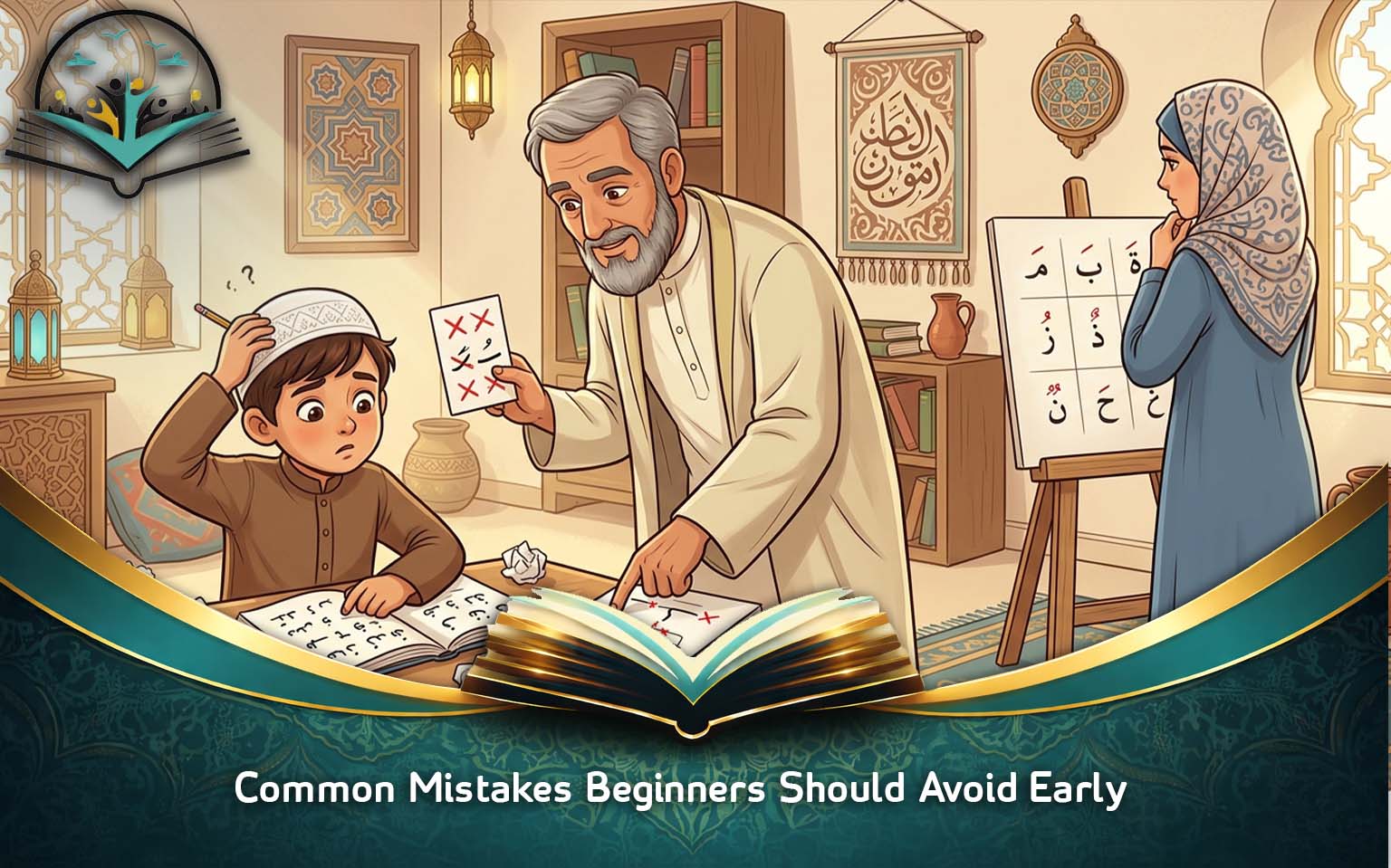
Many beginners make the same mistakes, and most of them are easy to fix when noticed early. The first mistake is learning too many letters too quickly. This creates weak recognition and poor recall. A slower, structured pace usually works better.
Another mistake is ignoring connected forms. A child may know a letter alone but fail to recognize it inside a word. Therefore, teachers should introduce position changes gradually. The learner does not need every form on day one, but the idea should appear early.
A third mistake is practicing without sound correction. Arabic is not only a written system. It must be heard and pronounced. If a learner guesses sounds, mistakes may grow stronger.
Some parents also compare children too much. One child may learn letters quickly, while another needs more repetition. However, comparison can damage confidence. Progress should be measured against the child’s previous level.
Learning Arabic alphabets fast works best when speed is balanced with accuracy, especially when guided by a female Quran teacher online. If accuracy is ignored, the learner may need to go back and relearn the basics later, which ultimately takes more time and effort.
Frequently Asked Questions For New Learners
These questions answer practical concerns that many parents and beginners ask before starting Arabic alphabet lessons online.
Can Children Learn Without Prior Knowledge?
Yes, children can begin without any prior Arabic knowledge. A good course starts from the basics, including direction, letter names, sounds, and shapes. The teacher should move slowly enough for the child to understand, practice, and review each new skill.
How Long Should Daily Practice Take?
Daily practice can be short and still effective. Ten to fifteen focused minutes often helps more than one long weekly session. The key is repetition. Children should review old letters, read new ones, and practice sounds regularly.
Should Writing Start Before Reading Fluency?
Yes, writing can start early because it supports reading. Children do not need perfect handwriting first. Simple tracing and copying help them notice shapes, dots, and direction, which makes letter recognition stronger during reading practice.
In conclusion, learn arabic alphabets is a powerful starting point for every child beginning the journey toward Quran reading. Without strong letter recognition and correct pronunciation, students may struggle later with Qaida, Tajweed, and fluent recitation.
A quran tutor online UK can guide children to recognize each letter, pronounce sounds correctly, and progress step by step until they gain confidence. Online learning also gives families a flexible way to build this foundation from home.
When the alphabet is taught with patience and structure, children enjoy progress instead of frustration. This early stage can shape their entire Quran learning experience positively for long term success.
Ready to start? Explore our Arabic Language Course to build the reading and comprehension skills that support Quran study.
Add New Comment